OKX AML Multi-User Case Management
Designing a collaborative investigation workflow for compliance teams reviewing high-risk cases.
Project Snapshot
Role
Senior Product Designer
Team
PM, 2 engineers, Compliance Ops stakeholders
Scope
Internal AML investigation tool
Focus
Designing a multi-reviewer case workflow
Context
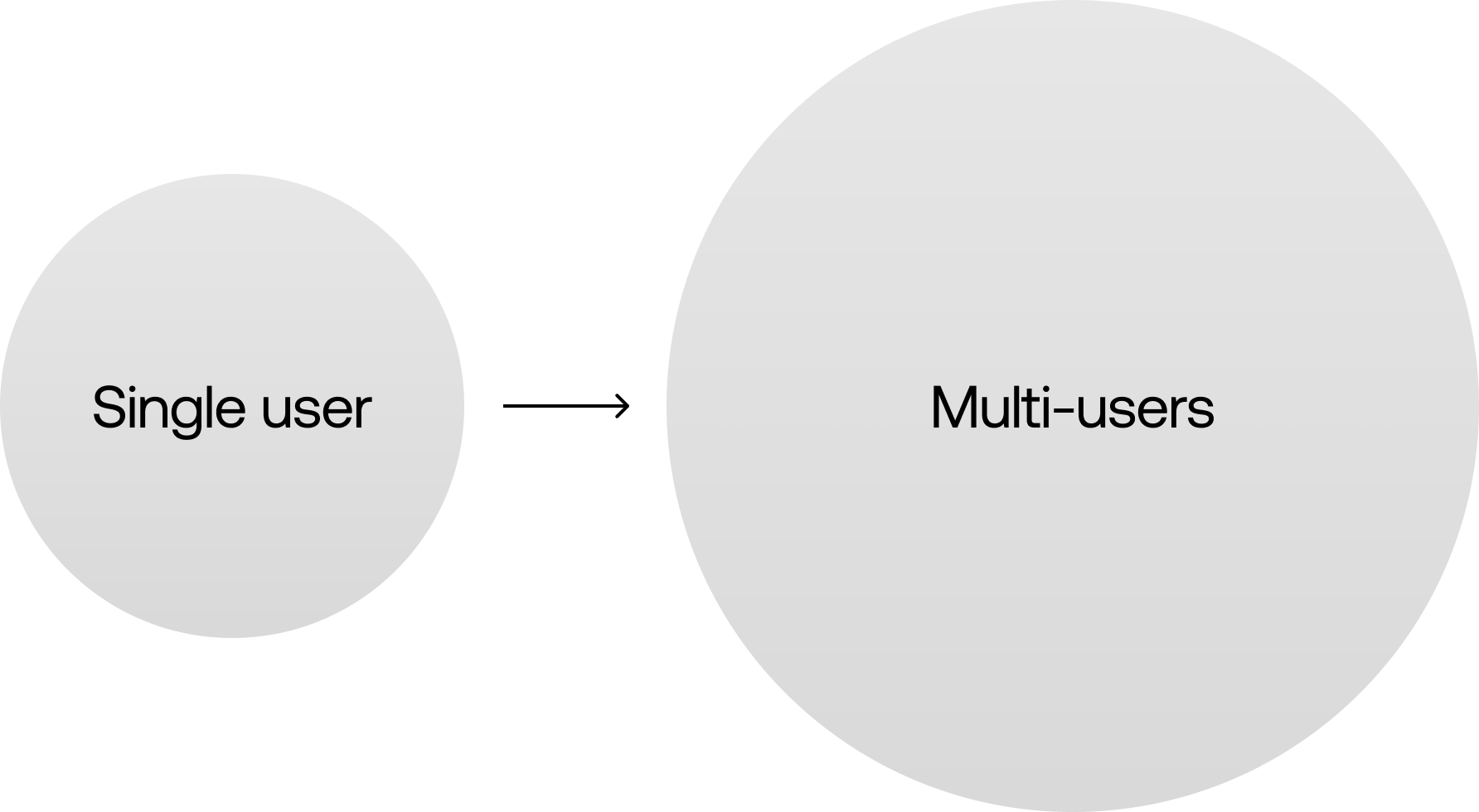
AML investigations are rarely a single-person task.
High-risk cases often involve multiple roles — analysts, investigators, team leads, and compliance officers — reviewing evidence, requesting information, and making escalation decisions.
At OKX, our internal case tool was originally designed around single-analyst workflows. As investigation complexity grew, multiple reviewers frequently had to collaborate on the same case.
The system was not designed for that.
Problem
“Investigators often had to reconstruct the case context before they could continue the investigation. As case volume increased, these inefficiencies slowed down compliance operations.”
-
→ To assigned reviewer per stage
-
→ To structured checklist
-
→ To case status visibility
-
→ To in-case collaboration
-
→ To shared investigation context
Design Goal
Design a case workflow that allows multiple investigators to collaborate on the same AML case while maintaining clarity, accountability, and auditability.
The solution needed to:
• Make reviewer ownership clear
• Show investigation progress across roles
• Preserve decision history for audits
• Reduce duplicated work between investigators
Constraints
AML workflows come with several operational constraints:
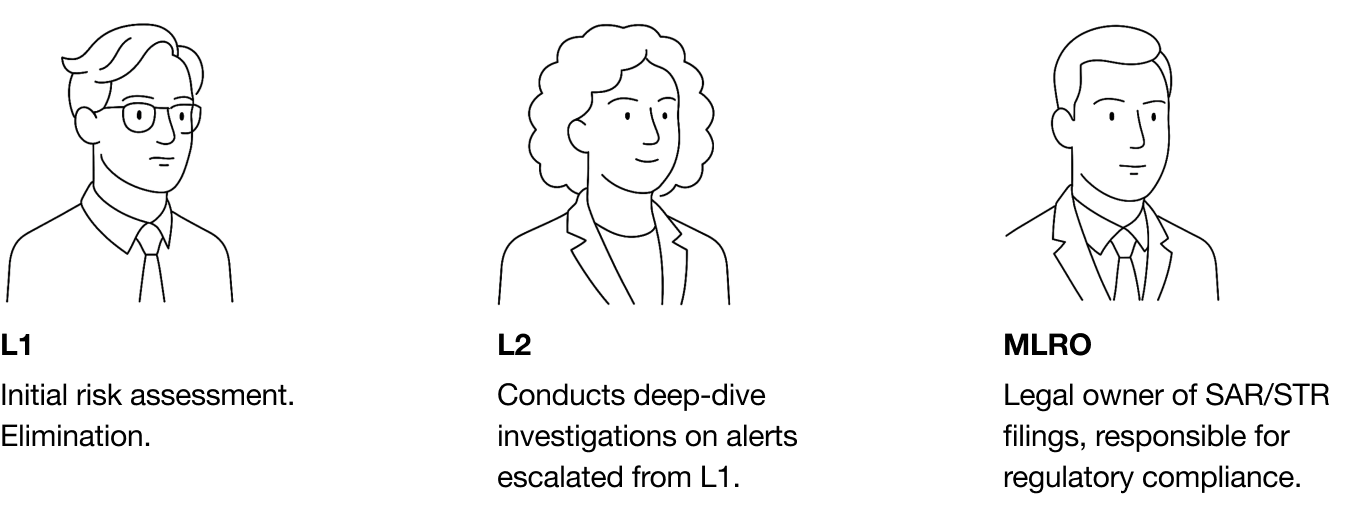
1. Role hierarchy
Different investigators are responsible for different stages of review.
Example roles:
L1 analyst → initial investigation
L2 investigator → deeper review
Team lead / MLRO → approval or escalation
2. Auditability
Every action must be traceable:
• who reviewed the case
• what decision was made
• what evidence supported it
3. Operational scale
Investigators often handle large case queues, so workflows must support fast context switching.
Design Approach
I redesigned the investigation experience around three key principles
1. Role-aware workflow
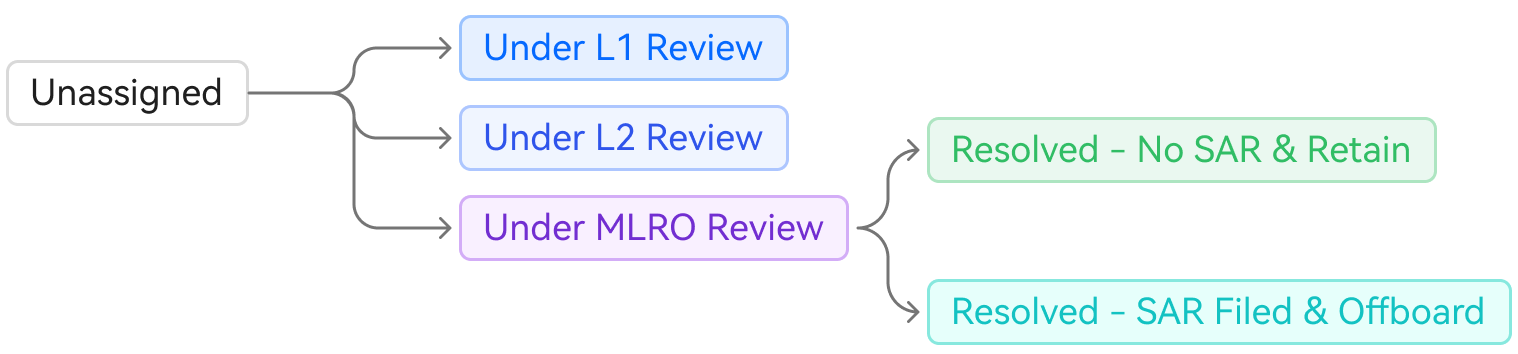
The case lifecycle was structured around investigation stages instead of static screens.
Example flow:
Alert triggered
→ L1 investigation
→ Escalation review
→ Senior approval
→ Case closure
Each role clearly understands what they are responsible for next.
2. Shared investigation context
Every reviewer should immediately understand:
• what signals triggered the case
• what evidence has been reviewed
• what decisions were already made
• what actions remain
This reduces duplicated investigation work.
3. Action-driven interface
Instead of passive data displays, the interface highlights the next investigation actions:
Examples:
Request additional information
Escalate case
Assign reviewer
Close investigation
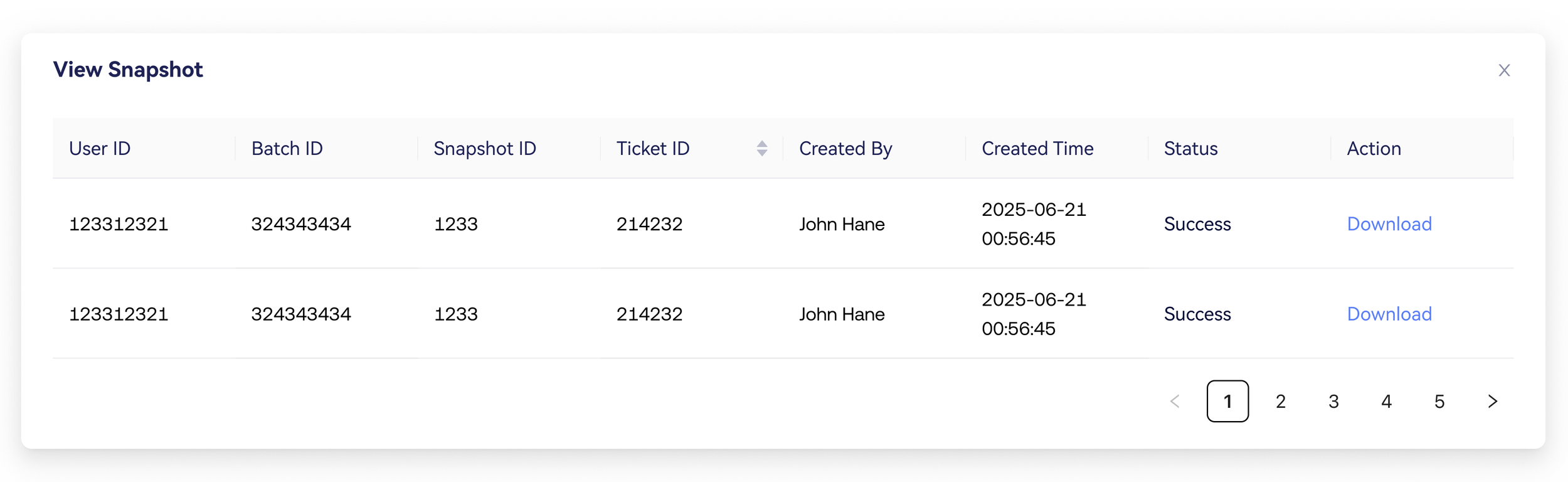
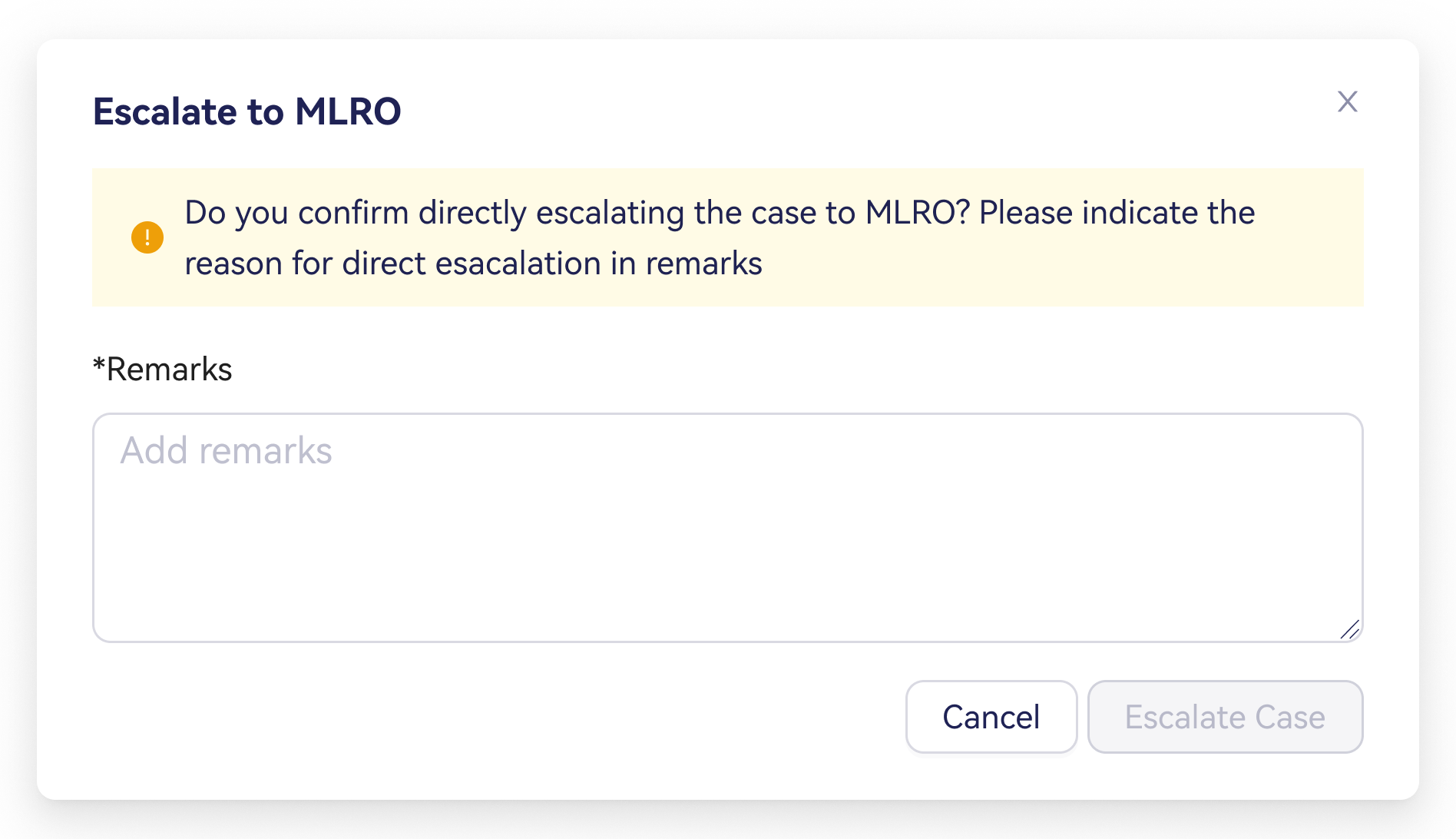
Key Design Solutions
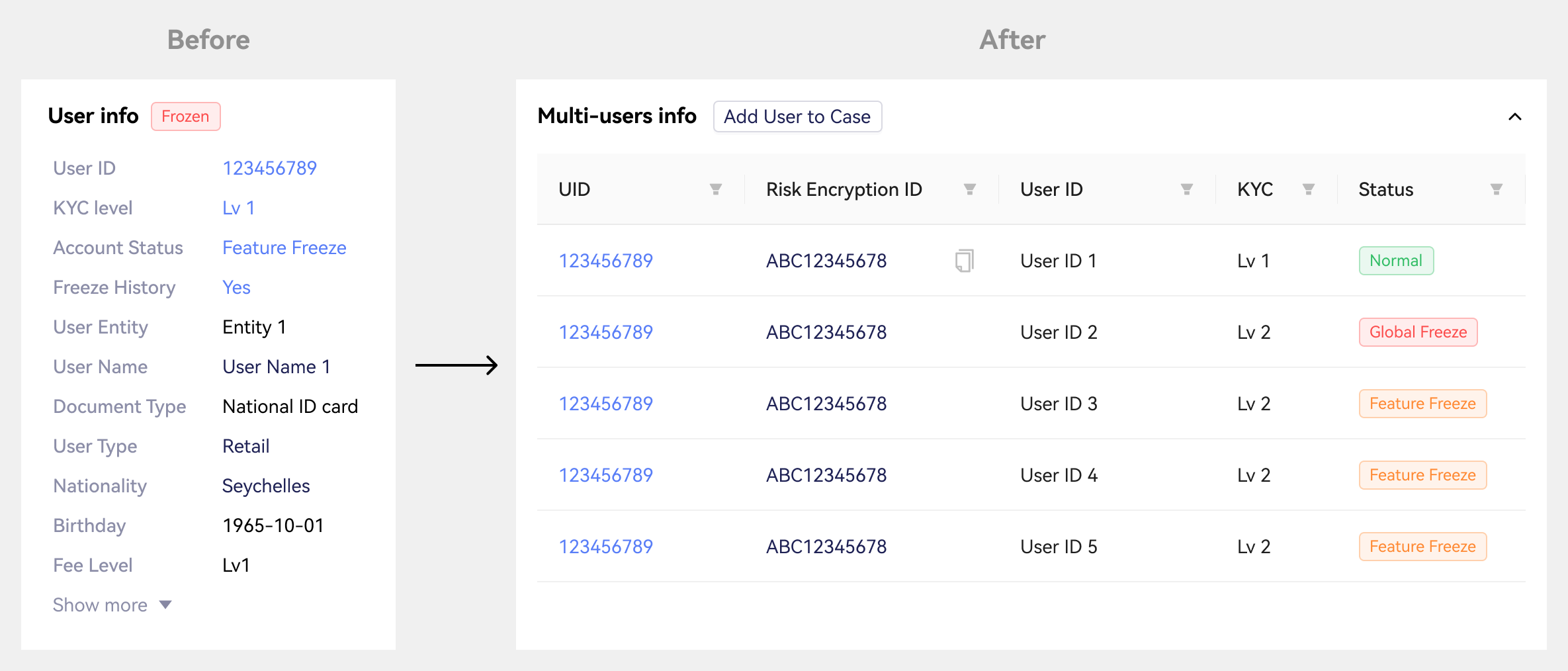
1. Case overview
A unified view surfaces the most important case information:
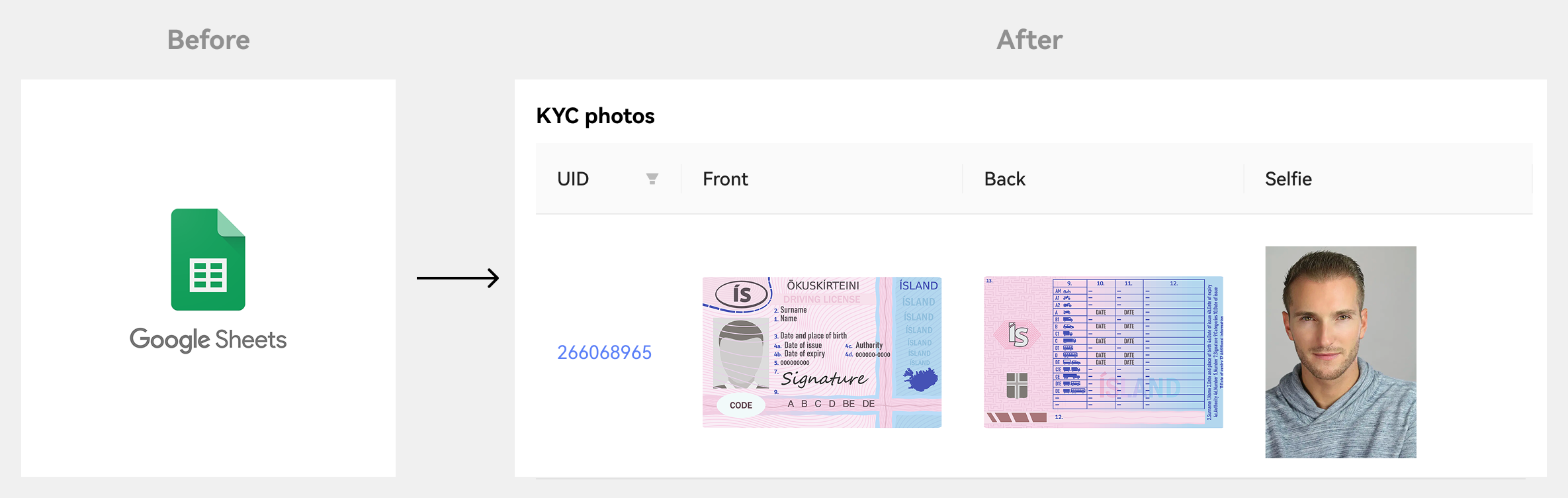
2. Eliminating fragmented external workflows
Investigators relied on external tools (e.g. Google Sheets) to track case data and supporting evidence.
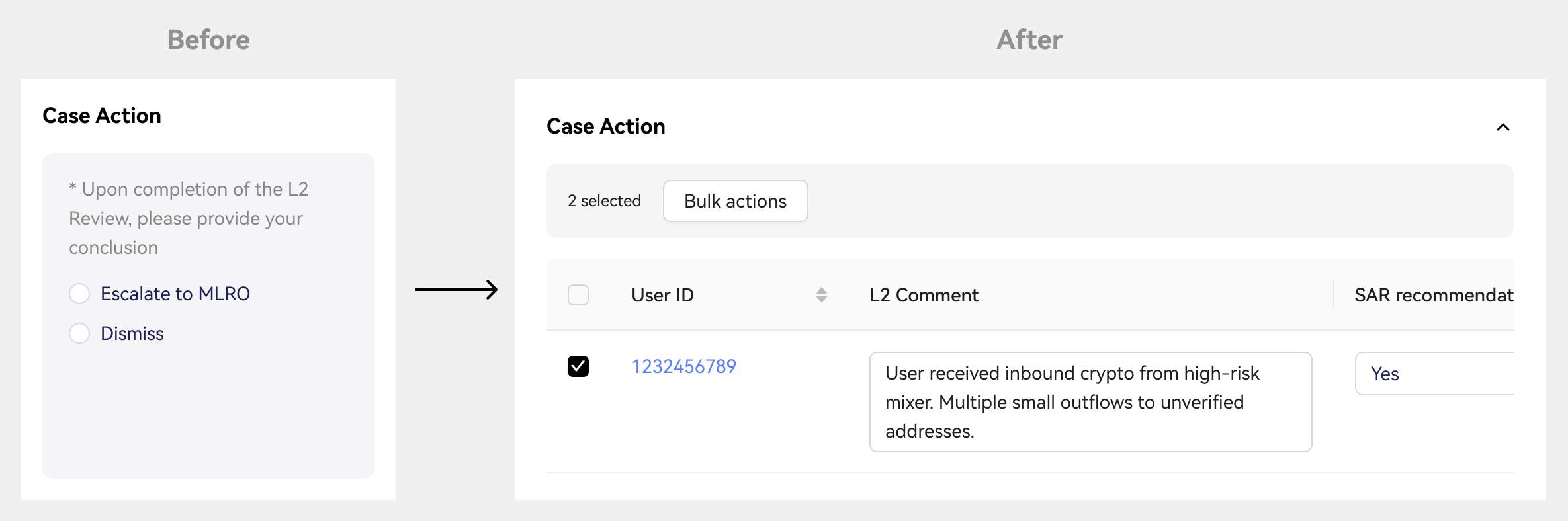
3. Structured investigation and reviewer collaboration
A guided checklist helps analysts review risk indicators consistently with a workflow supports collaboration across investigators:
Success
35% faster case resolution
Reduced investigation time through clearer workflows and multi-user collaboration
• less duplicated work
• clearer ownership
• better visibility
• improved consistency
Designing AML tools is less about presenting data and more about designing decision workflows that allow investigators to collaborate while maintaining regulatory accountability.
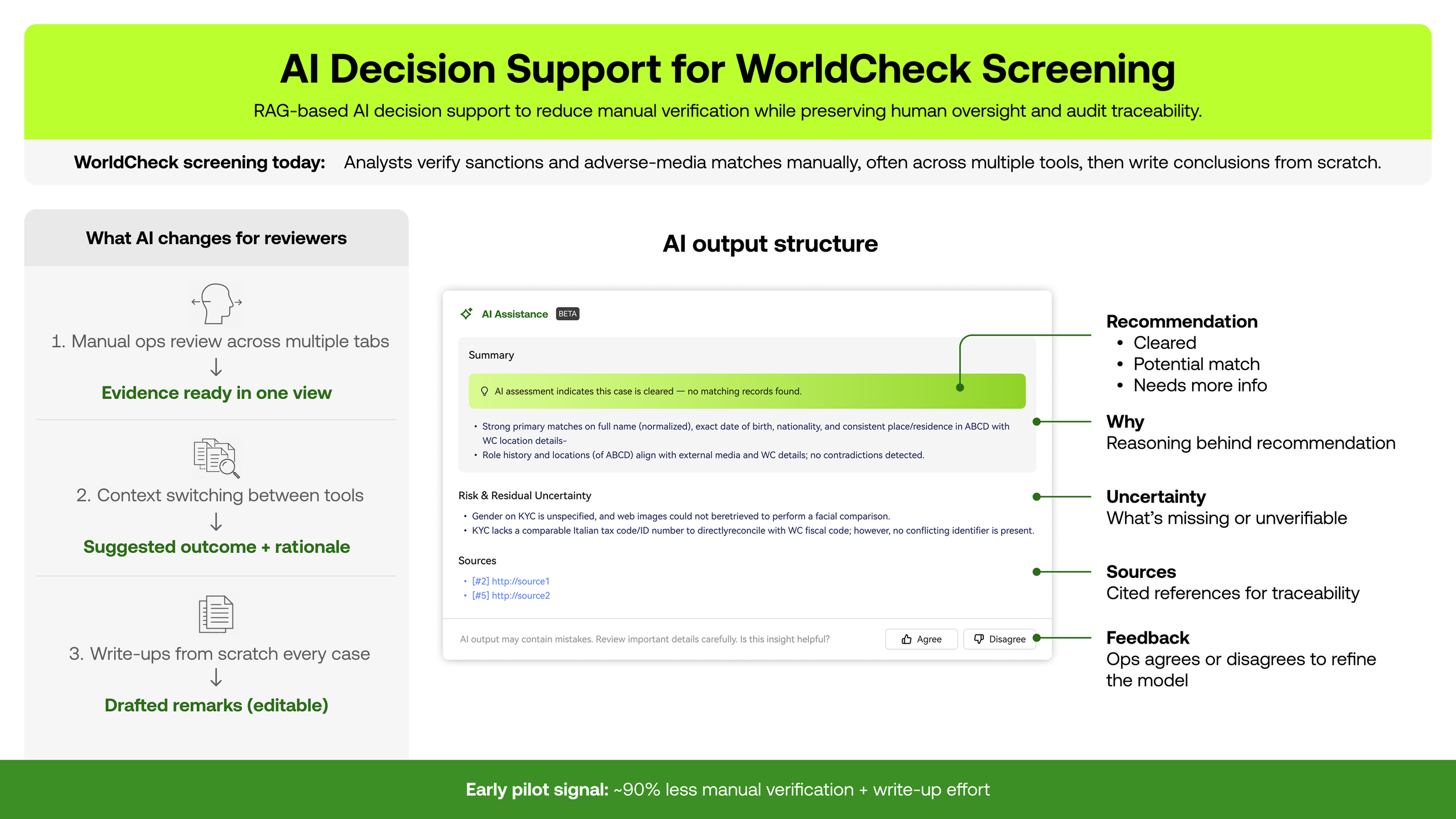
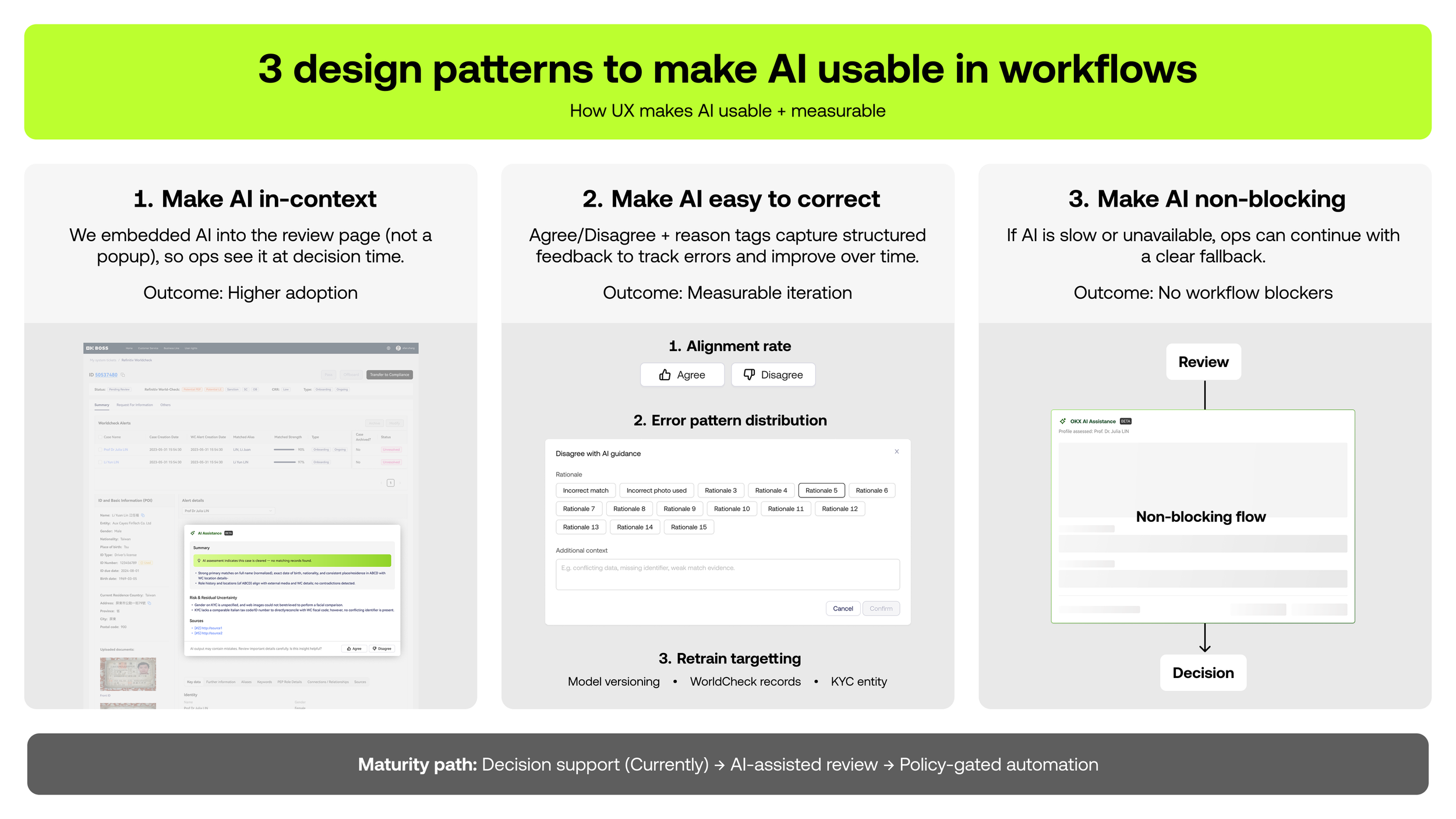
Implementing AI to improve efficiency