Scale + speed up financial crime investigation
Role: The only designer on Compliance internal tools
Scope: End-to-end · Internal operations · Human + AI workflows
// Who we designed for
The users

L1 investigator
Alert Reviewer
High-volume triage. Initial risk assessment, account activity, onboarding. Escalates when patterns emerge. Single-account focus.

L2 investigator
Case Analyst
Complex network patterns: Multi-related accounts, high-velocity transfers, layering activity across jurisdictions. Files suspicious activity reports. Per-user decisions required. Before CMS 1.0: pivot tables, Google Sheets, manual know-your-customer (KYC) review, all outside the system.

Team lead
Quality Gate
Reviews analyst dismissals for new joiners and severe cases. Confirms or sends back. Needs full narrative context on arrival, no capacity to re-investigate or chase clarification.

Reporting Officer
Final Regulatory Authority
Final call on suspicious activity report filing and account offboarding. Accountable to regulators if a decision is challenged. Cannot afford a second pass. Every decision, rationale, and evidence trail must be ready in one view.
Understanding how it comes together
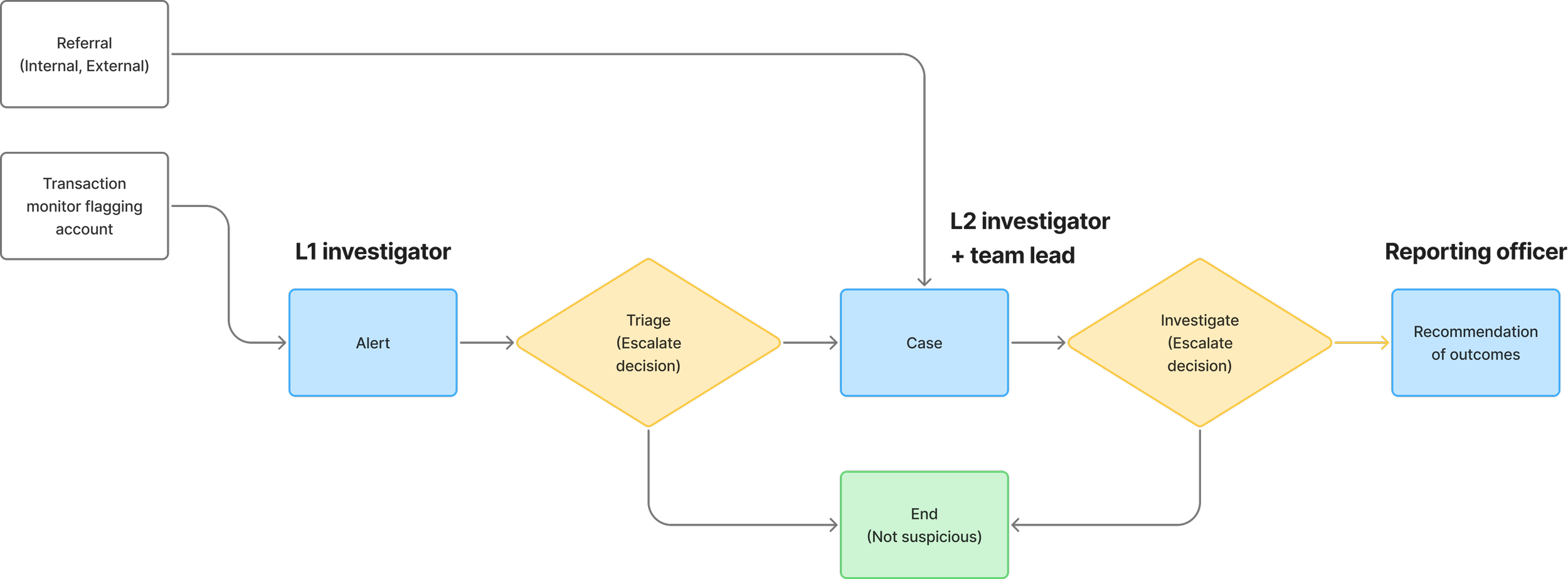
How does the investigation work?
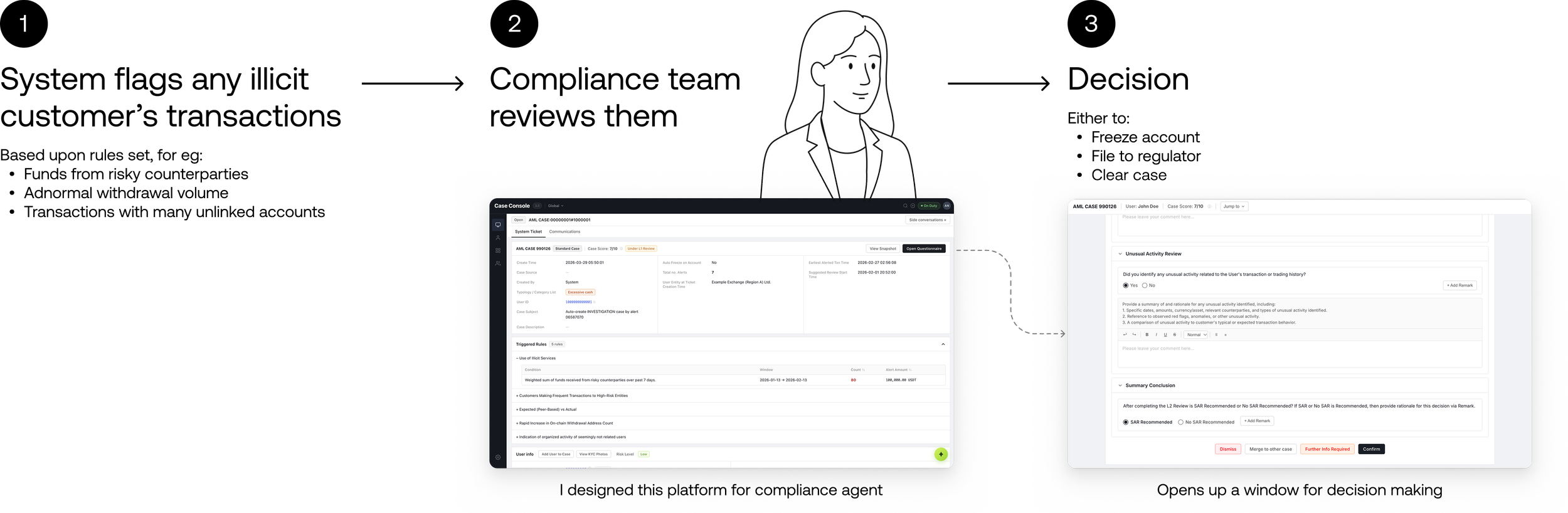
// The problem
Not scalable. Analysts need to investigate many accounts at once
Our case management system (CMS) is where compliance analysts investigate suspicious accounts. It could only look at one account at a time.
But accounts trade with each other, so one case could link to 30+ accounts. Analysts ended up in pivot tables and Google Sheets, outside the system.
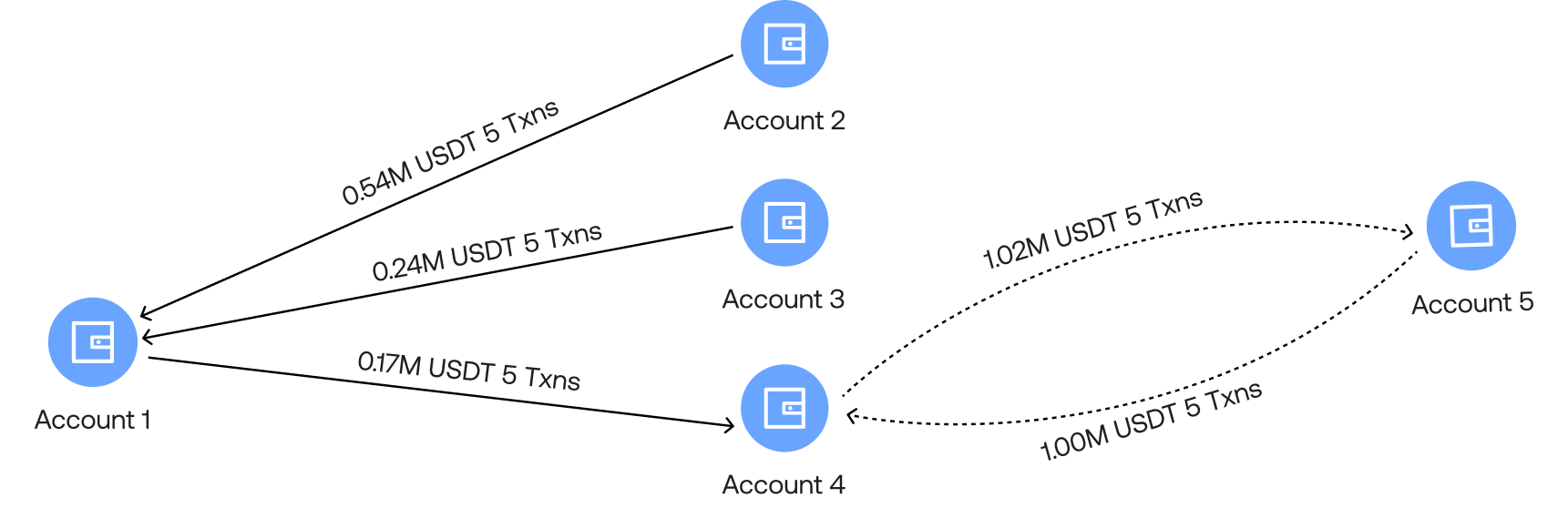
// Learning their workflows
Focus group with AML analysts
I ran a focus group with 4 analyst team leads (from Singapore, Malta and US) to:
See how they handle multi-account cases today
Find pain points from first alert to case closed
Spot gaps in current tools
Hear what they’d need to manage multi-account cases
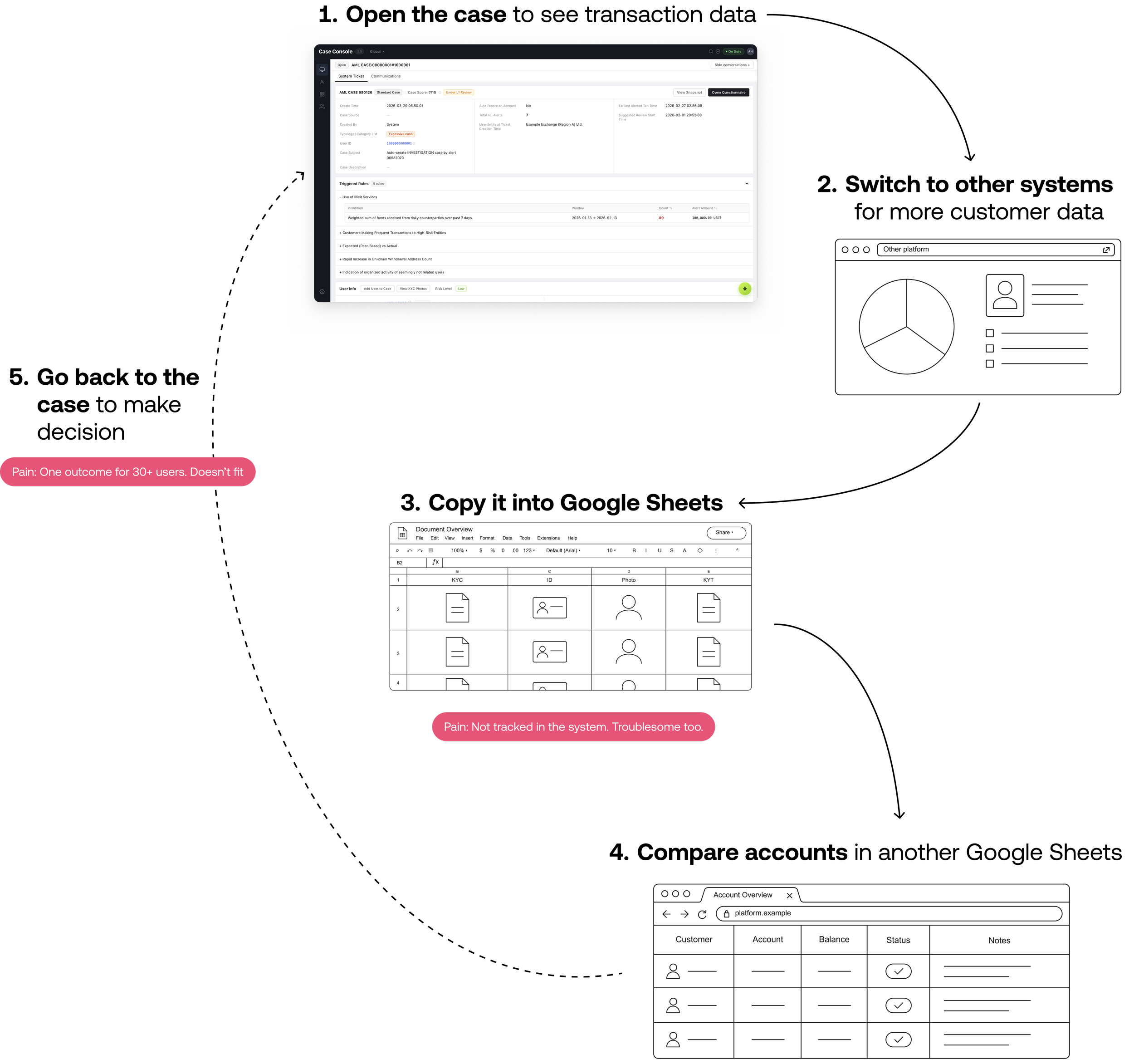
Pain points, mapped across the investigation flow

// CMS 1.0 - Design to scale
Three solutions to scale multi-accounts
From there, solutioned with my product managers.
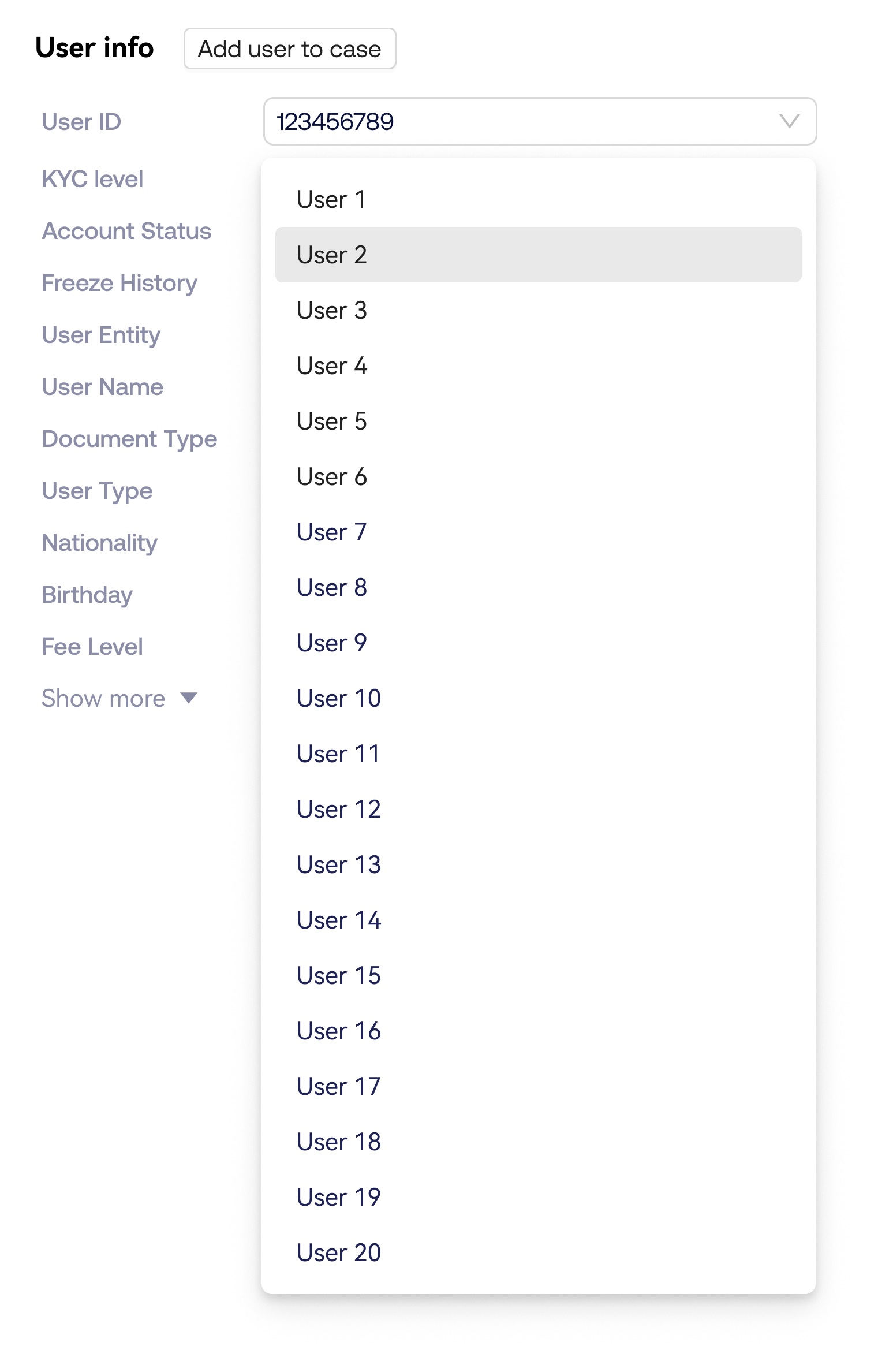
Before:
Each account was its own isolated view. No way to compare across them. Findability also an issue with so many users within the dropdown.
After:
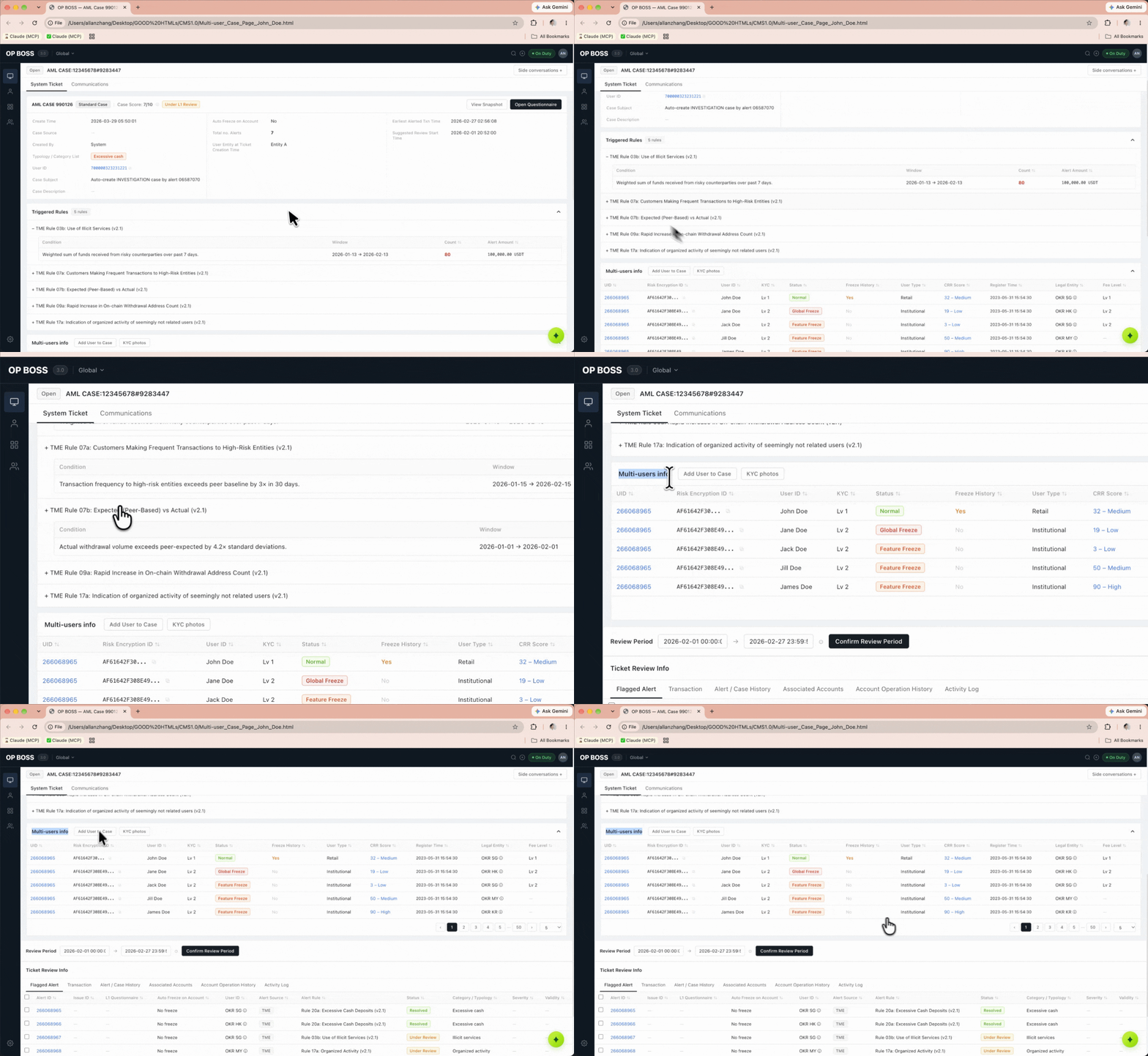
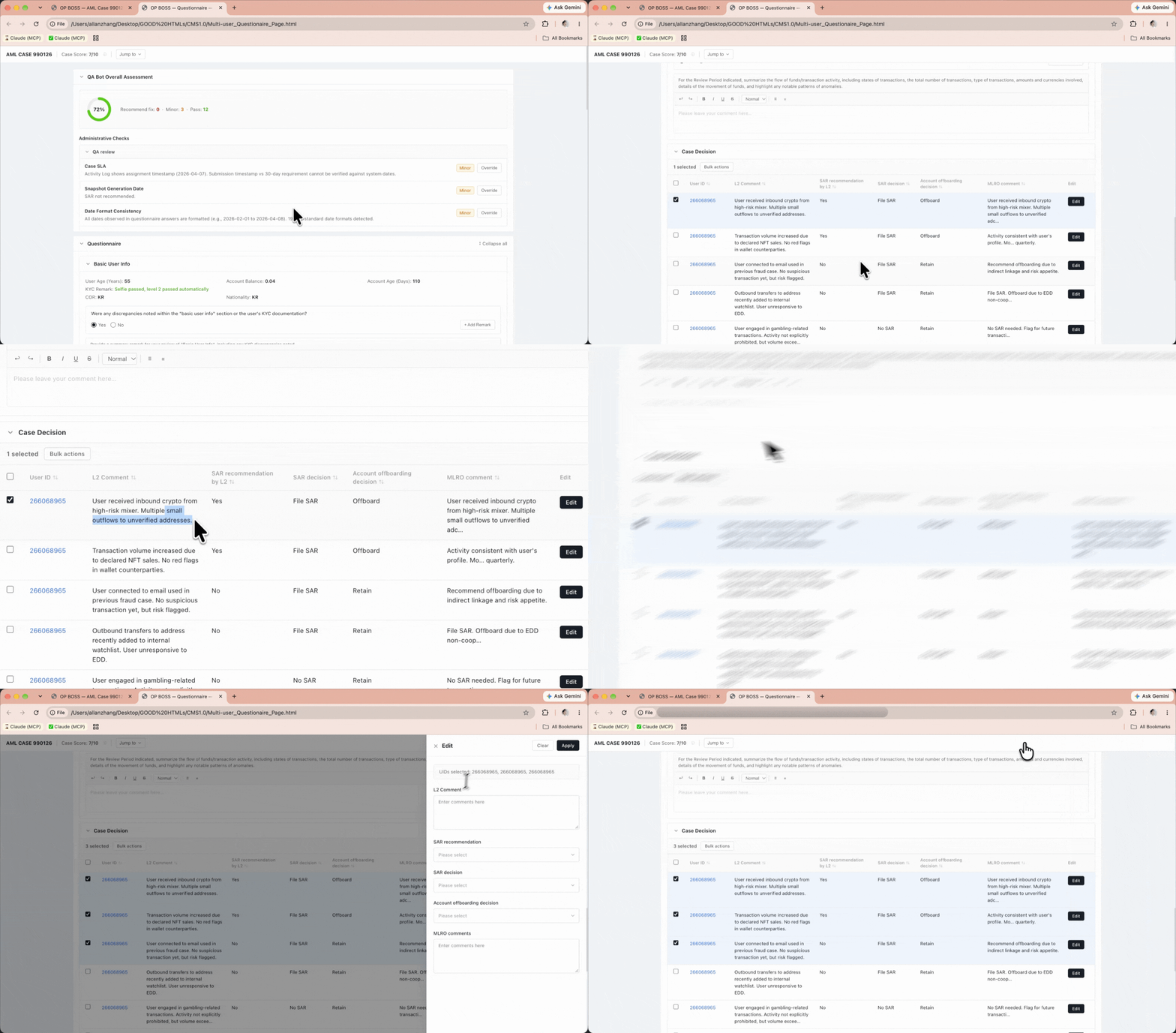
Multi-account comparision table
Scan across all information across 30+ accounts at once.
Before:
Identity documents lived in a separate system. Investigators were switching tabs to verify each account manually.

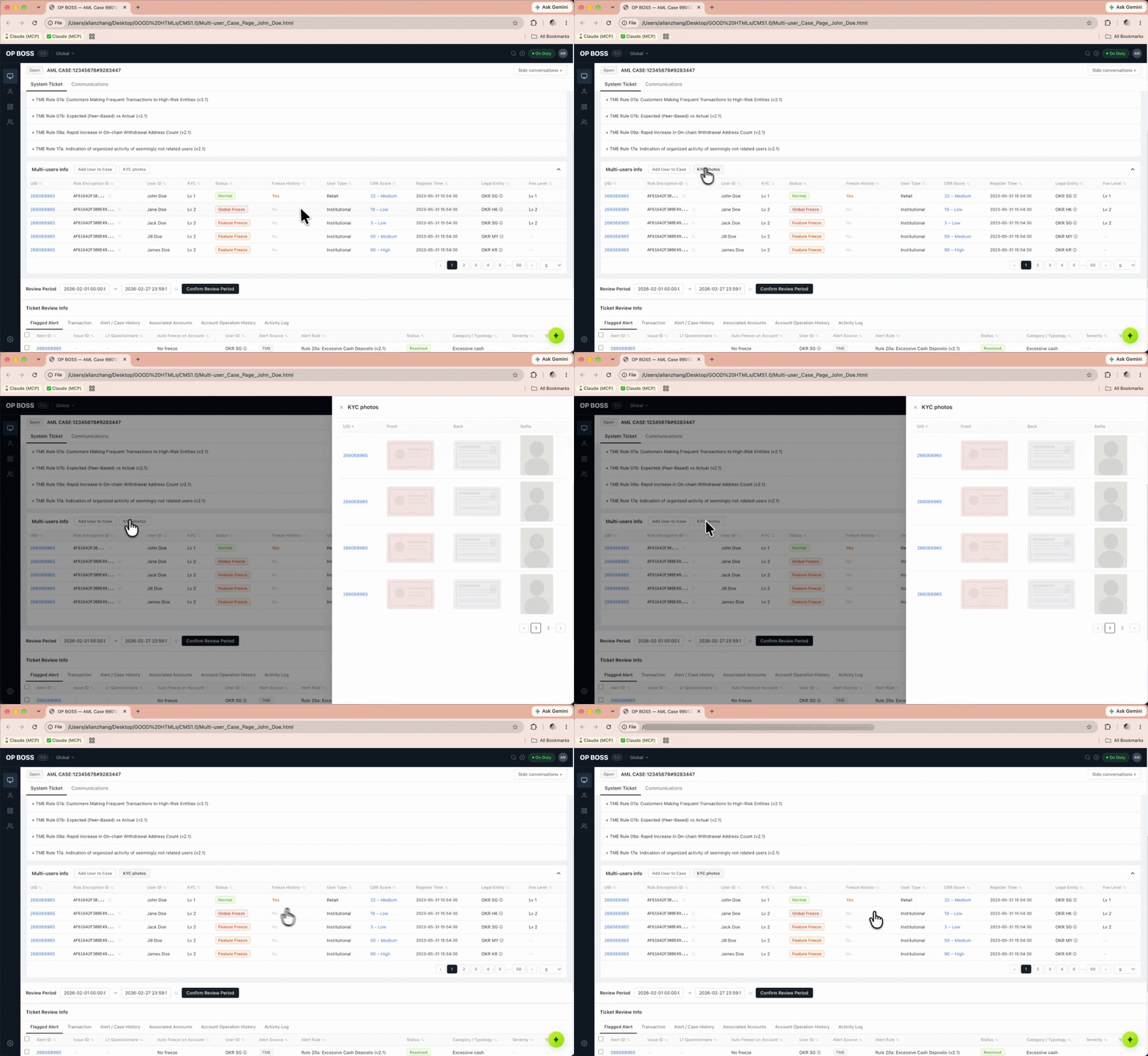
After:
Bulk KYC viewer & progressive disclosure
ID front, back, selfie all included now in the case platform. Surface it on demand without cluttering main investigation panel.
Before:
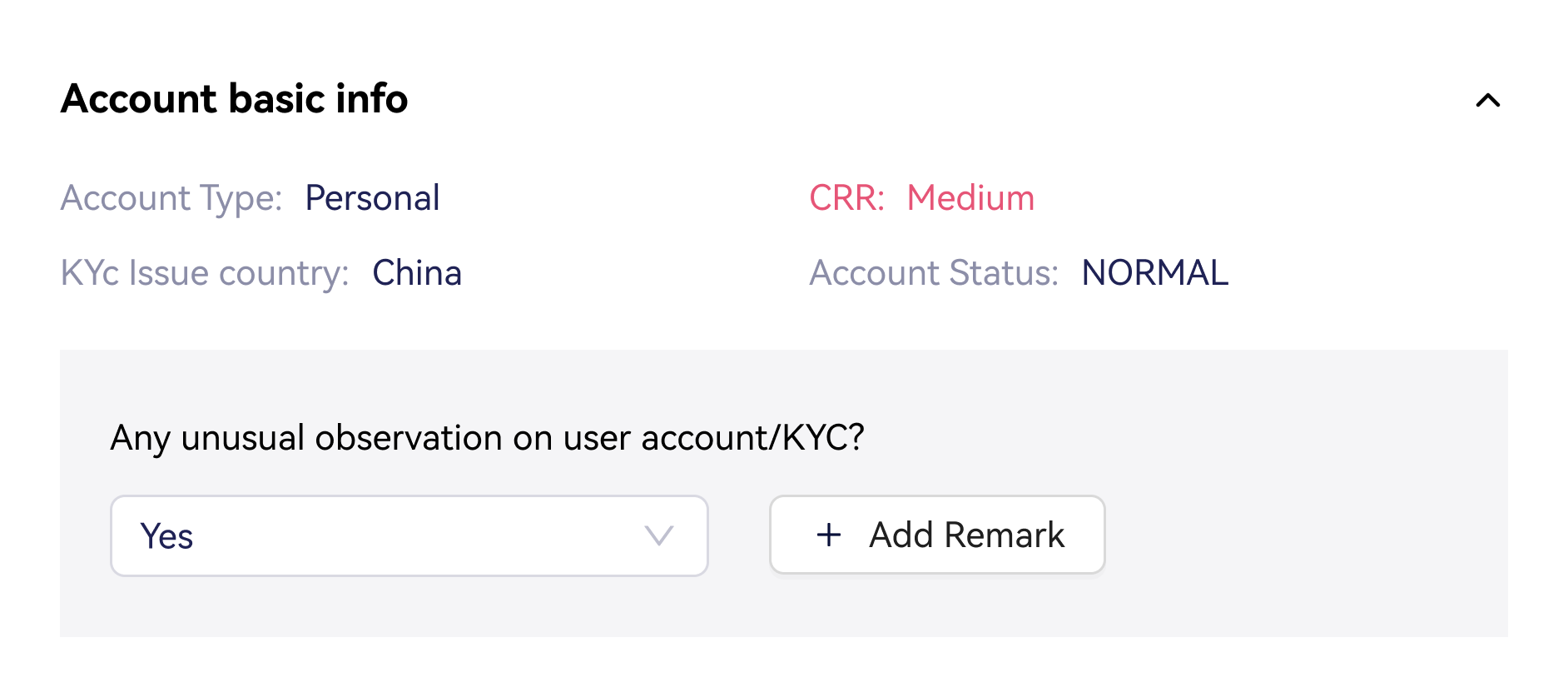
The system had one outcome for the whole case. But compliance filings and offboarding decisions need to be made per account.
After:
Per-account decision table
Compliance filing and offboarding outcomes made per account, bulk apply function and with individual traceability.
Speaking to various users to come up with the service workflow
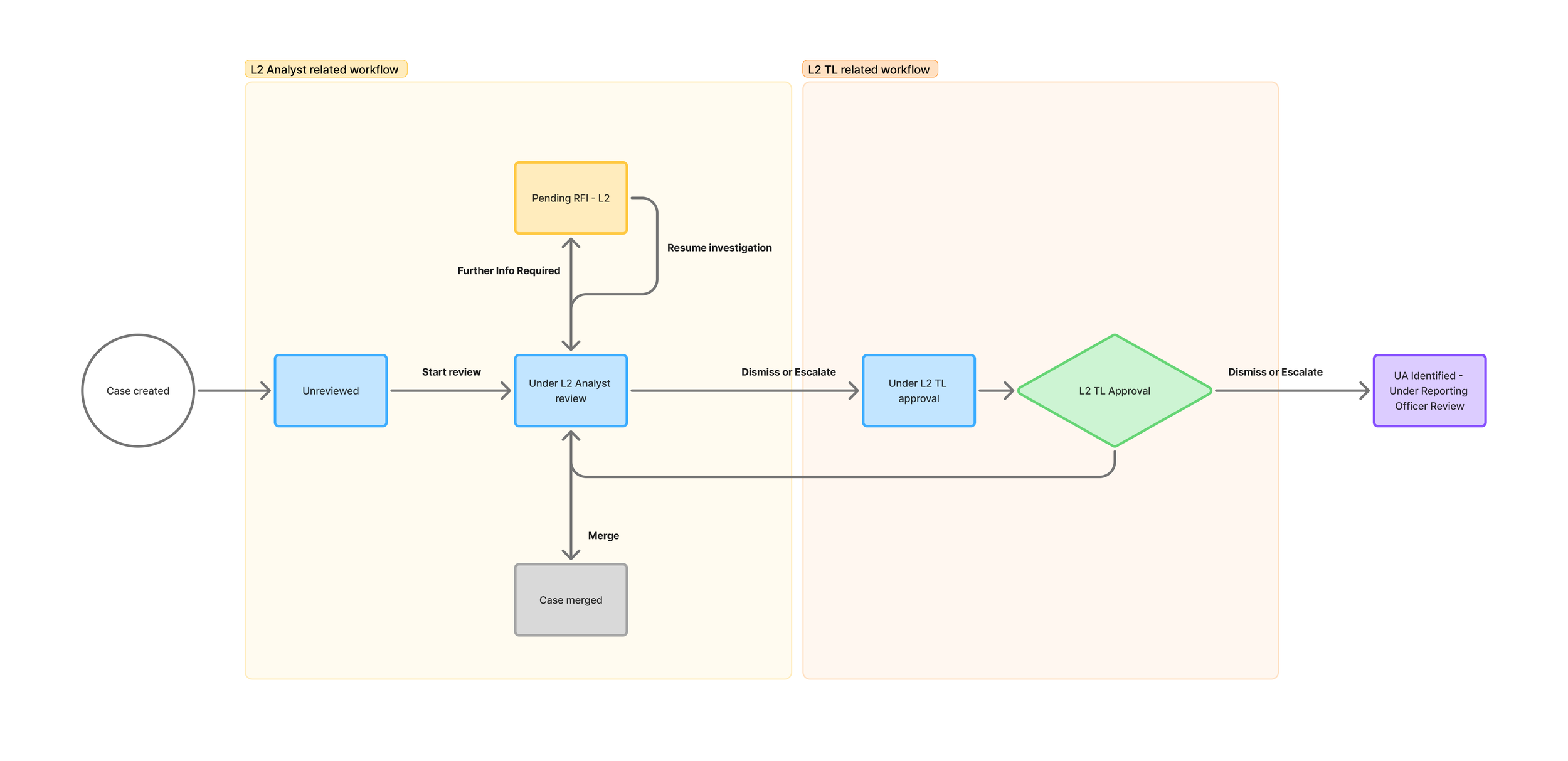
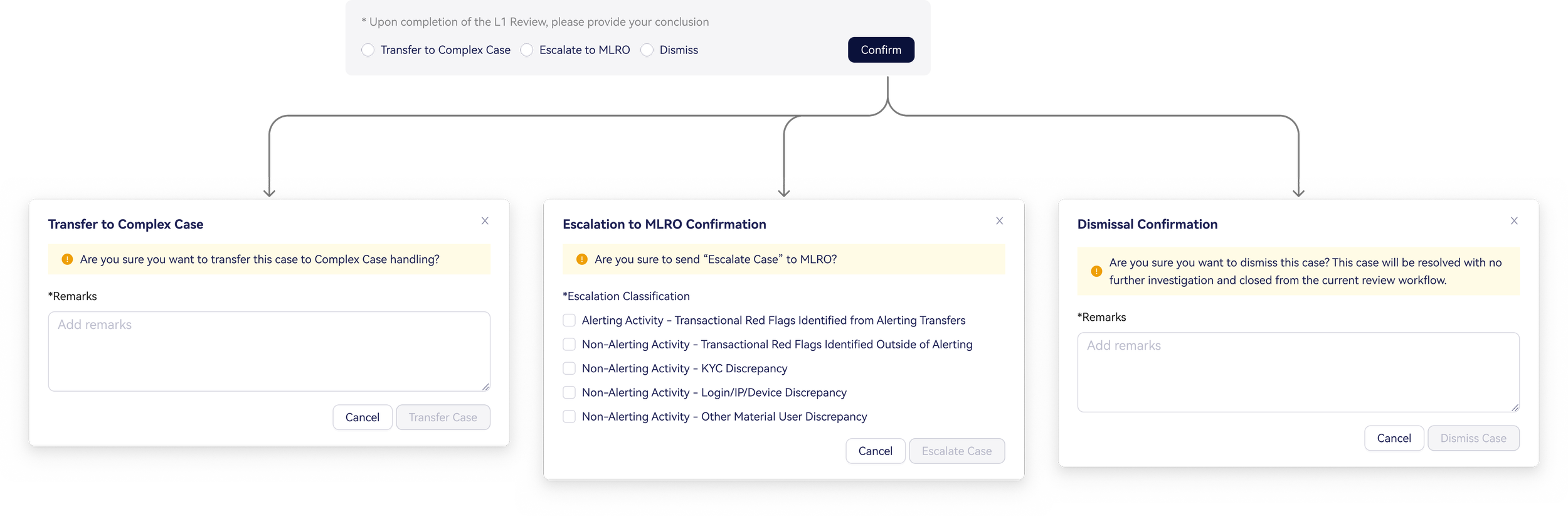
That understanding allows me to design the different workflow states, scenarios, handoffs
// Phase 1 checkpoint
This scaling enhancements achieved compliance effectiveness.

Compliance effectiveness
Every case reviewed to the right depth,
Every decision traceable,
Every filing defensible to a regulator
Also need to consider operational efficiency
Analysts spending time on judgment not data collection. Queue clearing at scale.
Take a break here
If you still have attention span, continue with me to see part 2, if you are interested to see how I try to design for operational efficiency using AI a product.
// First AI attempts
Two AI attempts that didn’t cut review time
V1. AI summary popup on the case page
Generated summaries for each investigation section.
What we learnt: analysts still collected all the data by hand first. The AI summarised work already done. It didn’t reduce it.
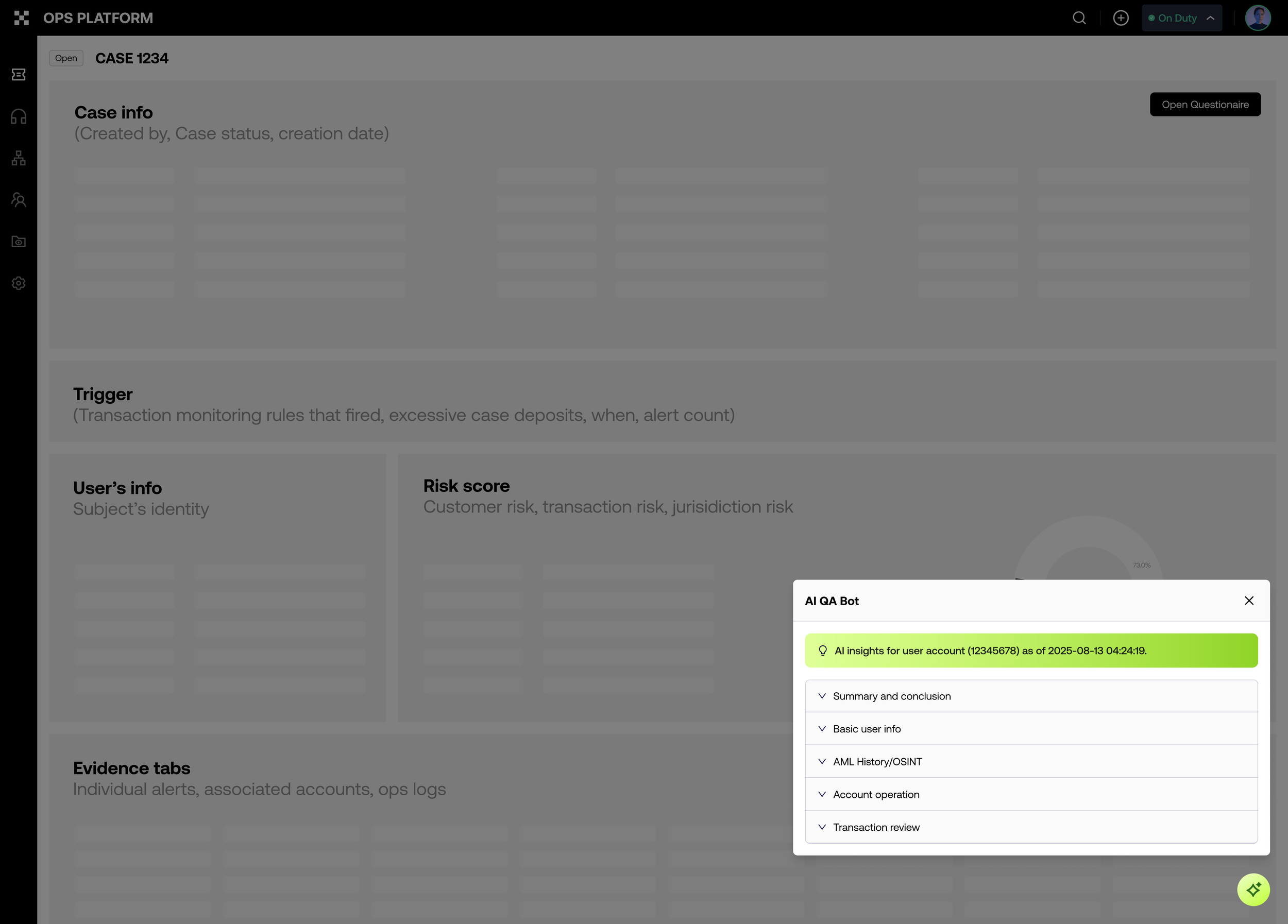
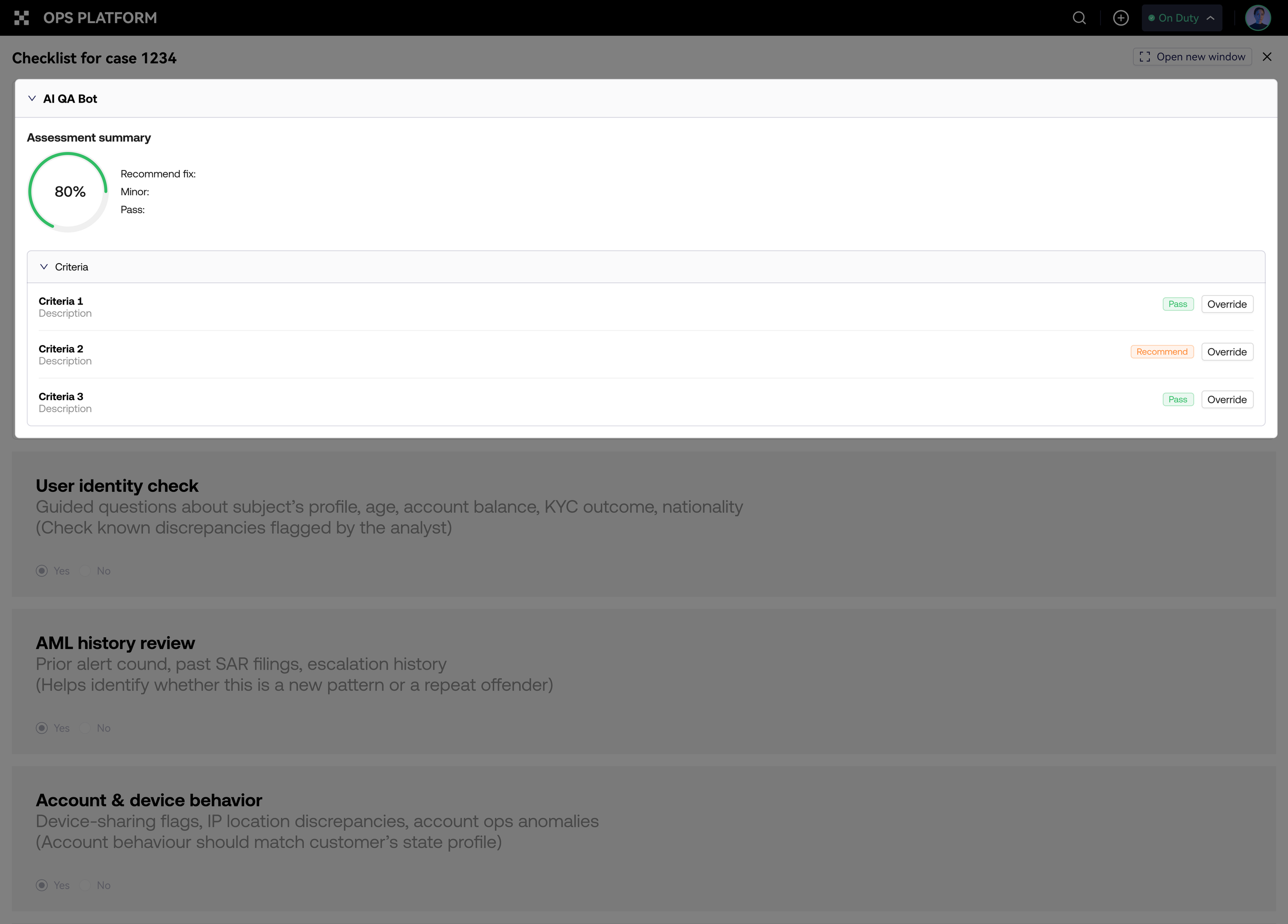
V2. QA agent that scored every submitted case
Checked each case against compliance rules after submission.
What we learnt: it caught gaps, but only after the time was already spent. And when senior reviewers disagreed with a finding, there was nowhere to record it.
I shadowed the analysts using the current platform
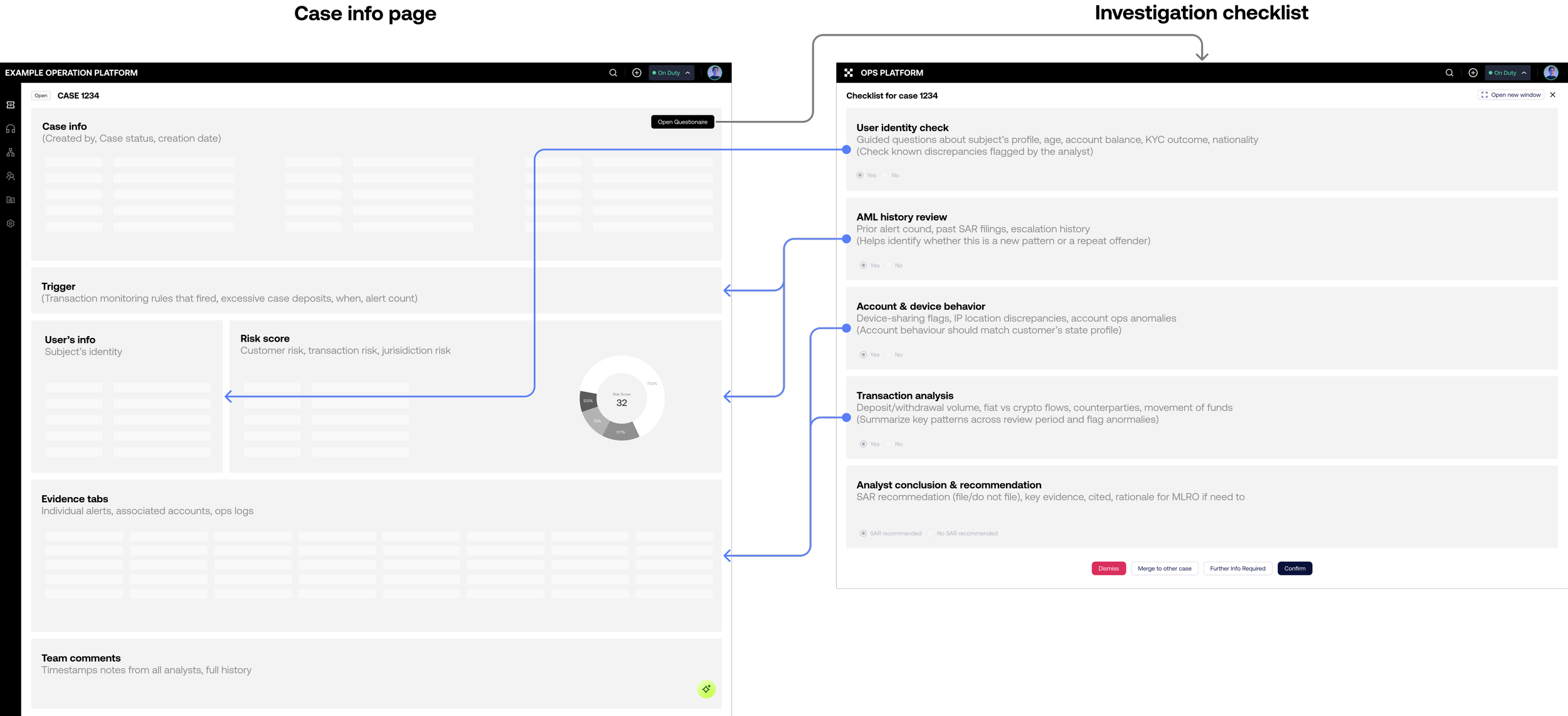
Case arrives with a composite risk score, built from customer, transaction, and jurisdiction signals
Analyst reviews the trigger, subject profile, and evidence
Works through five investigation sections in the checklist
Submits a recommendation, file, dismiss, or escalate
// New CMS 2.0
That allows me to designed the brand new AI-first copilot platform
CMS 2.0 is a ground-up redesign of the investigation experience. The system pre-analyses each case before the analyst opens it — they arrive to structured findings, not a blank form.
The multi-account patterns from CMS 1.0 carry forward. The core design challenge wasn't building AI features. It was designing the right relationship between AI output and human judgment in a context where every decision must be defensible.
Above is an interactive html prototype I’ve created.
Step 1
AI pre-analysis
Before the analyst opens a case, the system has already worked through it. Facts extracted, signals flagged, attention points surfaced. The analyst arrives to a structured view, not a blank form.
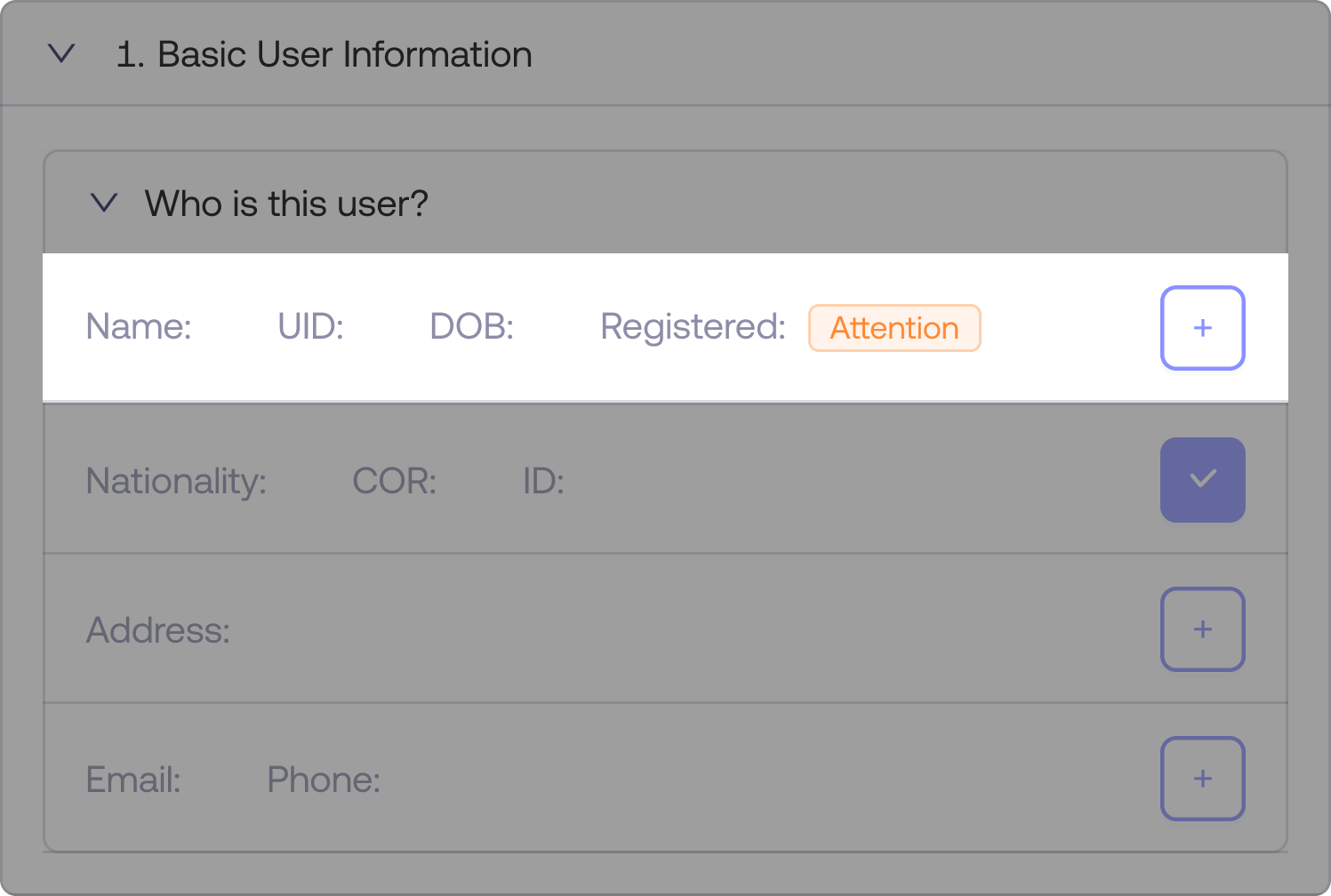
Step 2
Typology and evidence selection
The analyst selects the risk typology and links specific facts as evidence. This shapes what the AI generates, the analyst is directing the investigation, not just reviewing it. The AI drafts. The analyst owns.
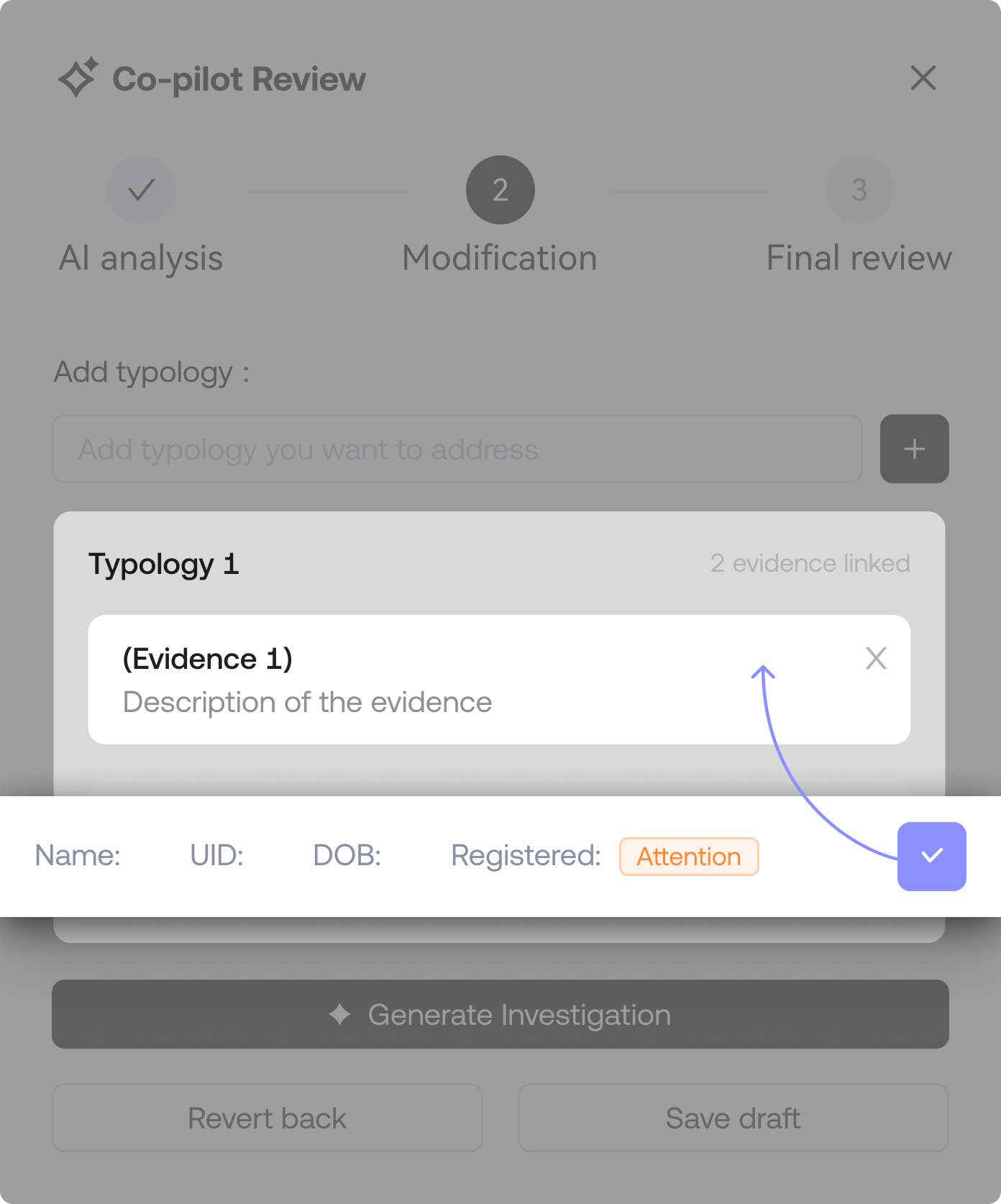
Step 3
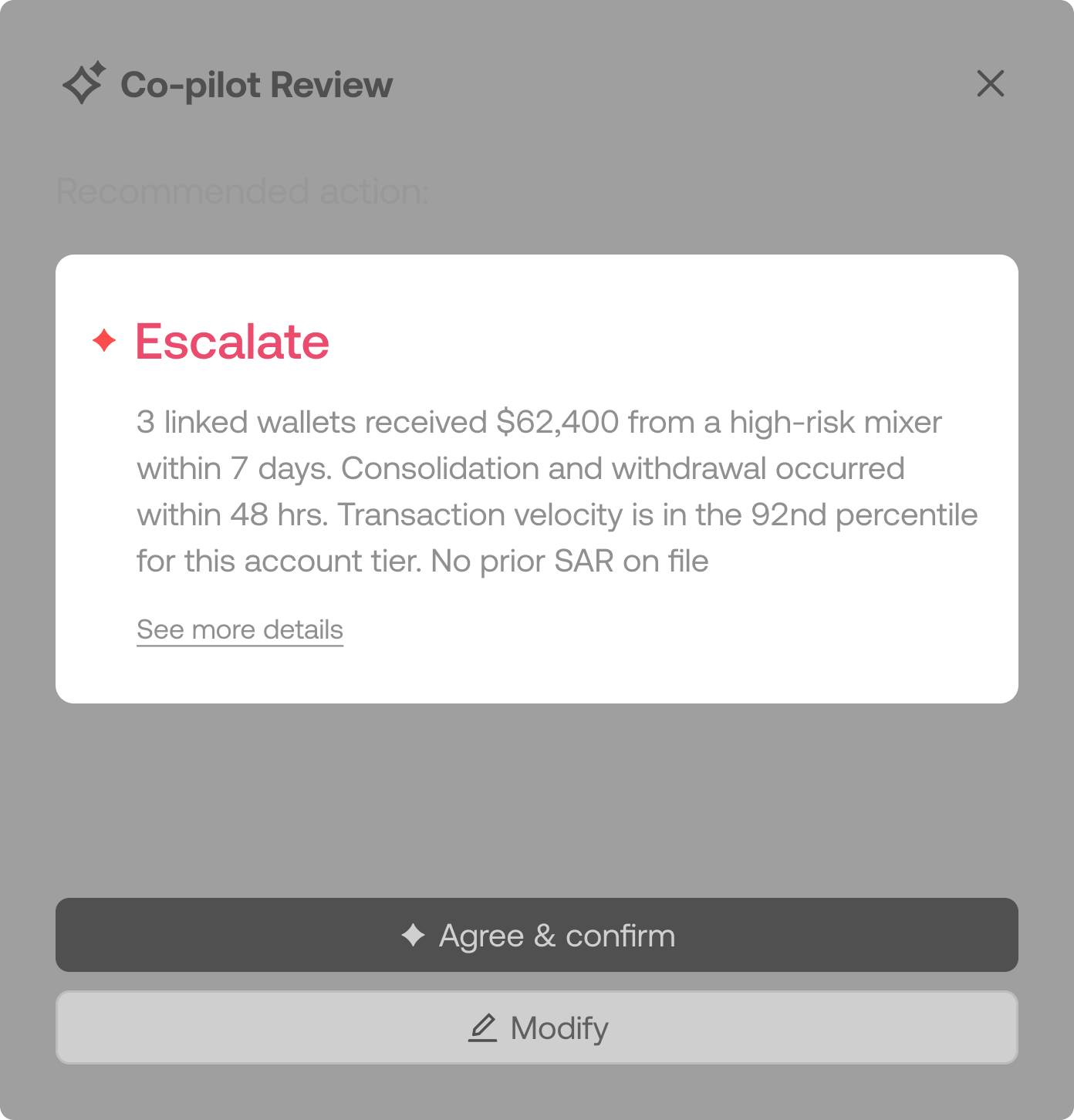
Confirm or modify
The AI recommends an action. The analyst reviews it. If they agree, they submit. If not, they modify. The system suggests. The analyst calls it.
// After launch
Design patterns to become a reusable “skill.md”
After launch, we tracked where the AI narrative broke down. Penned it down, made into a skill.md for internal platforms.
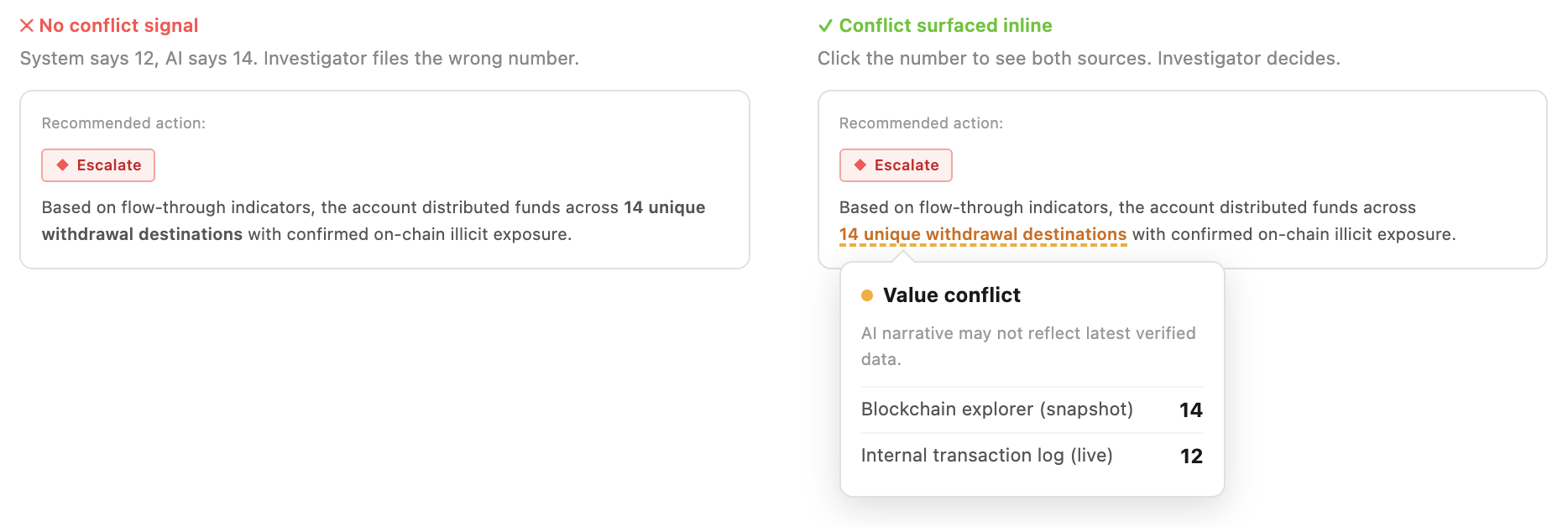
Conflicting numbers
When the AI’s number doesn’t match system data, we flag it. Click it to see both sources.
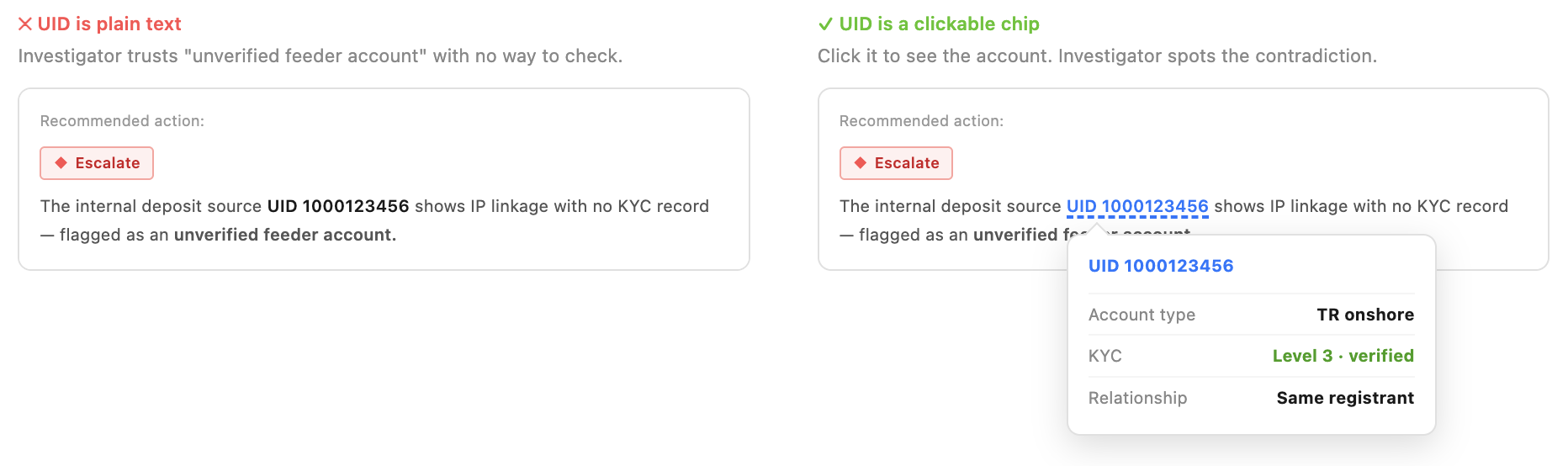
Unverified claims about accounts
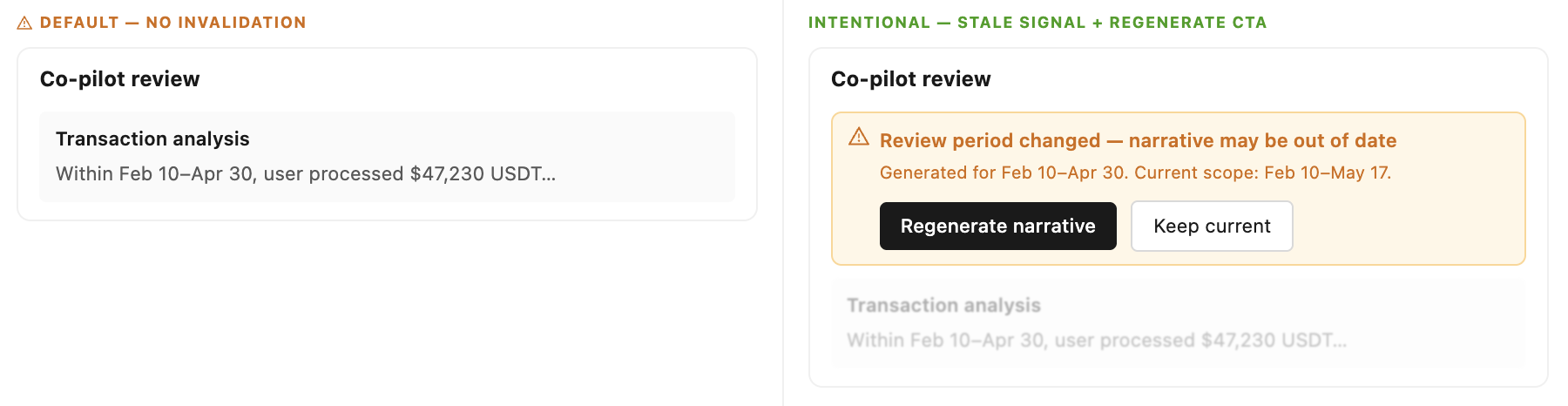
When the review period changes, we warn that the old narrative is out of date.
Out-of-date narrative
When the review period changes, we flag that the narrative is out of date and offer Regenerate.
Outcomes
〰️
Outcomes 〰️
CMS 1.0 multi-user case
100% investigation fully inside the system, external spreadsheet dependency eliminated
Clear role ownership across the full review chain
Significant reduction in manual verification effort and report preparation time
CMS 2.0 AI-native
Average case handling time cut by 40% (90mins → 54mins)
Backlog cleared without adding headcount
Quality and AI engagement instrumented and tracked from launch
// Closing
Financial crime investigation is decision quality design.
We built for scale first, so investigators could handle the complexity of connected cases together.
Then for speed, so the system does the groundwork, and analysts focus on the judgement.
The hardest challenge across both was not building the features. It was making sure every decision stayed traceable to the person who made it.