Scale + speed up financial crime investigation
Role: Sole Product Designer, Compliance Internal Platforms
Scope: End-to-end UX · Operations · Human-AI workflows
Why this platform exists
As crypto adoption grows, so does the need to detect and investigate suspicious activity.
Our Case Management System (CMS) helps compliance teams review flagged accounts and make informed decisions.
// The problem
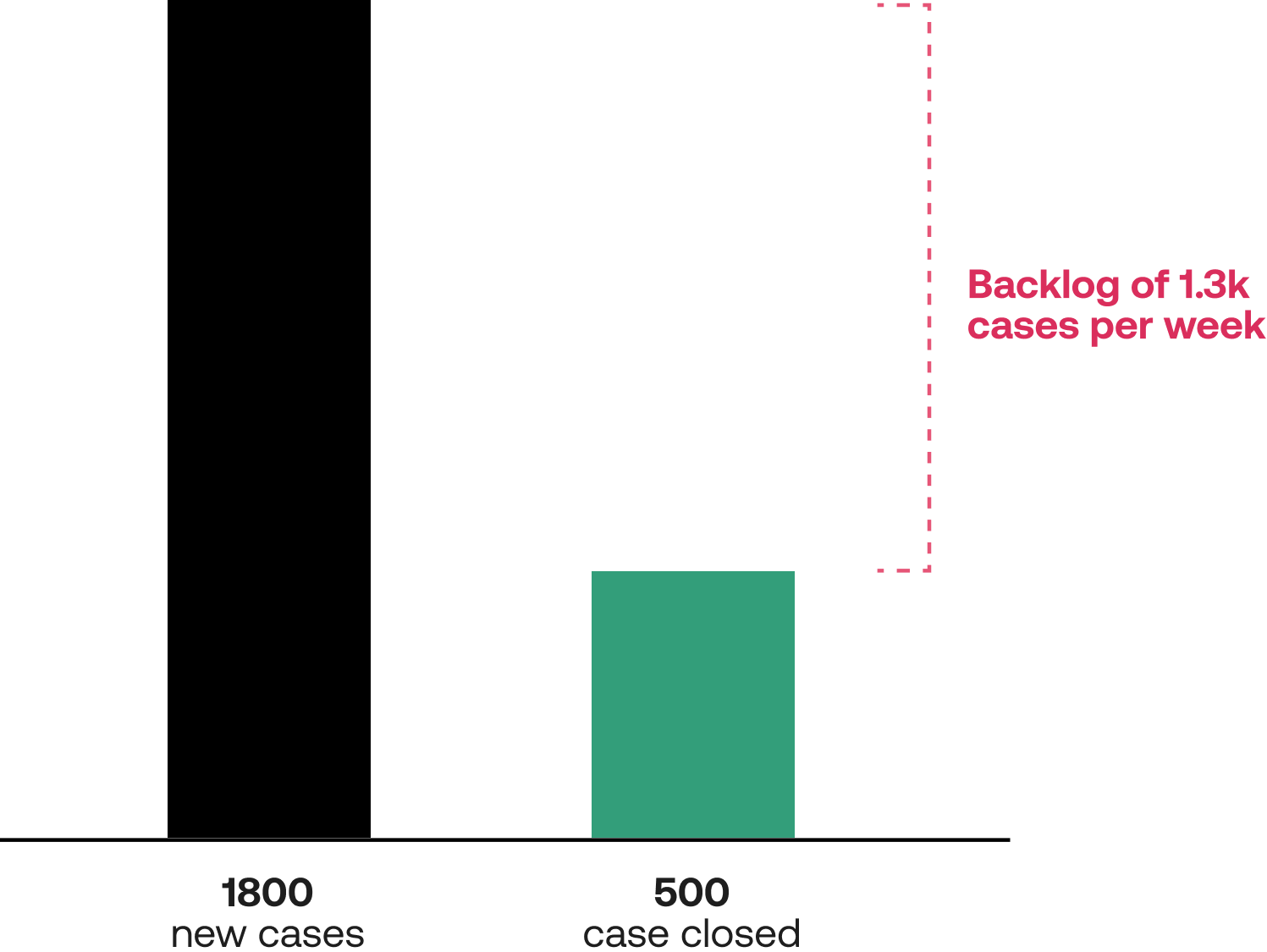
The L2 case backlog was growing every week.
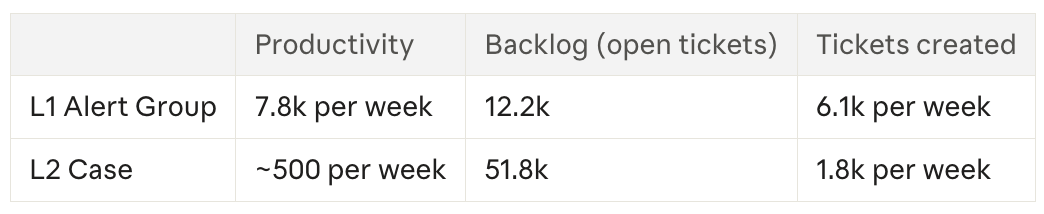
Limited to single-account reviews
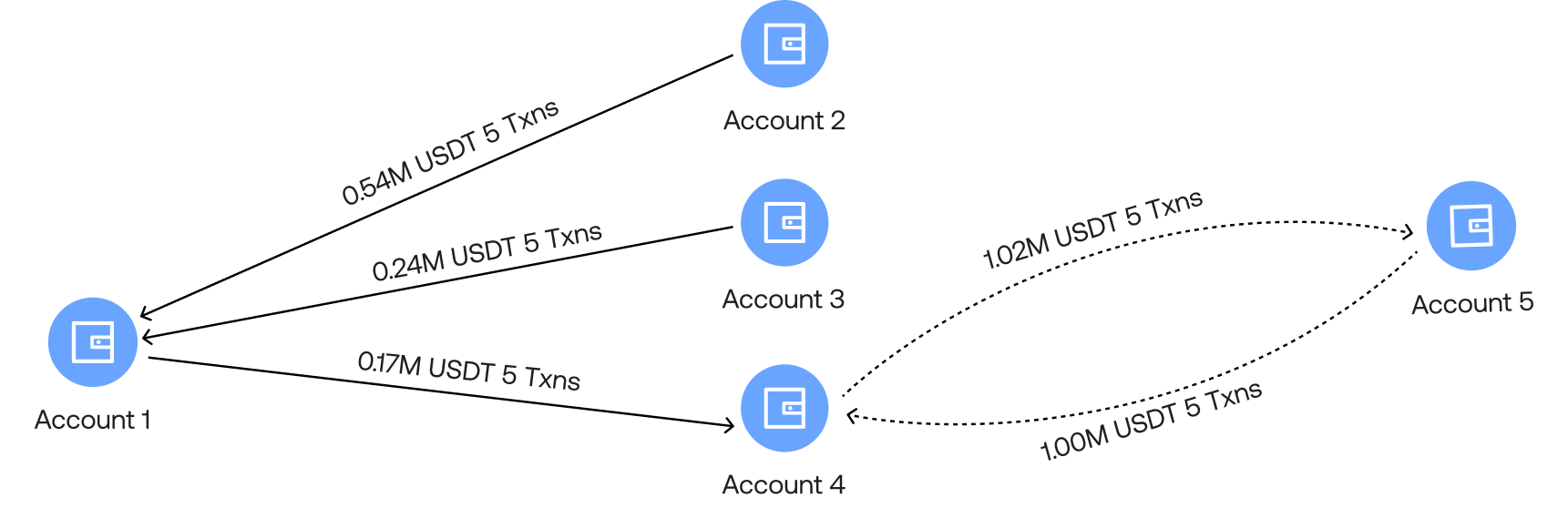
Shadowing analysts showed us why. They could only investigate one account at a time. A case could have [fill] accounts, so every case moved one account after another.
// Who’s involved
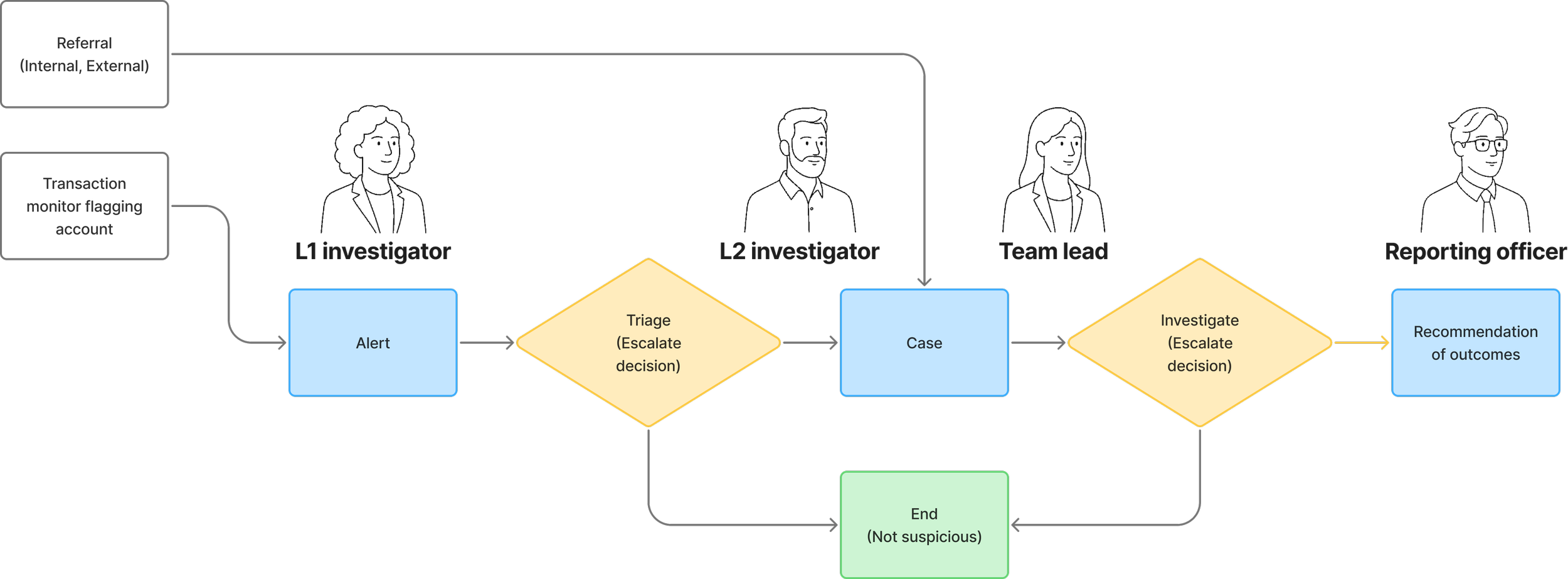
4 roles

L1 investigator
Alert Reviewer
Reviews alerts, assesses initial risks and escalates suspicious activity.

L2 investigator
Case Analyst
Investigates complex cases involving related accounts and recommends regulatory actions.

Team lead
Quality Gate
Reviews investigation decisions, approves or returns cases for further review.

Reporting Officer
Final Regulatory Authority
Makes final decisions on suspicious activity reporting and account actions.
Understanding how it comes together
Version 1
•
Design to scale
•
Version 1 • Design to scale •
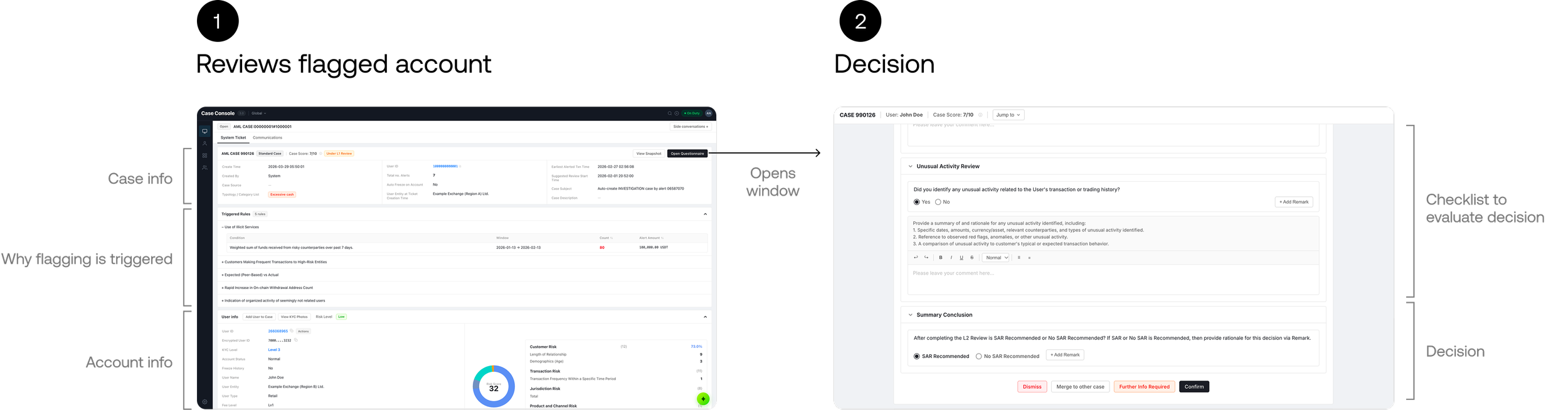
How does a case investigation work?
// Learning their workflows
Focus group with analysts
I ran a focus group with four analyst team leads from Singapore, Malta and the US to understand how they investigate cases.
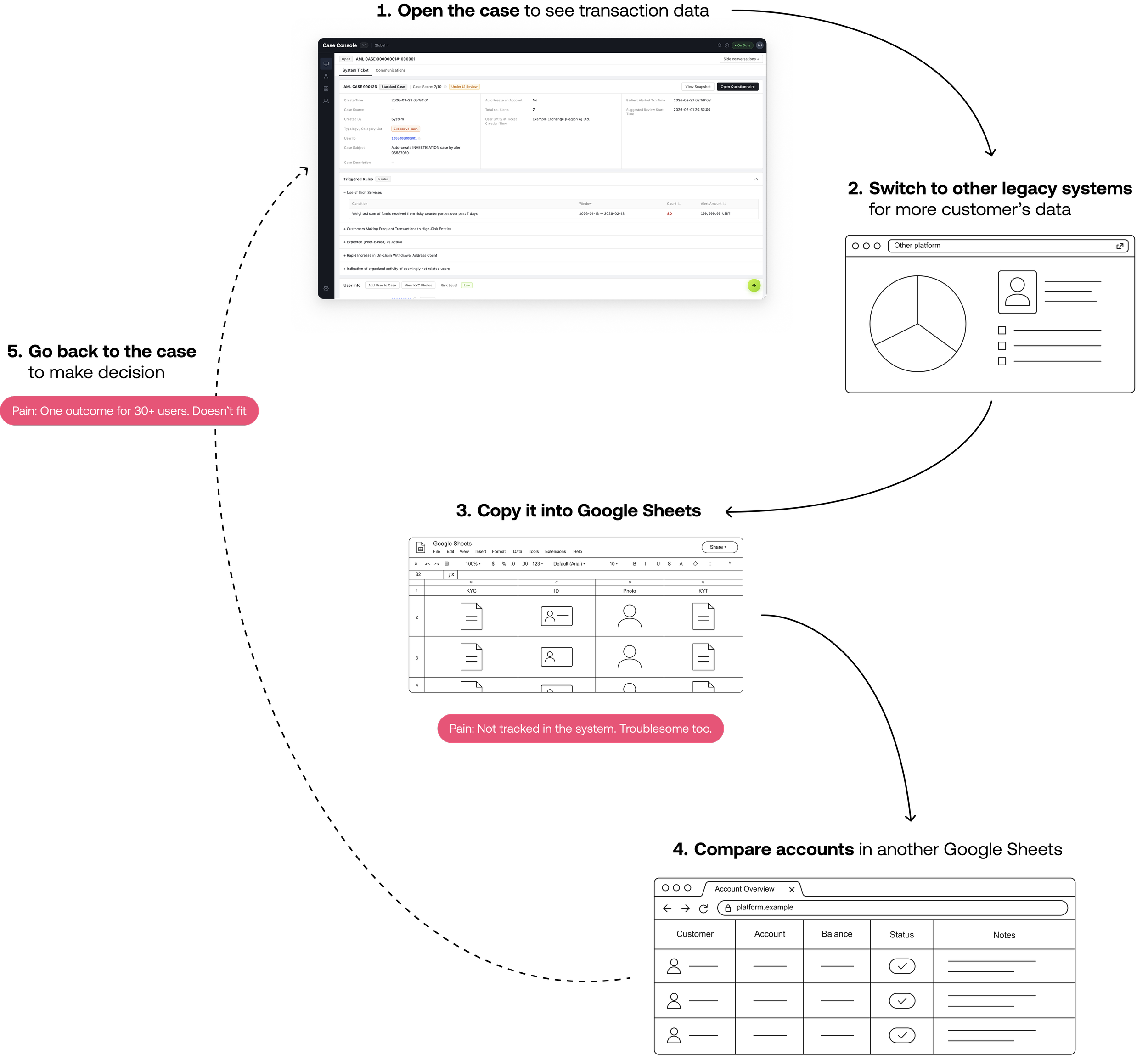
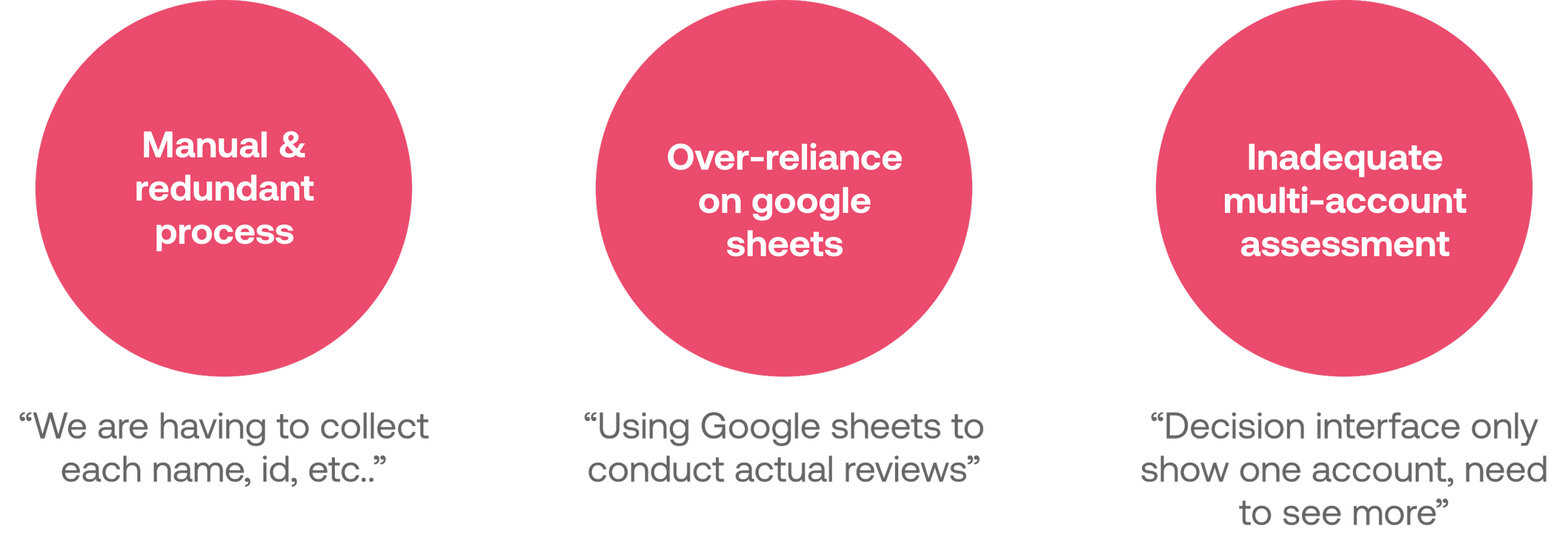
Pain points in a summary
// CMS 1.0 - Design to scale
Three improvements for multi-account investigations
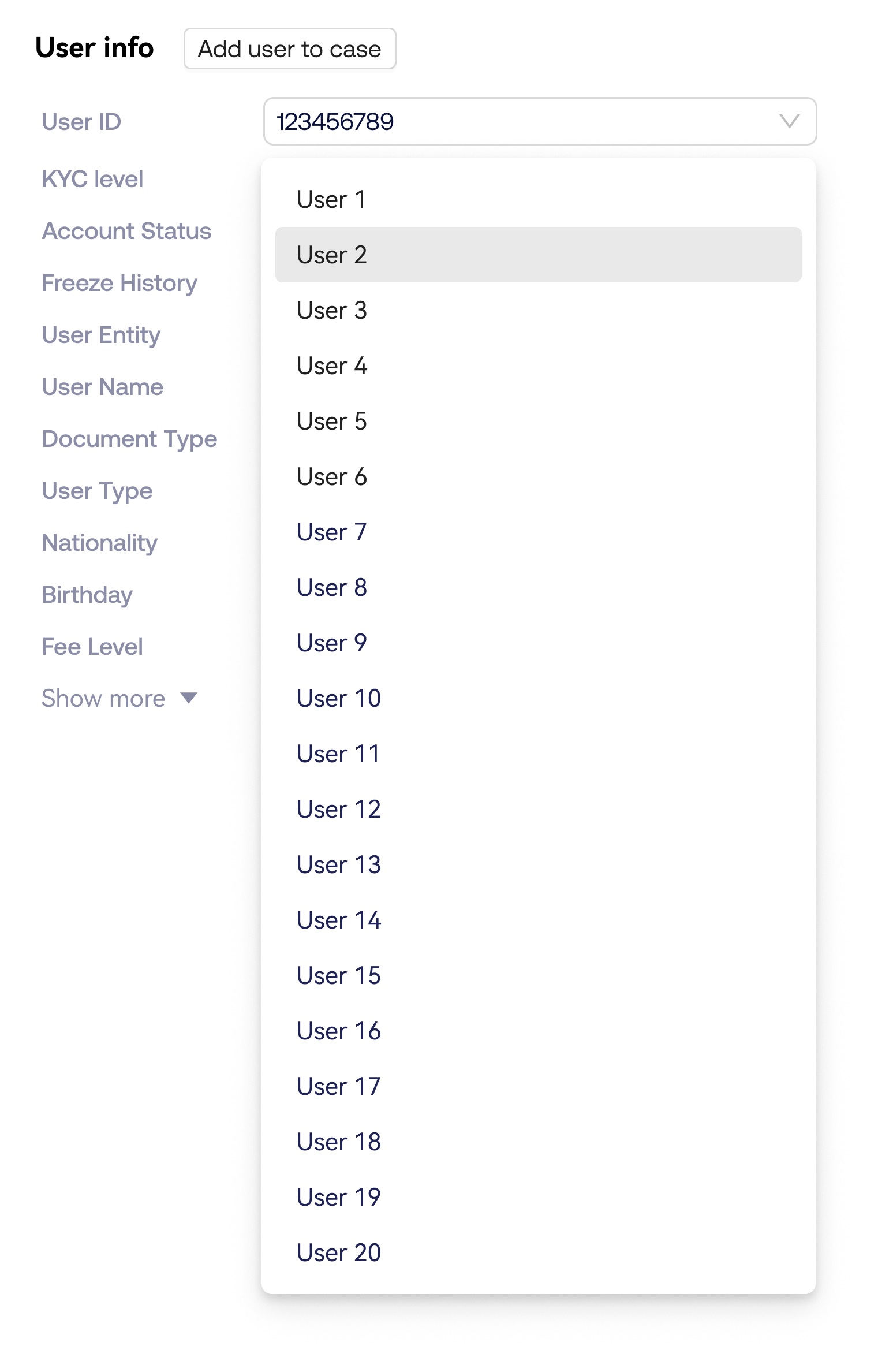
Before:
Each account was its own isolated view
No way to compare across them. Findability also an issue with so many users within the dropdown.
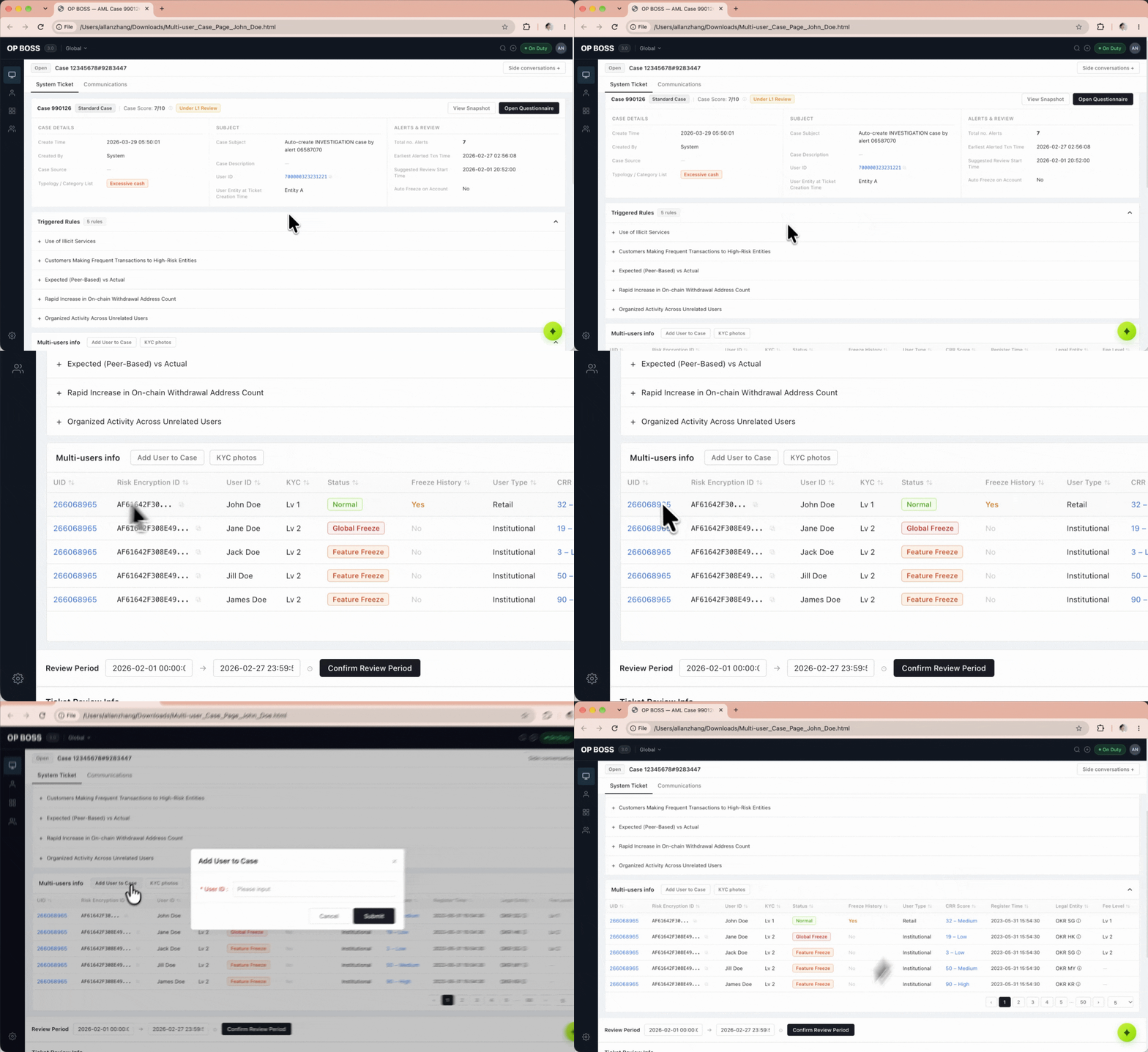
After:
Multi-account comparison table
Compare information across 30+ accounts in one view.
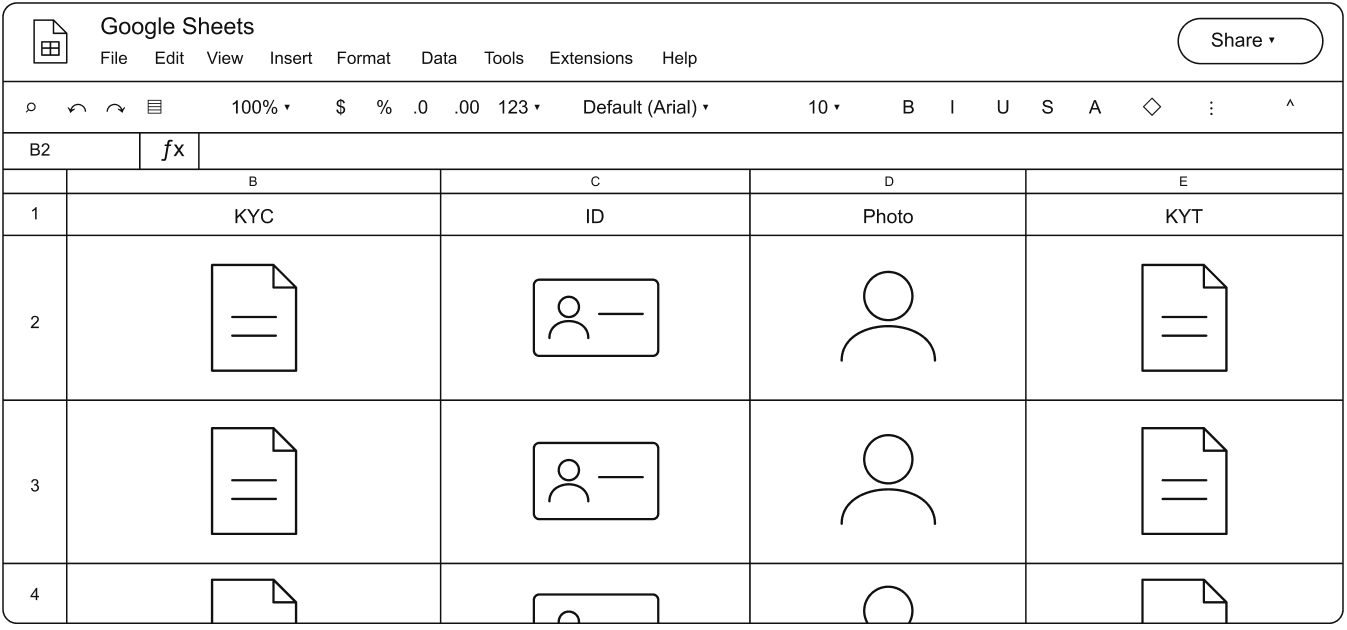
Before:
Identity documents lived in a separate system
Investigators were switching tabs to verify each account manually.
After:
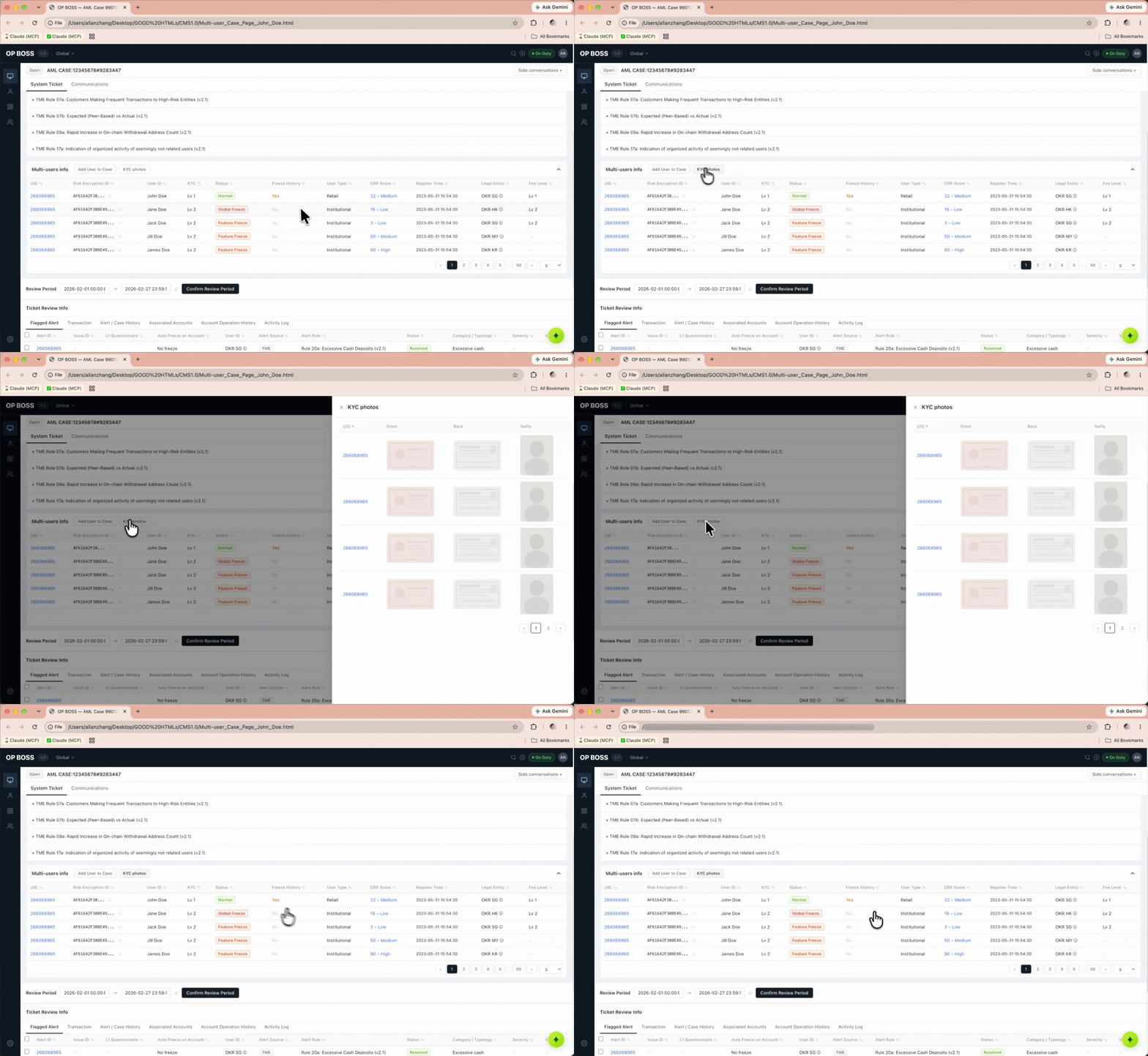
Bulk KYC viewer & progressive disclosure
ID front, back, selfie all included now in the case platform. Surface it on demand without cluttering main investigation panel.
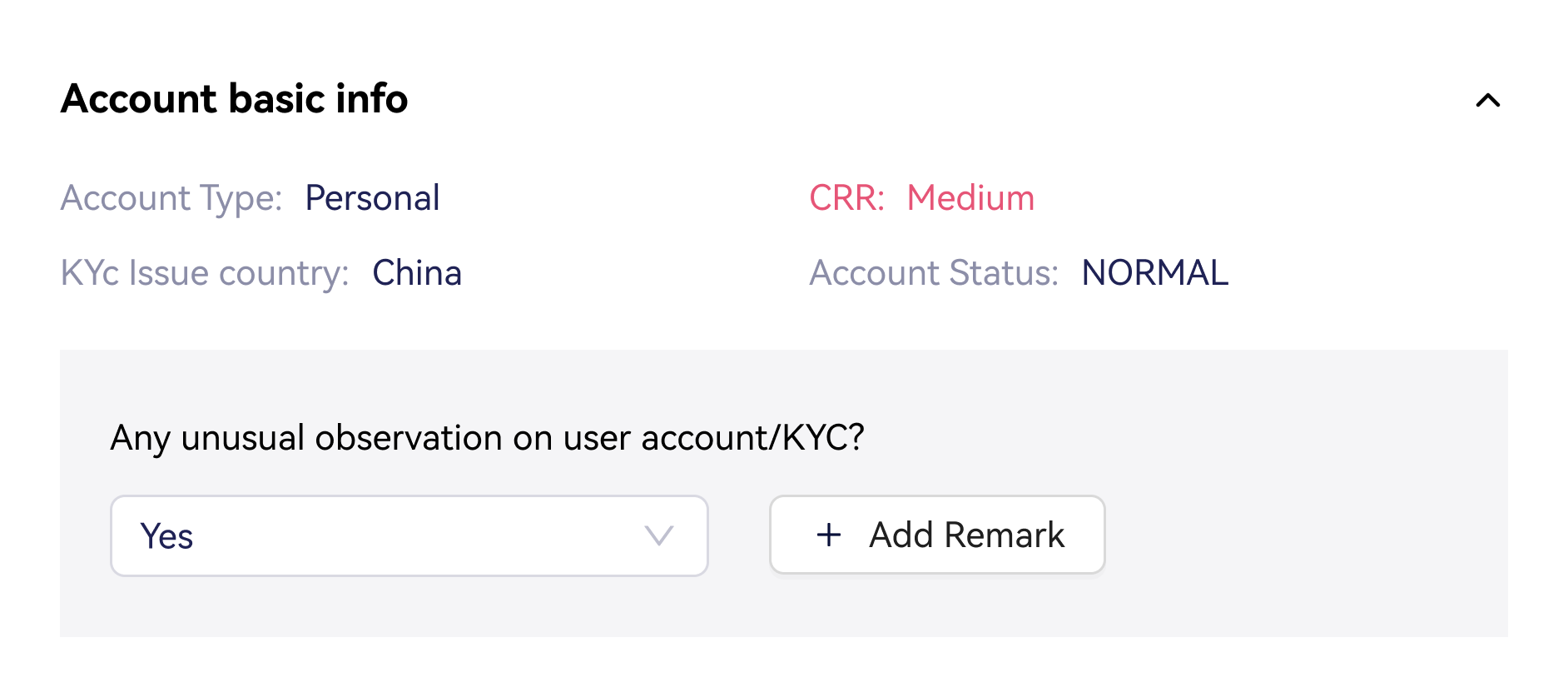
Before:
The system had one outcome for the whole case
But compliance filings and offboarding decisions need to be made per account.
After:
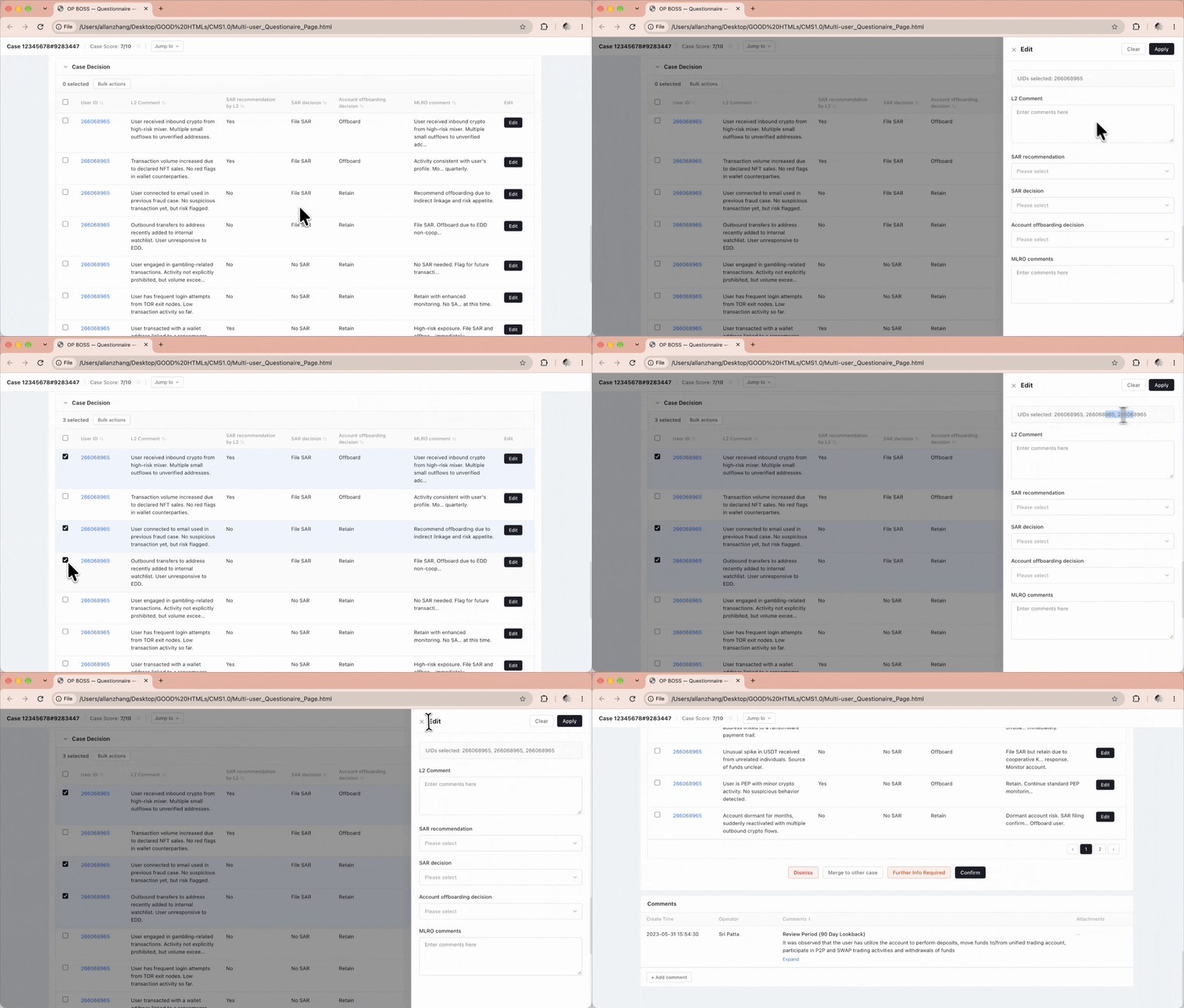
Per-account decision table
Compliance filing and offboarding outcomes made per account, bulk apply function and with individual traceability.
// Service design
Connecting workflows across user roles
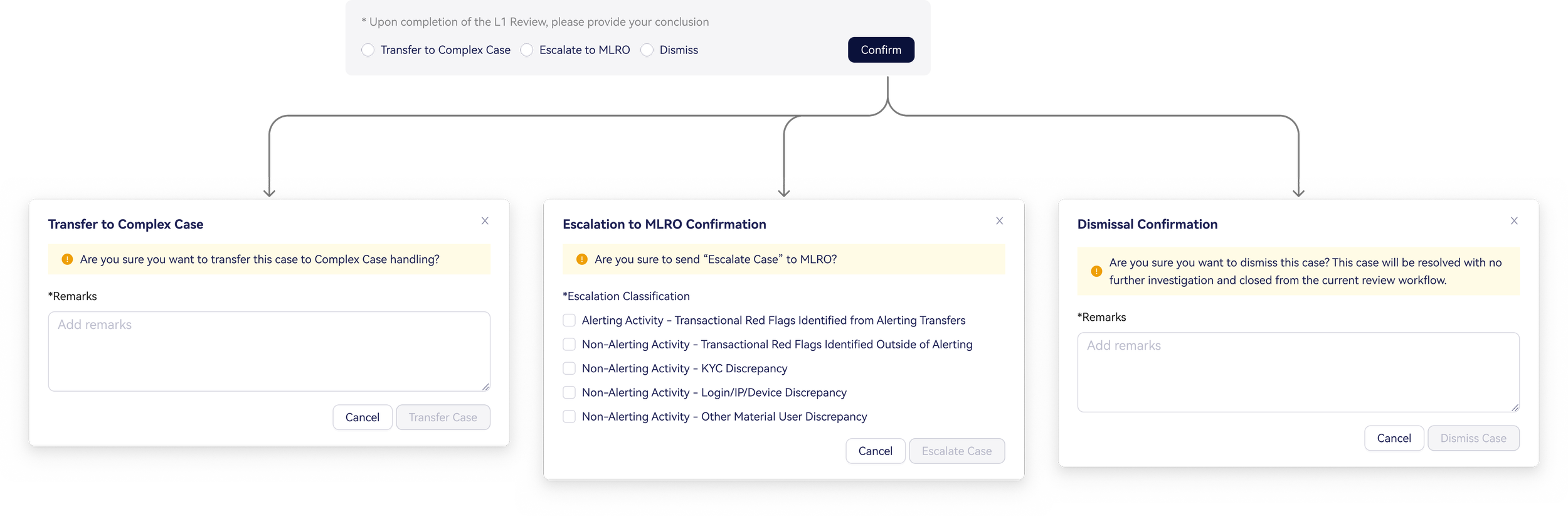
I spoke with different users to understand their responsibilities, decisions and handoffs, then brought their workflows together into one connected investigation process.
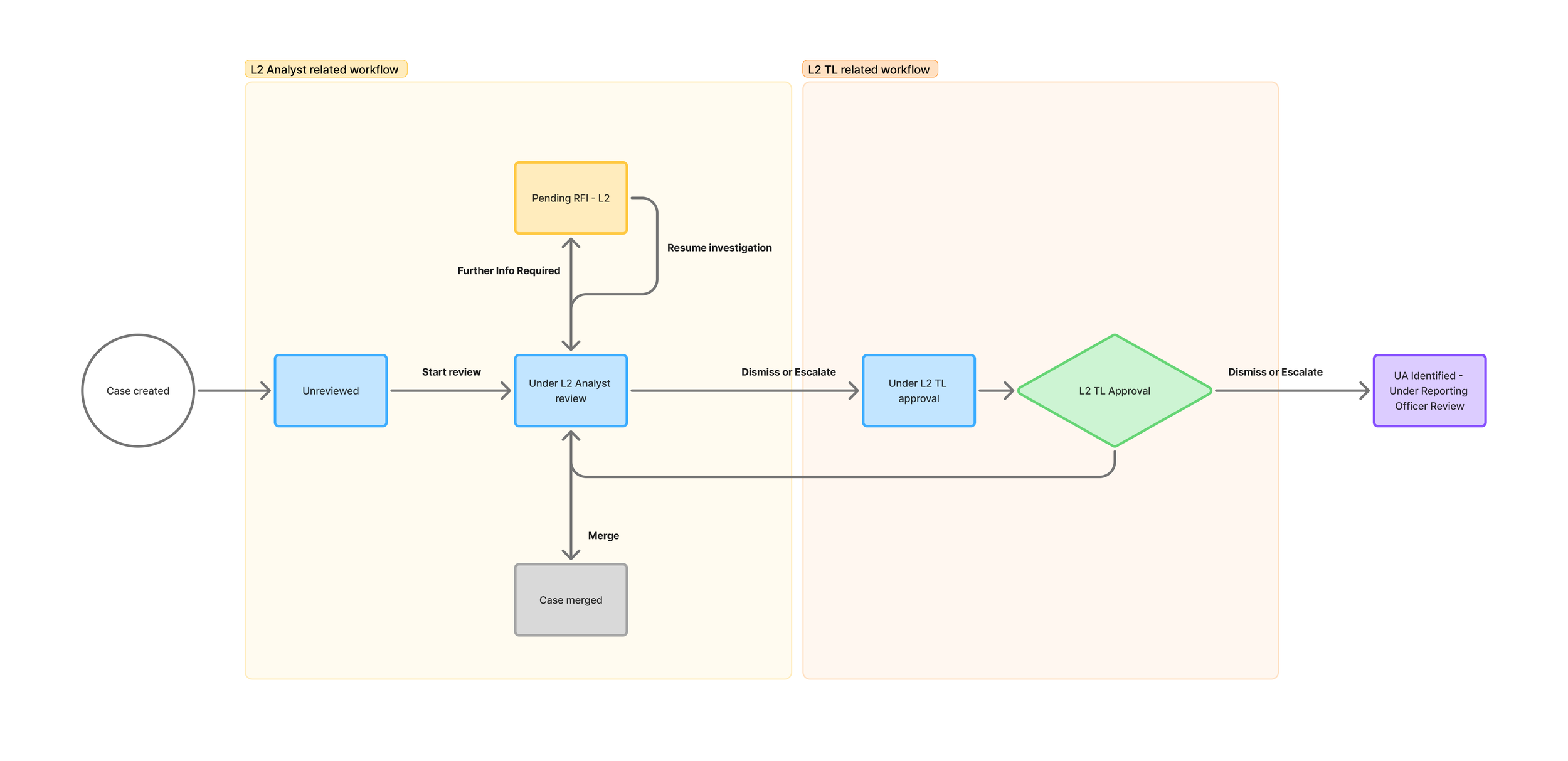
That understanding allows me to design the different workflow states, scenarios, handoffs
Phase 1 outcomes
〰️
Phase 1 outcomes 〰️
~90K
cases reviewed through the improved workflow
100%
of case decisions recorded with an audit trail
No more
Google Sheets needed for investigations
Version 2
•
Design for speed
•
Version 2 • Design for speed •
The remaining challenge:
Investigation time
We expected CMS 1.0's workflow improvements to also reduce review time significantly. While investigation coverage improved, cases still took around 90 minutes to review.
With the backlog growing, we explored how AI could reduce manual investigation work.
// First AI attempts
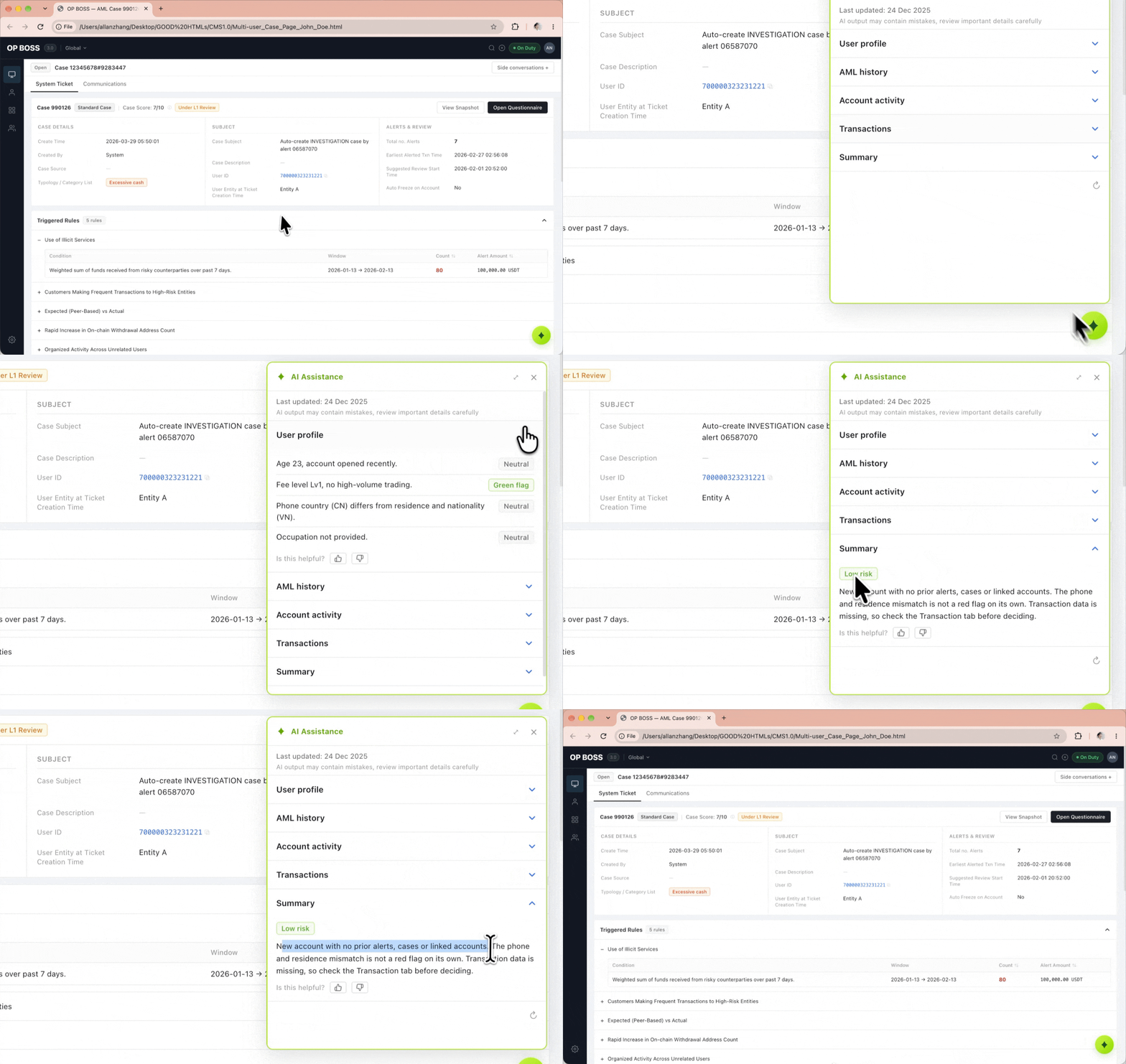
Two AI attempts that didn’t cut review time
1. AI summary popup
Analysts couldn't verify the AI's conclusions without repeating the investigation, so it didn't save time.
2. AI confidence score
Analysts didn't agree with the scoring criteria, making the recommendations difficult to trust.
What already worked
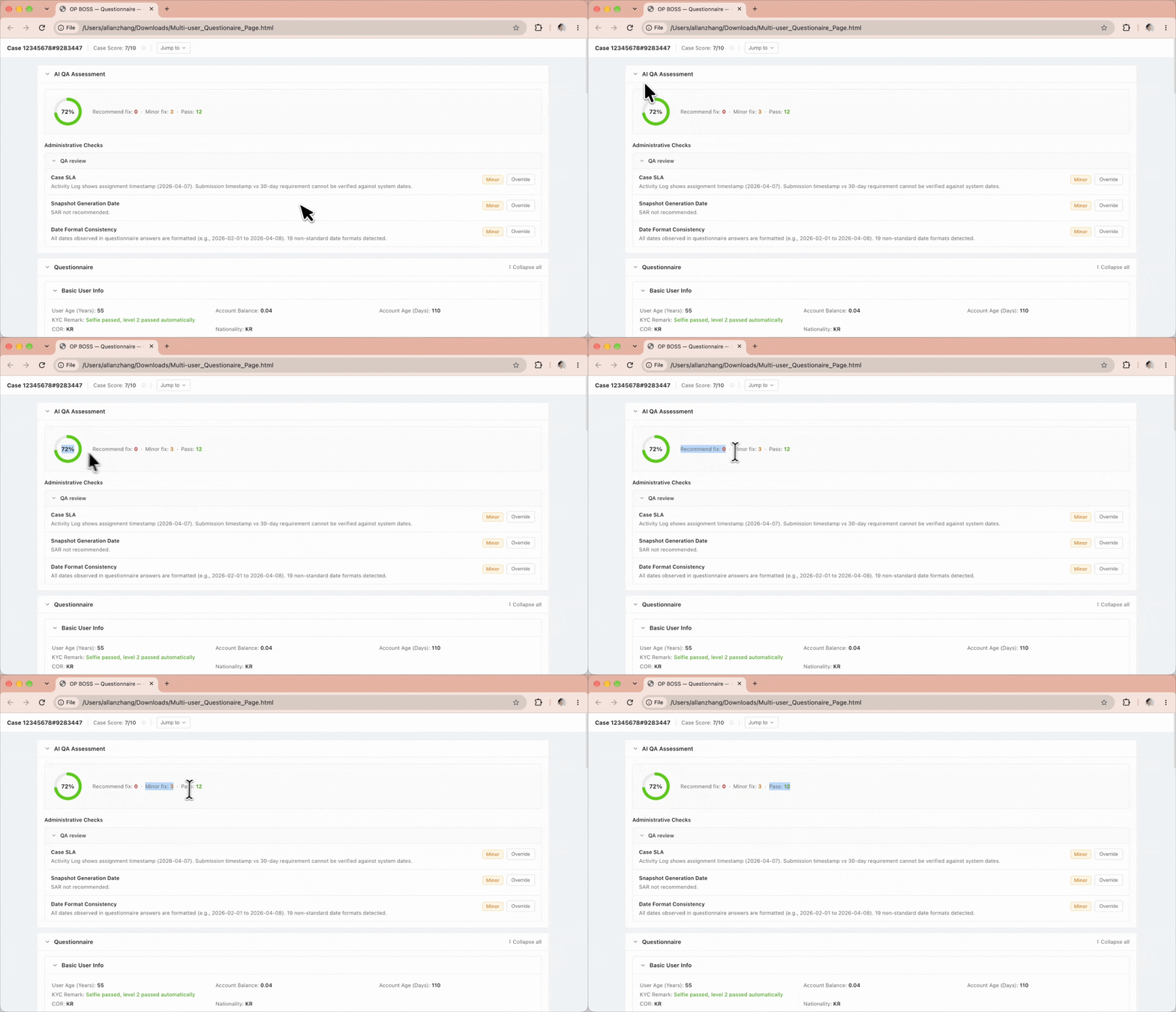
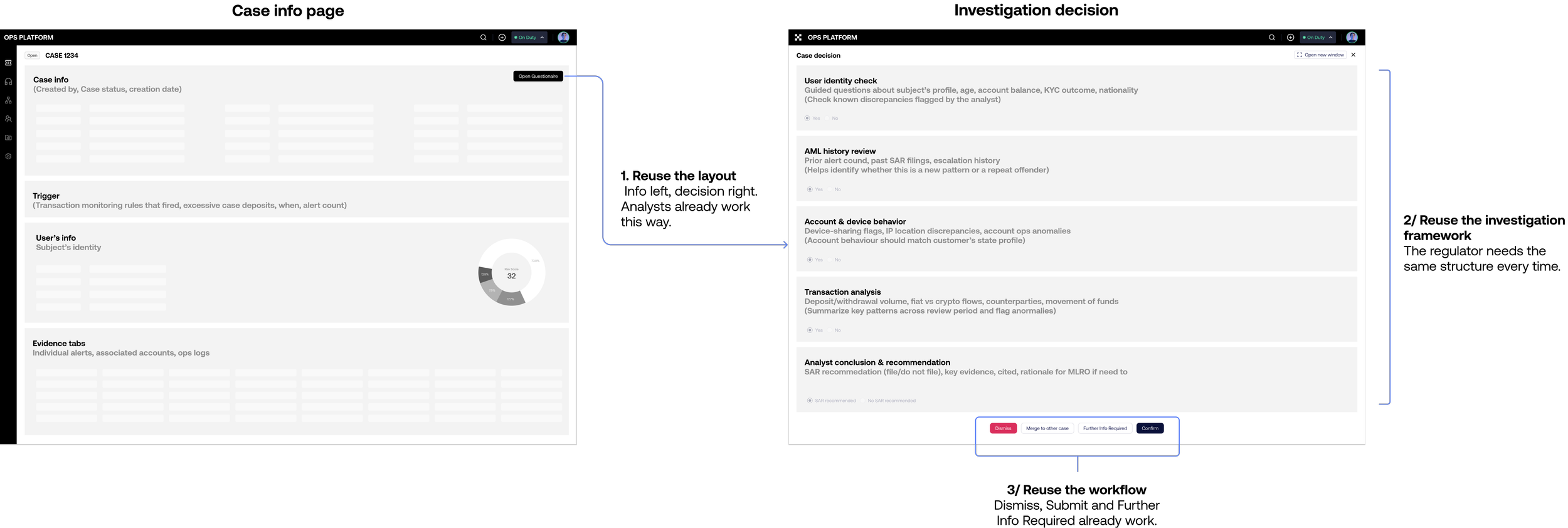
I shadowed analysts in Kuala Lumpur to understand which parts of CMS they relied on. We kept those familiar workflows and introduced AI without rebuilding the entire experience.
// New CMS 2.0
Designing a modular AI Co-Pilot
The AI co-pilot suggests investigation steps that analysts can edit like LEGO bricks. If a step doesn’t make sense, they can change it, remove it, or add their own. They can fix the part they disagree with and keep the rest.

Above is an interactive html prototype I’ve created.
// Design rationale
AI UX trade-off
Option 1 - Analyst-led
More control, but limited time savings.
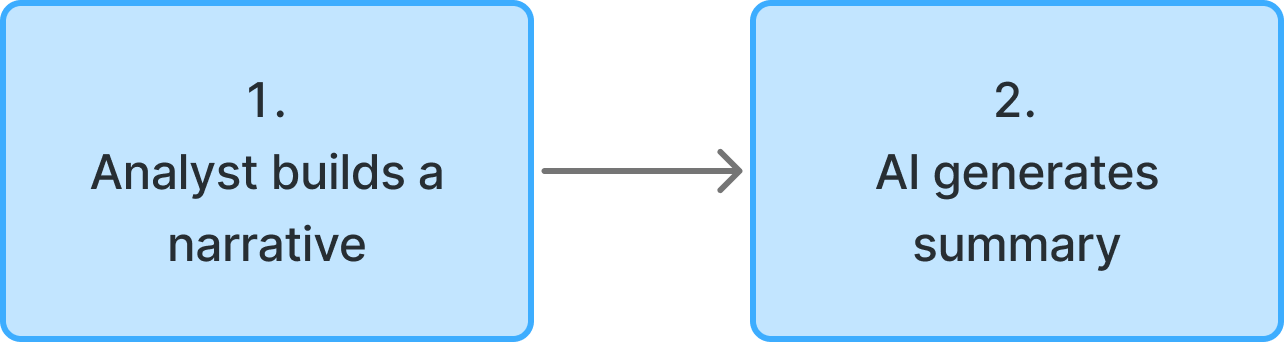
Option 2 - AI-led (chosen)
AI drafts the investigation for analysts to review and refine.
After discussing with my PM, we chose AI-led to improve efficiency while keeping analysts in control.

// After launch
AI design patterns
After launch, we tracked where the AI narrative broke down and turned the fixes into reusable patterns.
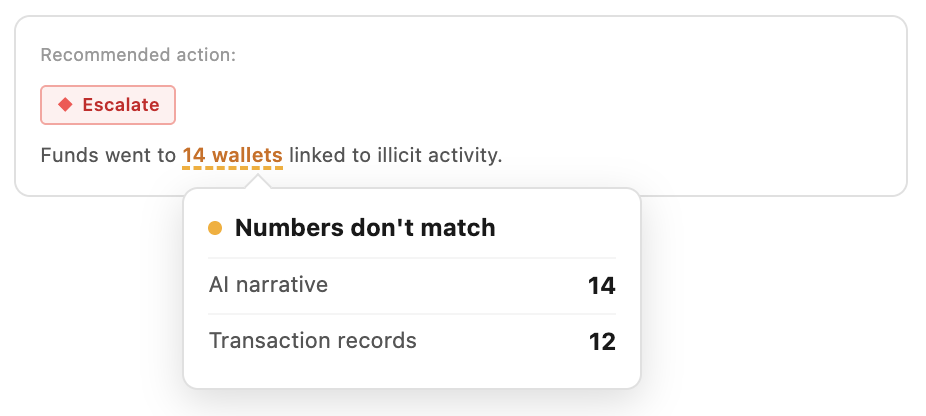
1. Mismatch flags
When the AI gets a number wrong, we underline it. Click to see the right one
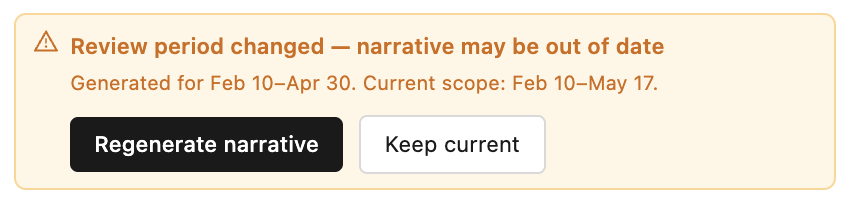
2. Out-of-date banner
When the review period changes, we flag that the narrative is out of date and offer to regenerate.
// After launch
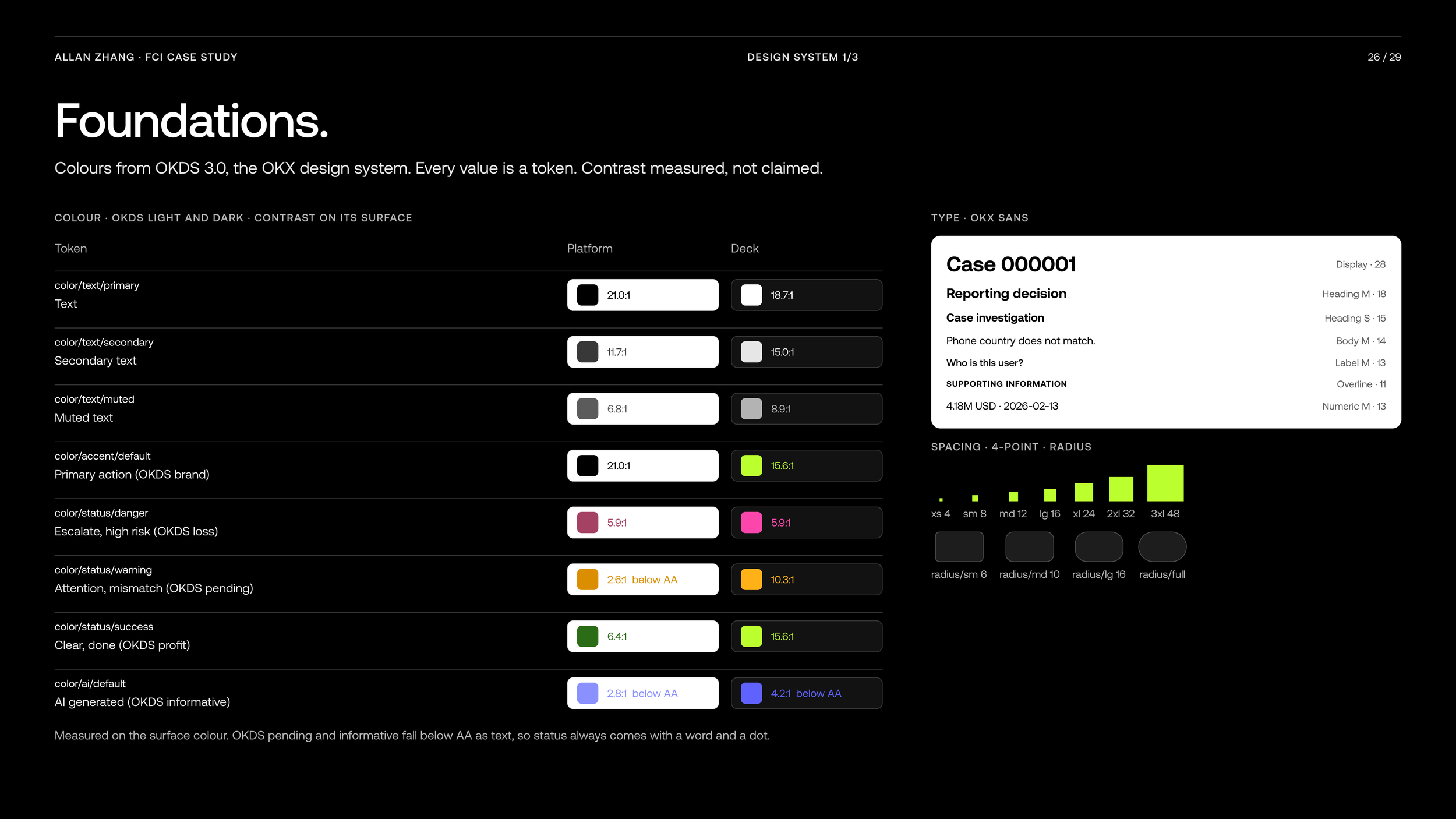
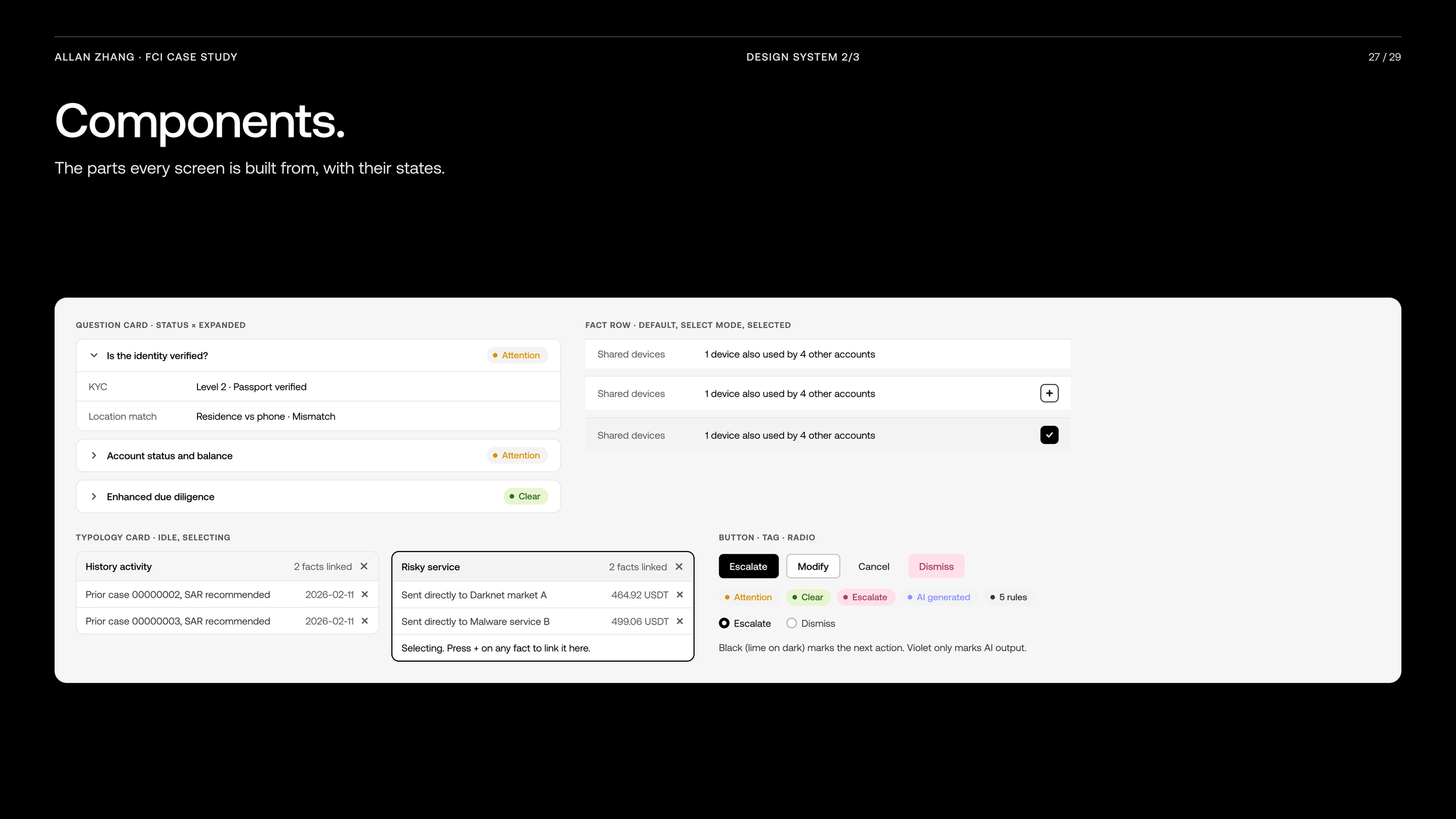
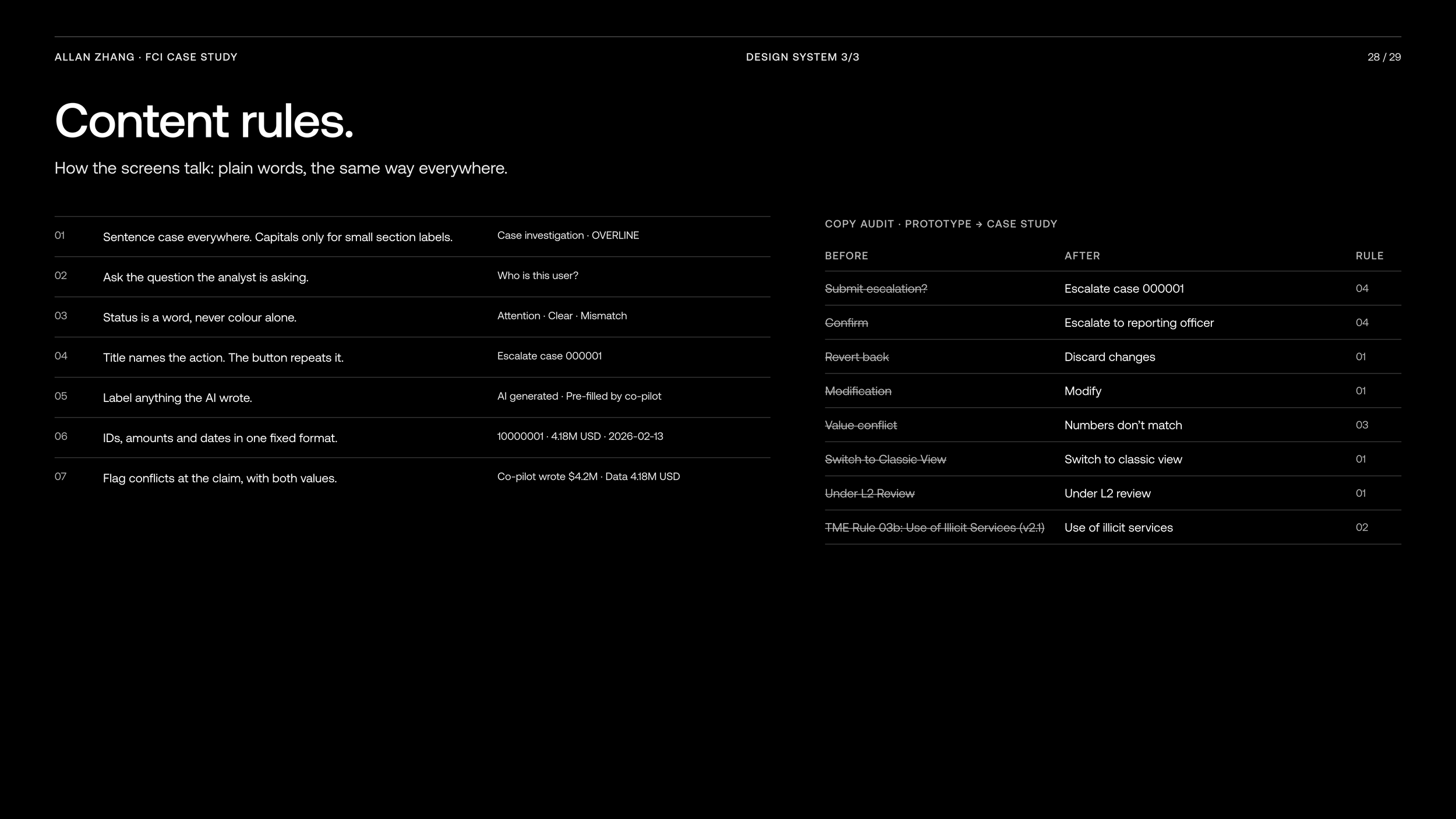
Reconstructing for AI-native design system
Phase 2 outcomes
〰️
Phase 2 outcomes 〰️
40%
average case handling time cut
(90mins → 54mins)
Cleared
backlog without adding headcount
Consistent
reviews across all analysts
// Closing
What I’ve learnt
1. Design is never finished.
User needs evolve, and what works today may need to change tomorrow.
2. Know when to rethink the platform.
Incremental improvements have their limits. Sometimes, a bigger redesign is needed to solve the underlying problem.
3. Better workflows don't always mean faster workflows.
We expected CMS 1.0 to significantly reduce investigation time. It improved how analysts managed complex cases, but meaningful time savings only came with CMS 2.0.