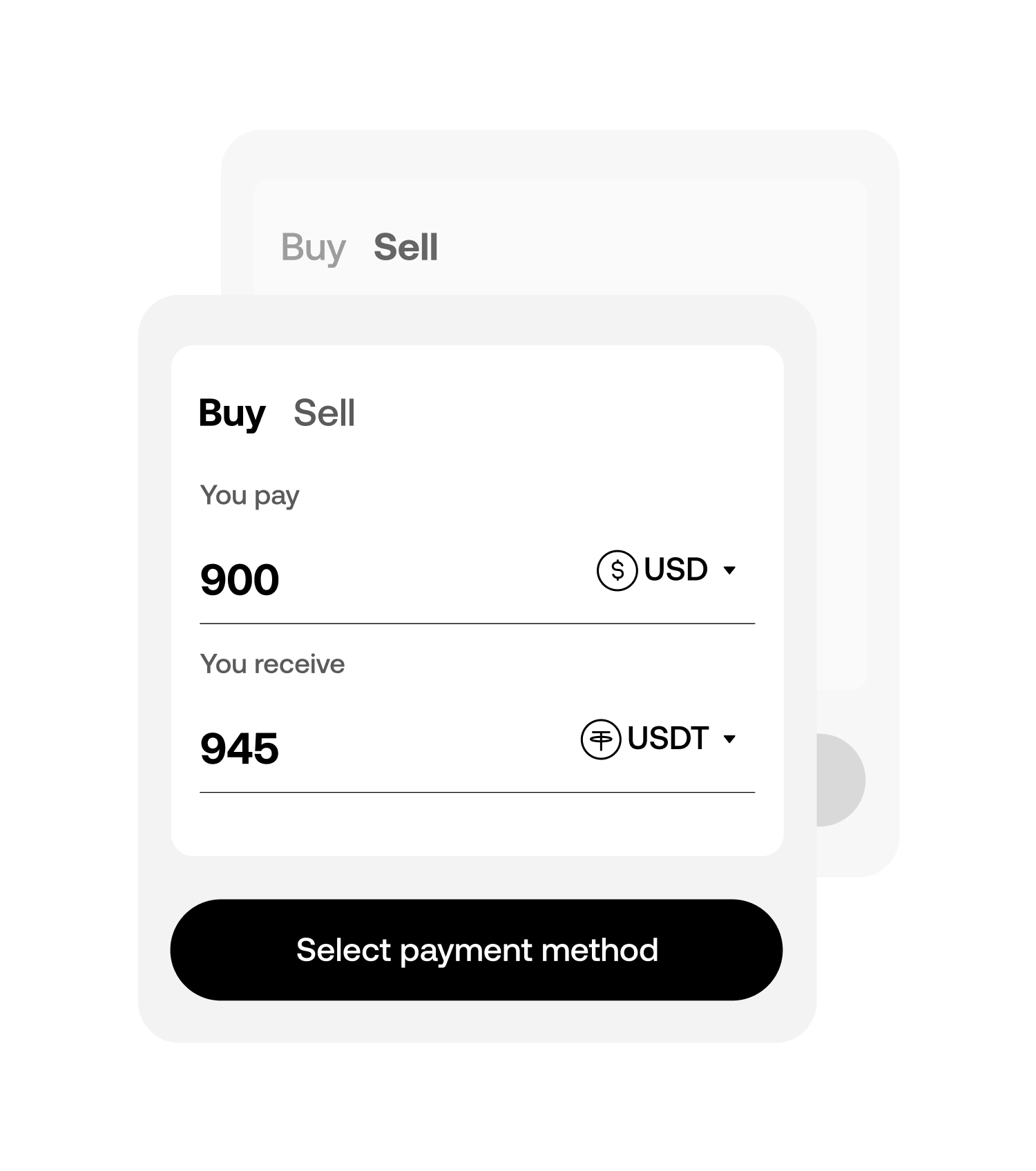
P2P new user adoption
Peer-to-Peer (P2P) trading is OKX’s only fiat on‑ramp offshore.
How can I as a PD raise mass user adoption?


Role
Product Designer
(The only PD back in P2P squad)
Scope
Repositioning • Concepts • Shipping • Measure
Inherited
An already existing P2P flow
Markets
CNY (focus), VND, offshore
What is P2P?
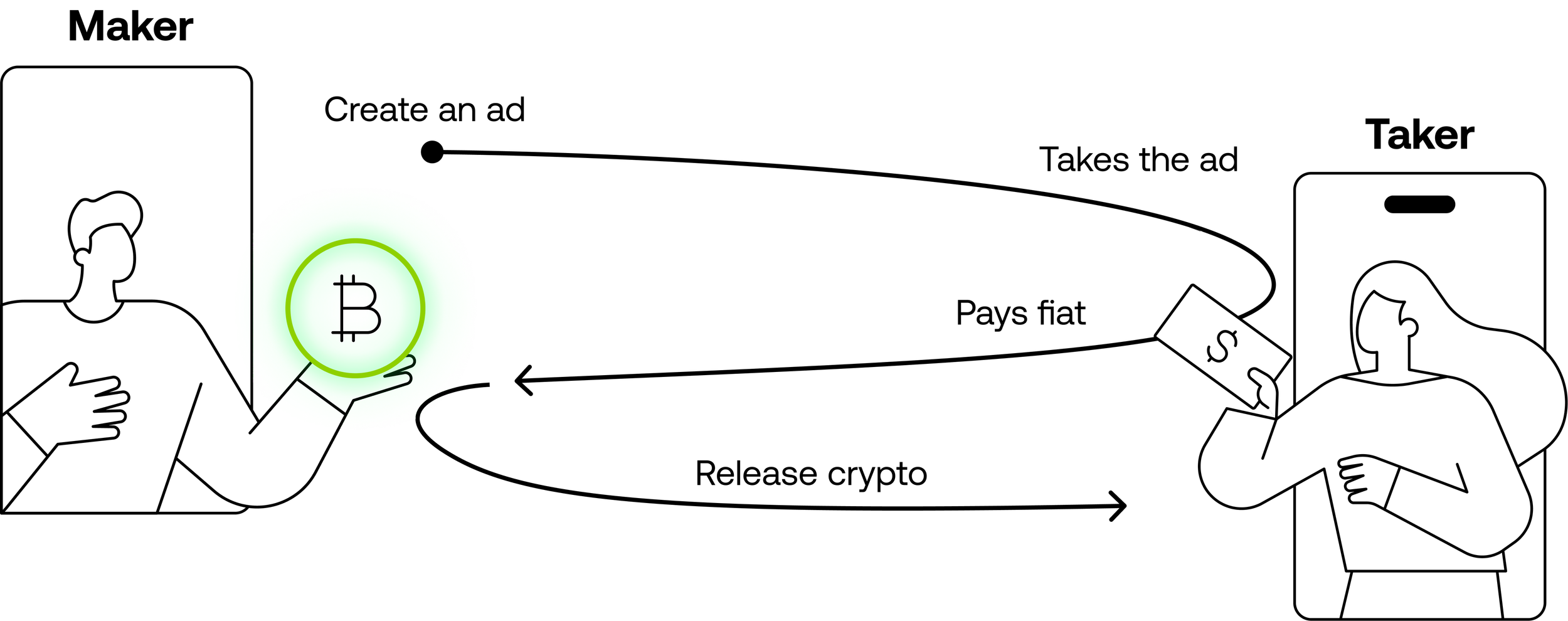
P2P stands for Peer-to-Peer trading. The concept is same like Facebook Marketplace. This marketplace that allows users in offshore or underserved markets to buy and sell cryptocurrency directly with each other
Hey Allan, this Q’s OKR is to increase new user adoption.
Okay PMs. Let’s discuss.
01/Objective
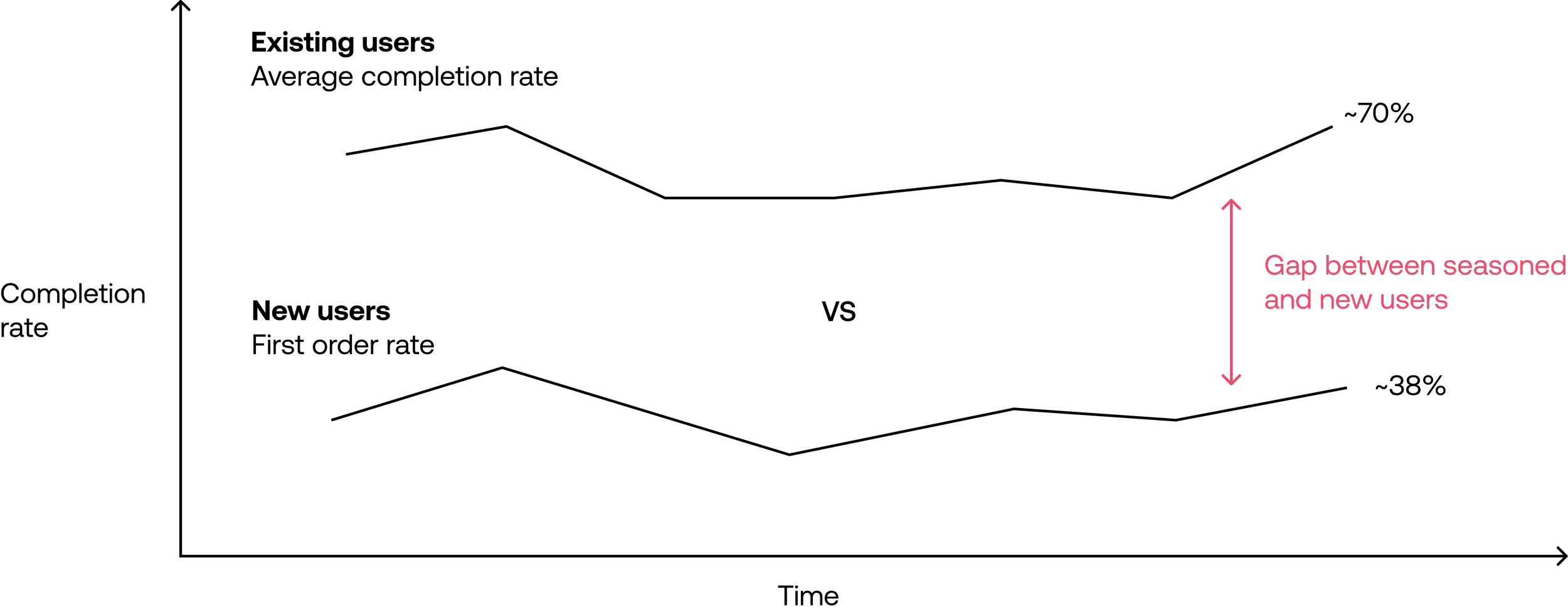
Looking at data to understand our 1st-time completion rate
For the platform to grow, new users must successfully complete their first trade.
It wasn’t converting worse. It was converting worse for new users only.
Starting point
~38%
New user first‑order completion on Express.
Target
~70%
Parity with experienced users
Current gap
32pt
Gap between experienced and new users
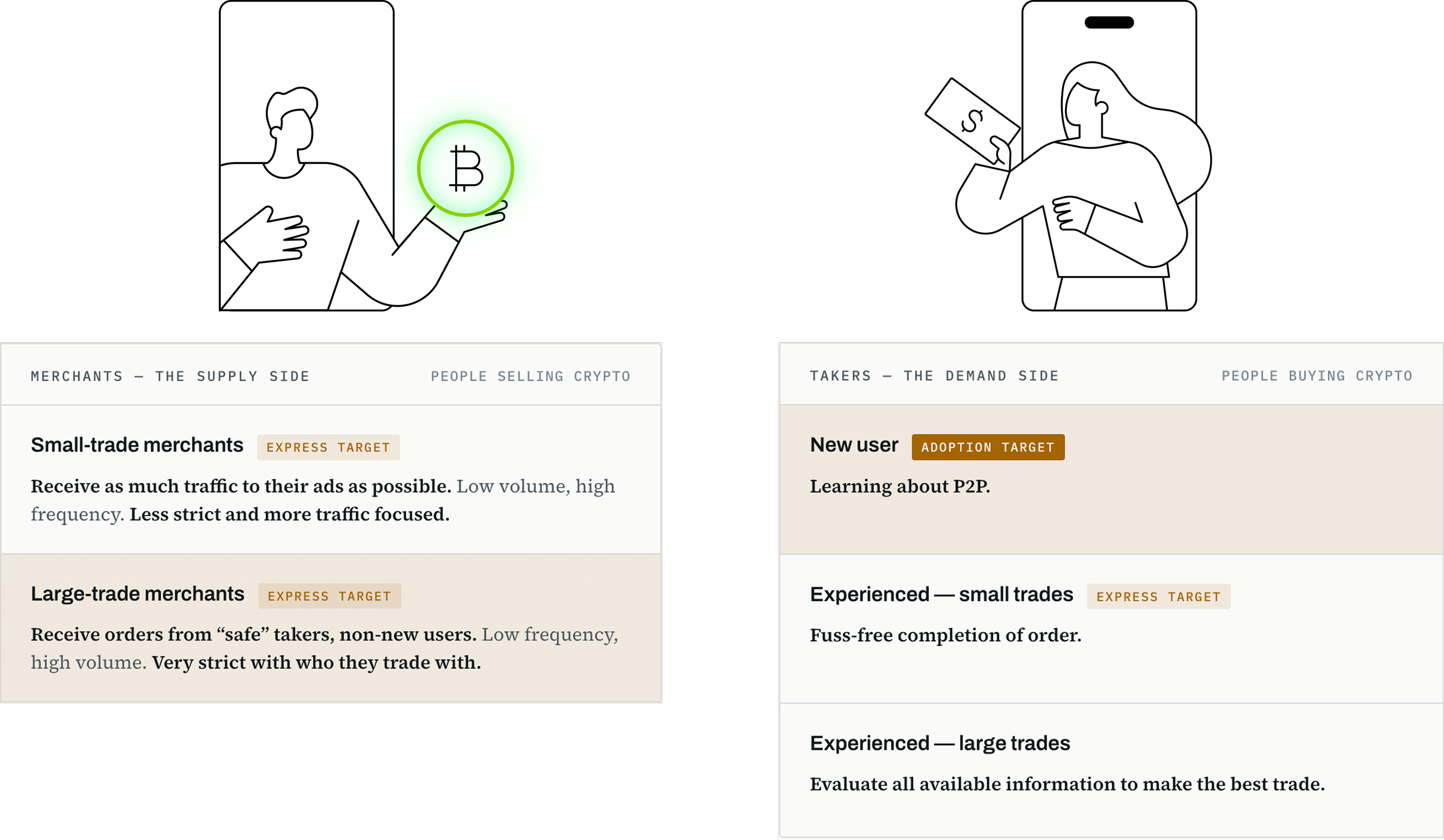
02/ The users
Assessing how designing for 1 segment affects other segments
When designing for 1 segment, it’s good to consider whether how it affects other segment because they could be sharing the same flow, and also how the counterparties in this case can affect our key segment users for this project.
03/ Pain points
A series of user interview to map out users pain points
Together with our researcher, we moderated research with 6 new-to-P2P users across Vietnam, Argentina, Philippines, and Thailand recruited from our existing user panel, incentivised. We combined heuristic audit with direct user sessions.
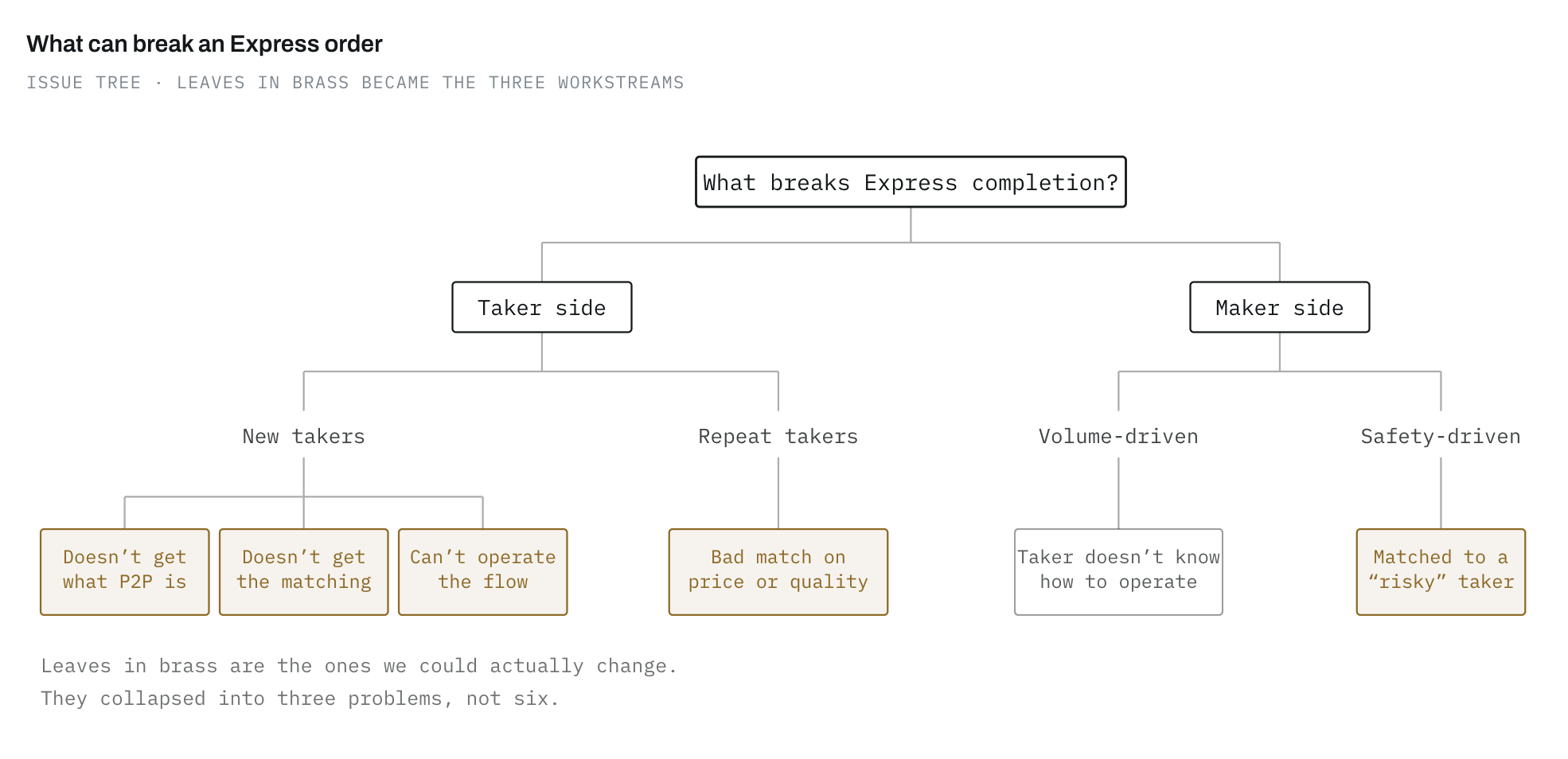
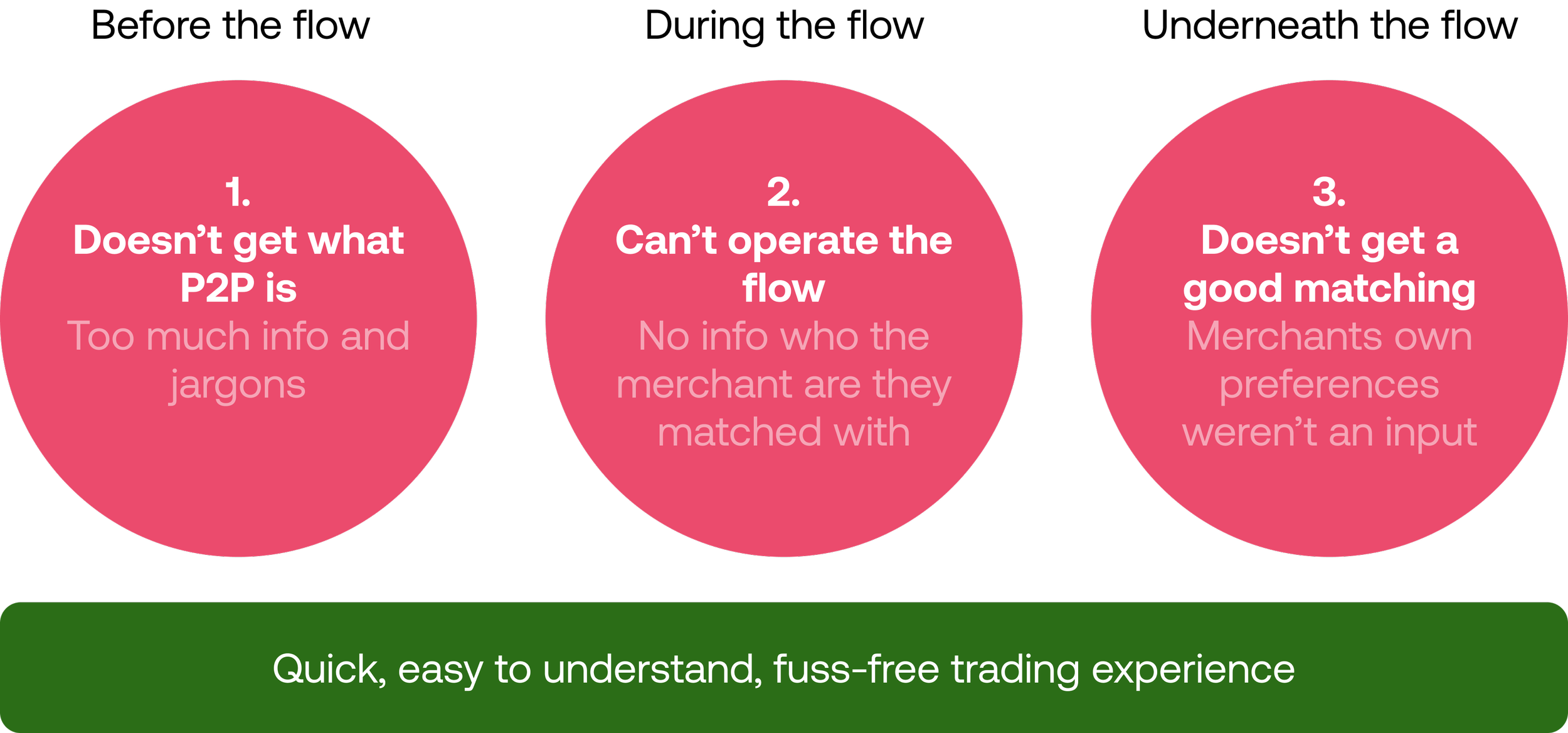
3 problems to resolve for better user completion rate
04/ User testing
Problem 1: Doesn’t get what P2P is
Research findings
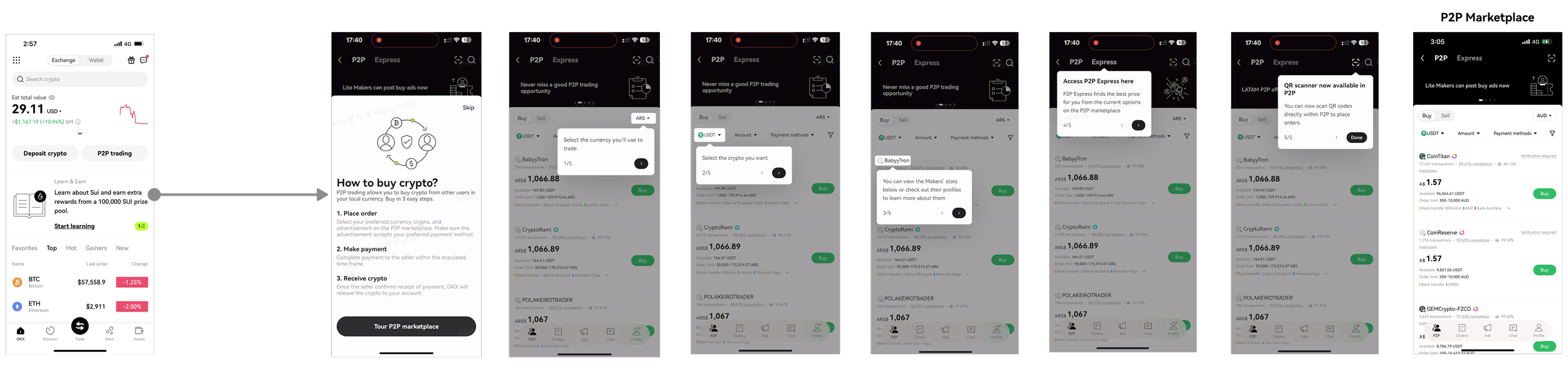
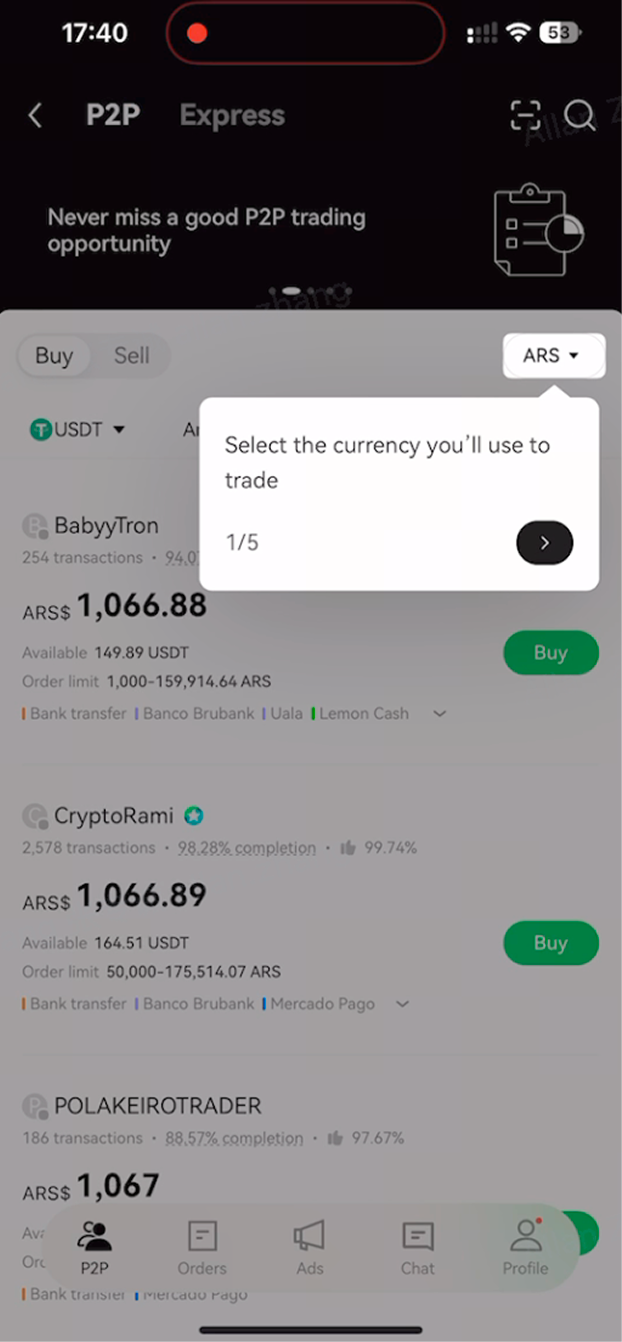
Coachmarks are ineffective in getting users to understand and recall what P2P Express is. Despite reading “P2P express find the best price…” 7 out of 10 newbies still mistook Express as a “shortcut” or “Search engine”
05 /The designs
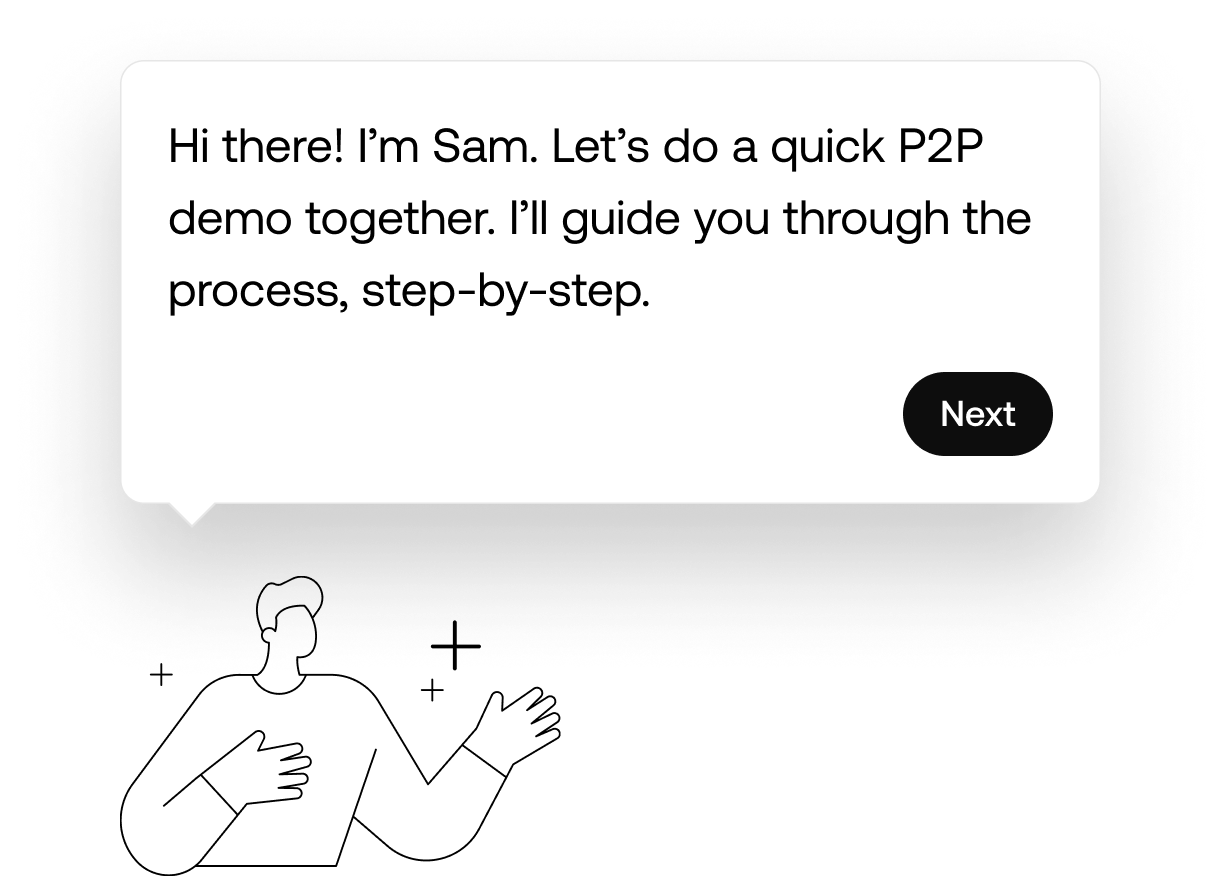
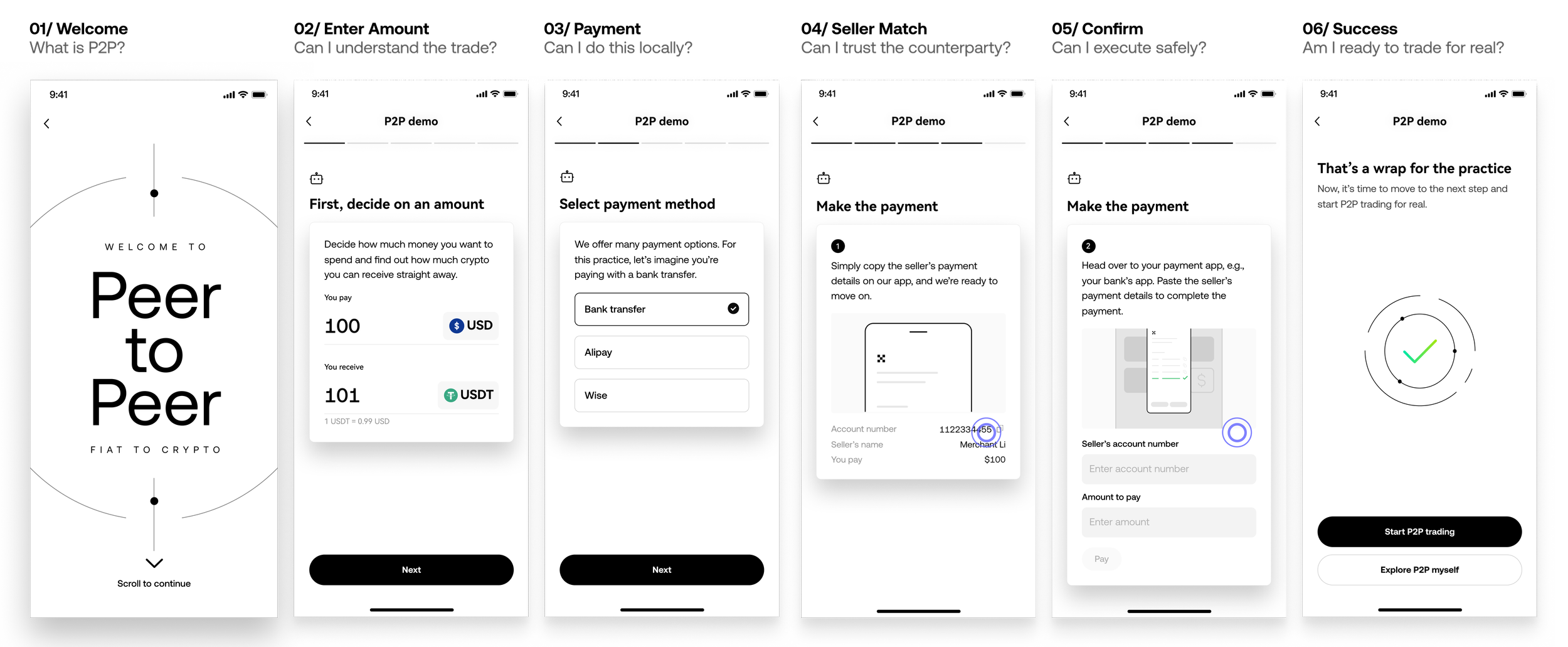
Designing a step-by-step practice
No coachmarks/confusing jargons. Go step-by-step, focusing on key points they need to understand.
Encourages users to use P2P express as main-flow.
06/More designs
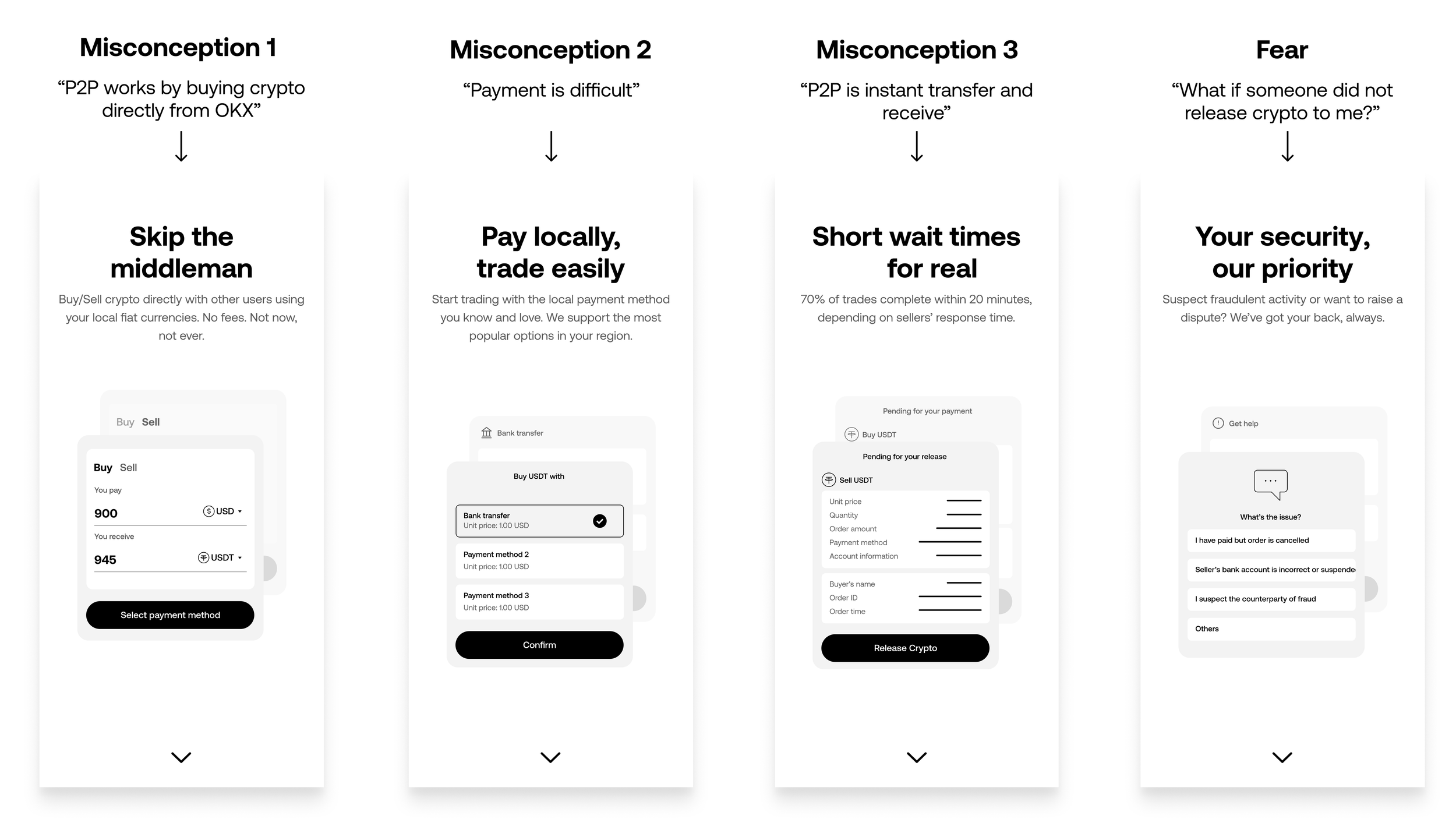
Addressing user fears
Besides designing for user ease and usability, we also need to relook into the psychology of new users trading, and addressing these fears or misconceptions.
07/ Recap
Tradeoff recap
Rejected approach
Explanatory onboarding
Tell them how it works
- Long tutorial video
- Static coachmarks
- Long explainer page
Strength: scalable, cheap to produce.
Weakness: weak for procedural learning — the user reads, then meets the real UI cold.
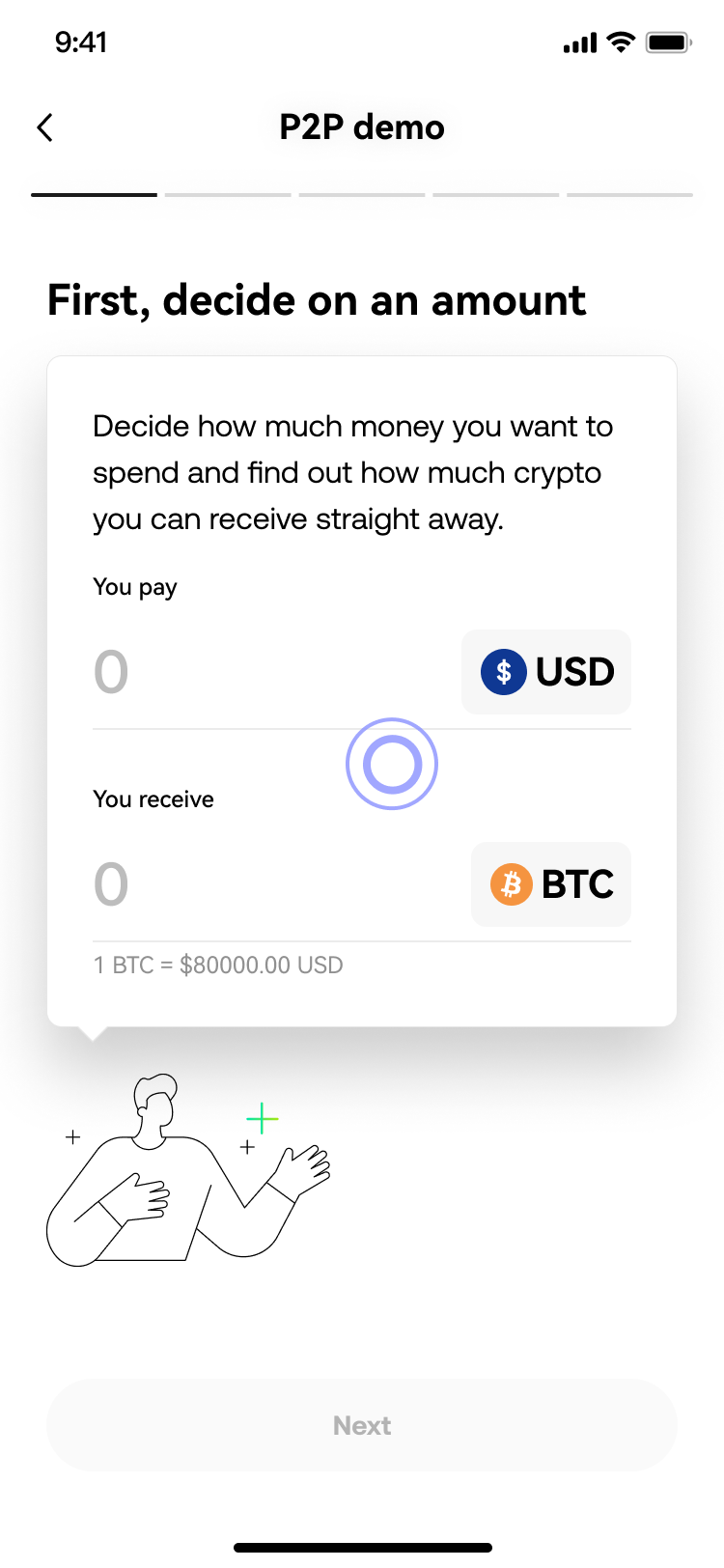
Chosen direction
Interactive walkthrough
Let them do it once, safely
- Simulated real trade flow
- Tap‑through interaction
- Demo mode with zero risk
Strength: strong for procedural learning, the user exits having completed a trade.
Weakness: higher design and engineering cost.
08 / Fixing “during” journey
Problem 2: Cannot operate the flow
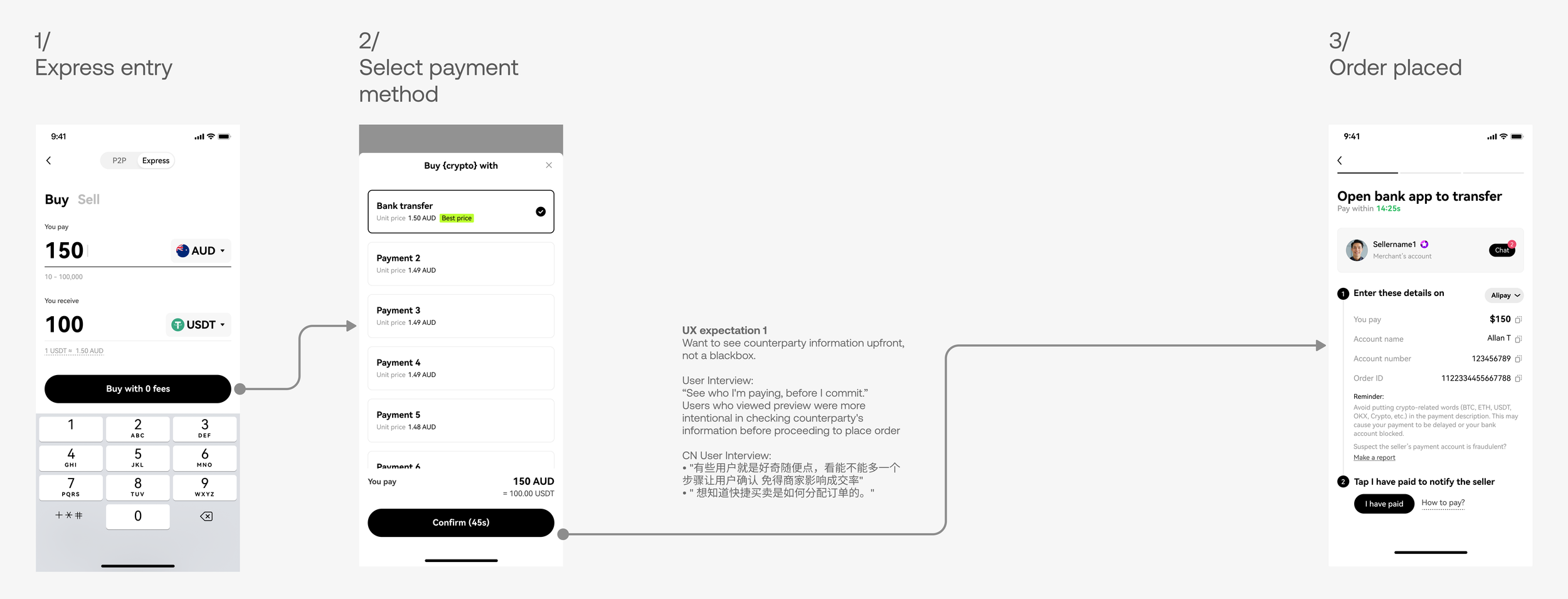
Previously
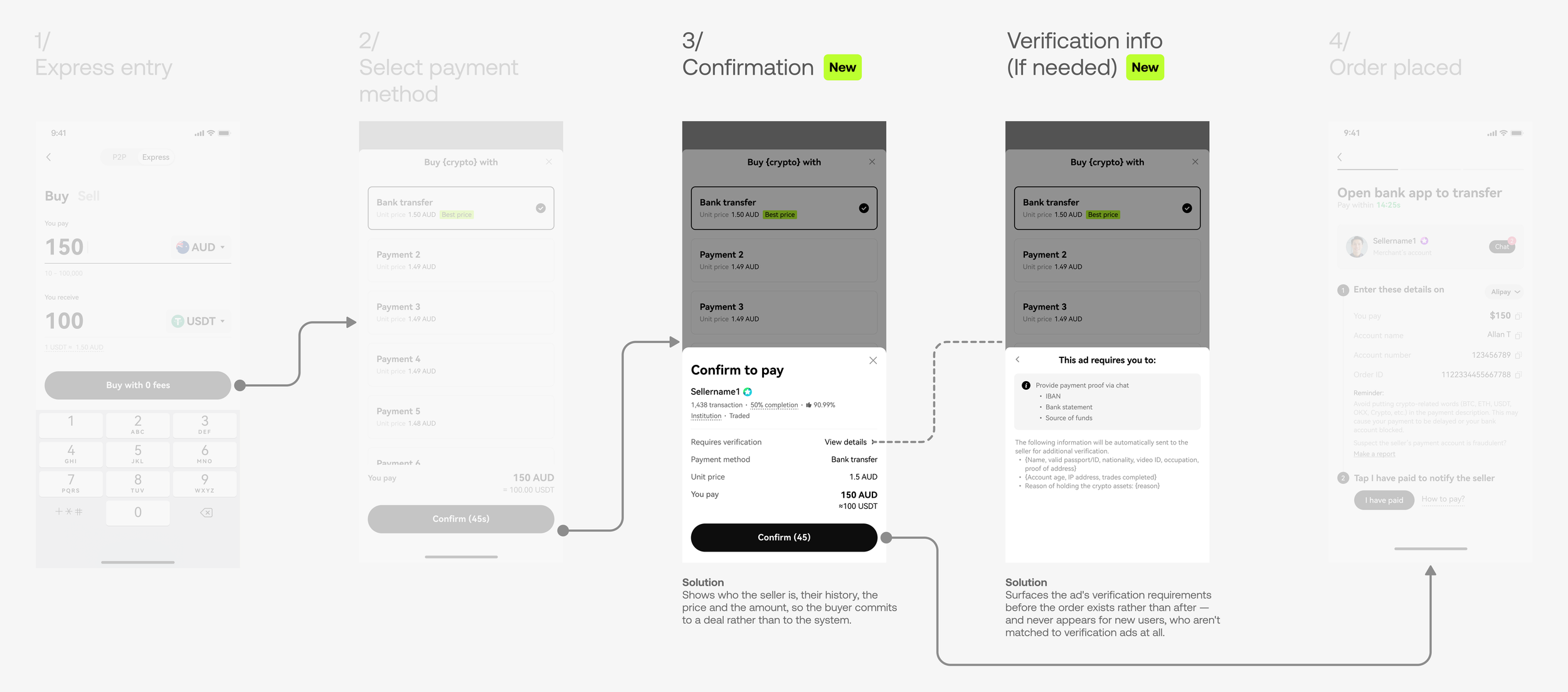
Solutions
Localization
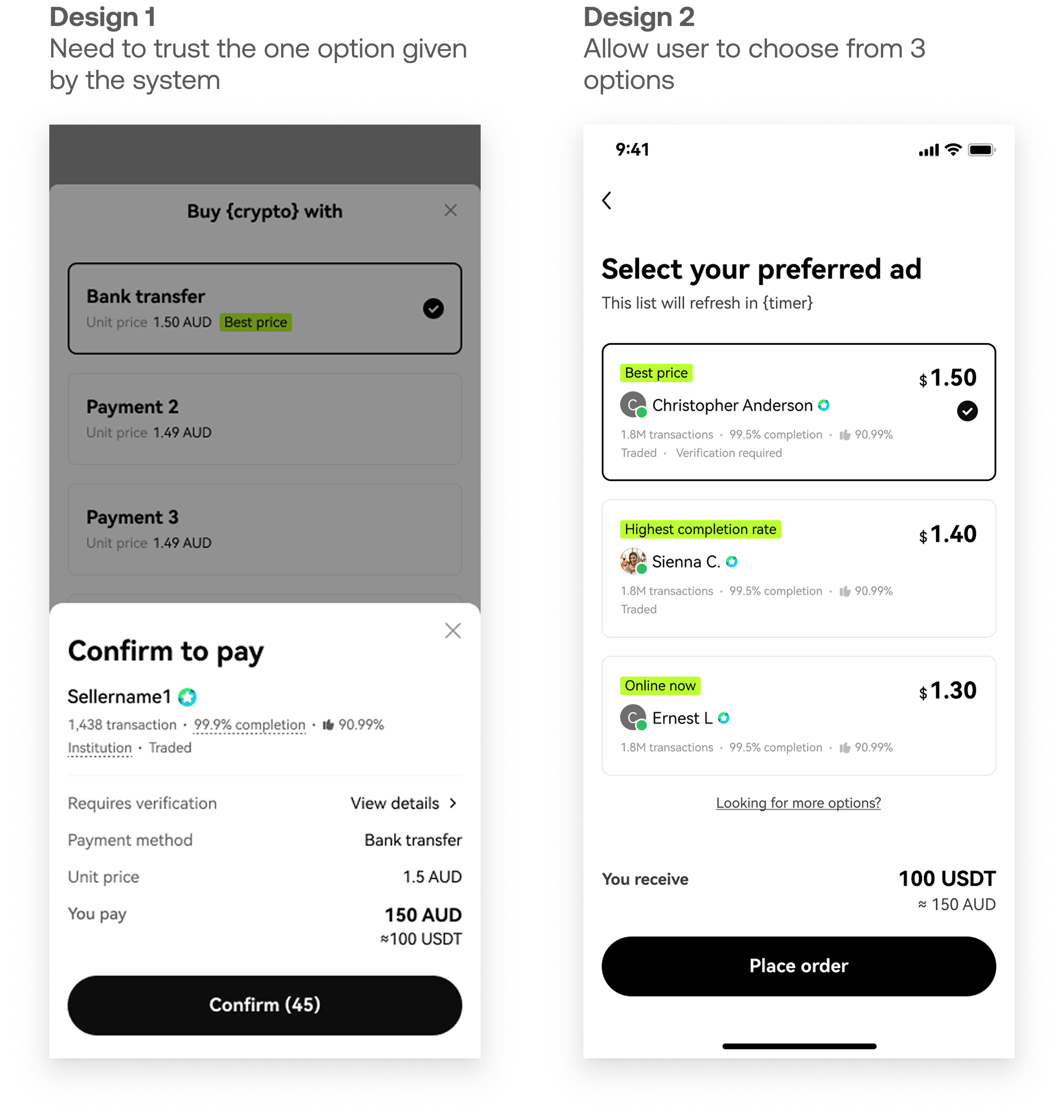
09/ Fixing the UX beneath
Problem 3: Doesn’t get a good matching
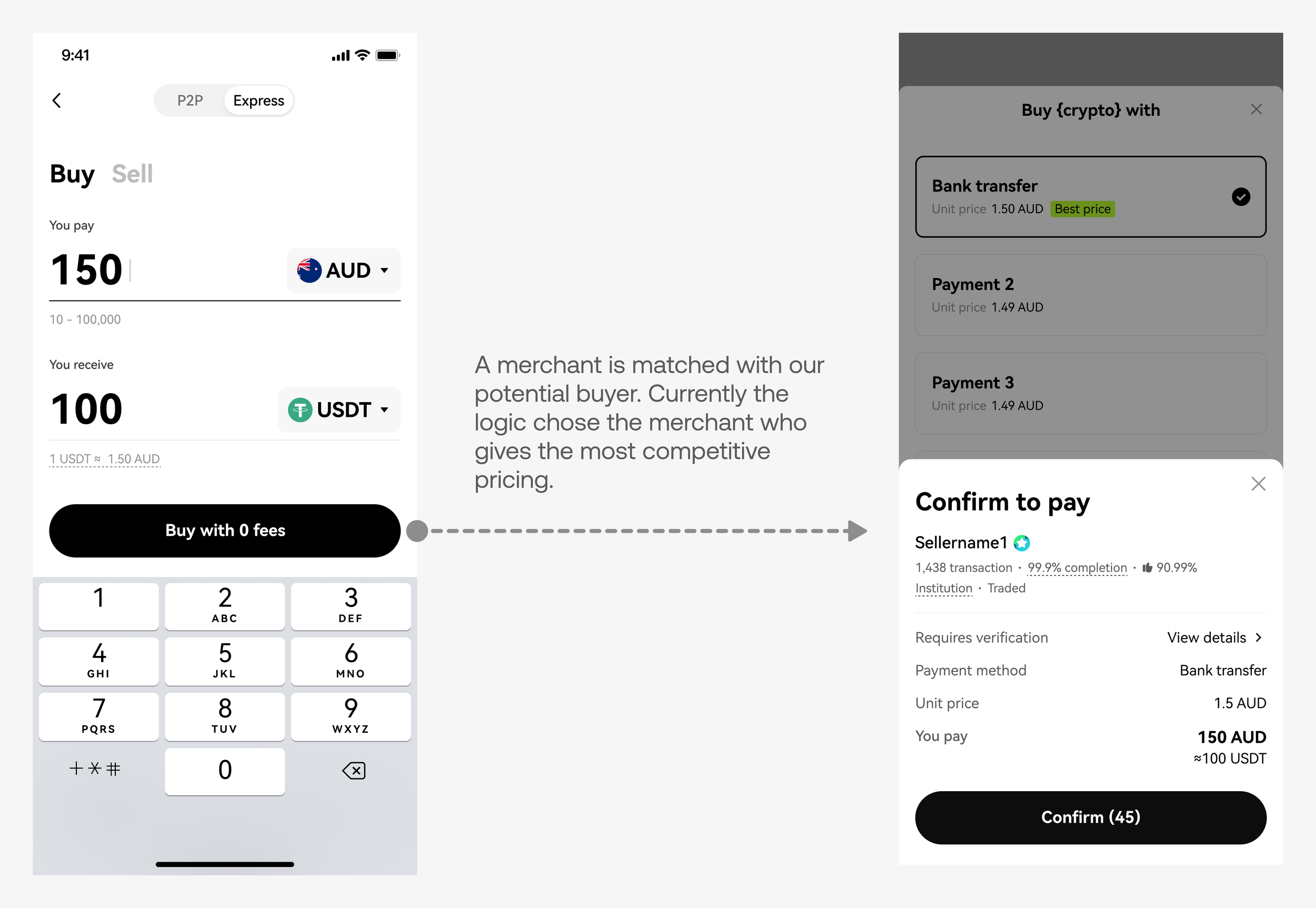
Current P2P Express matching logic
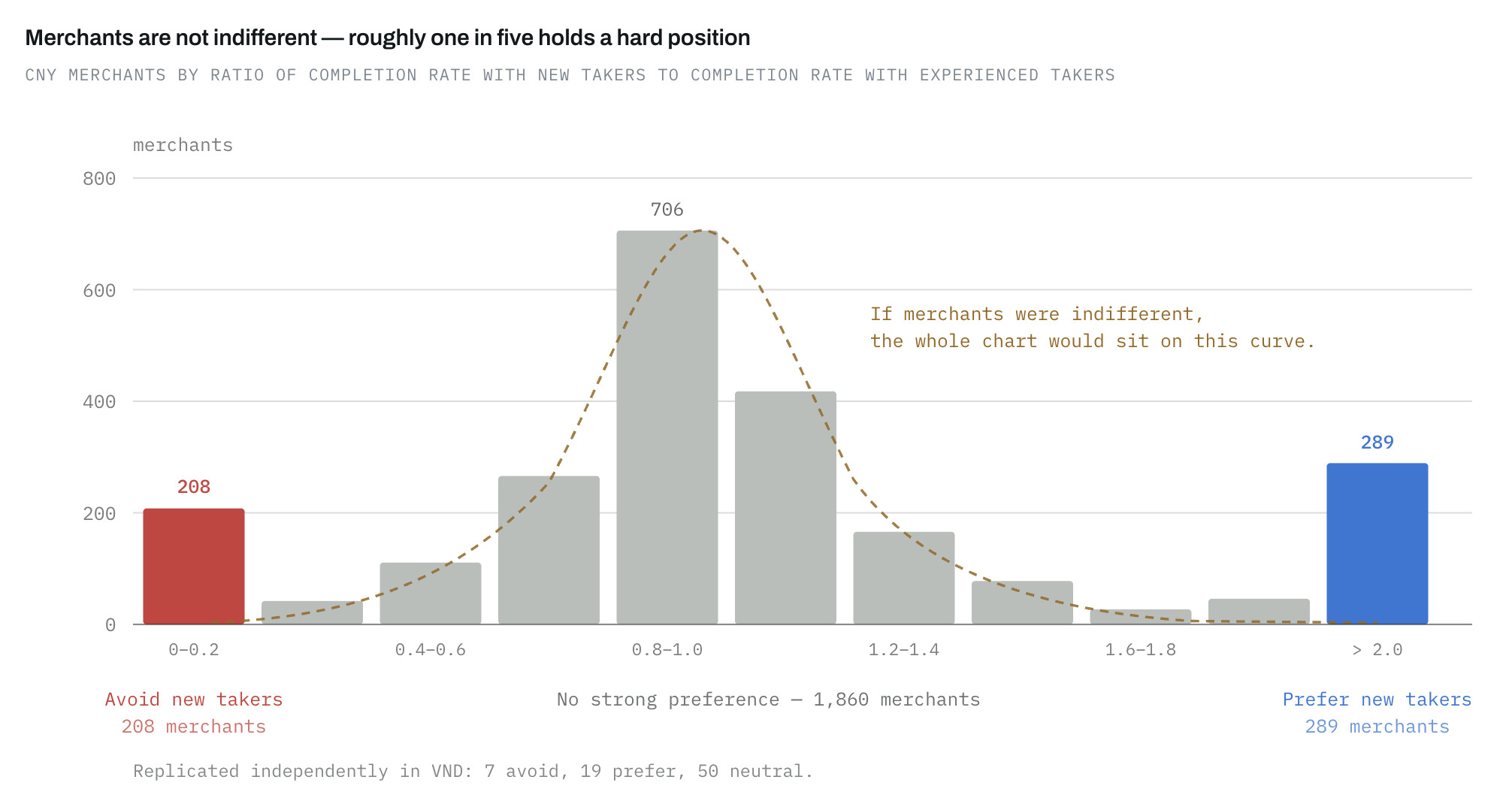
Hypothesis 1:
Current matching logic is purely designed based on takers choosing ads/maker, makers also have preferences for dealing/not dealing with certain takers
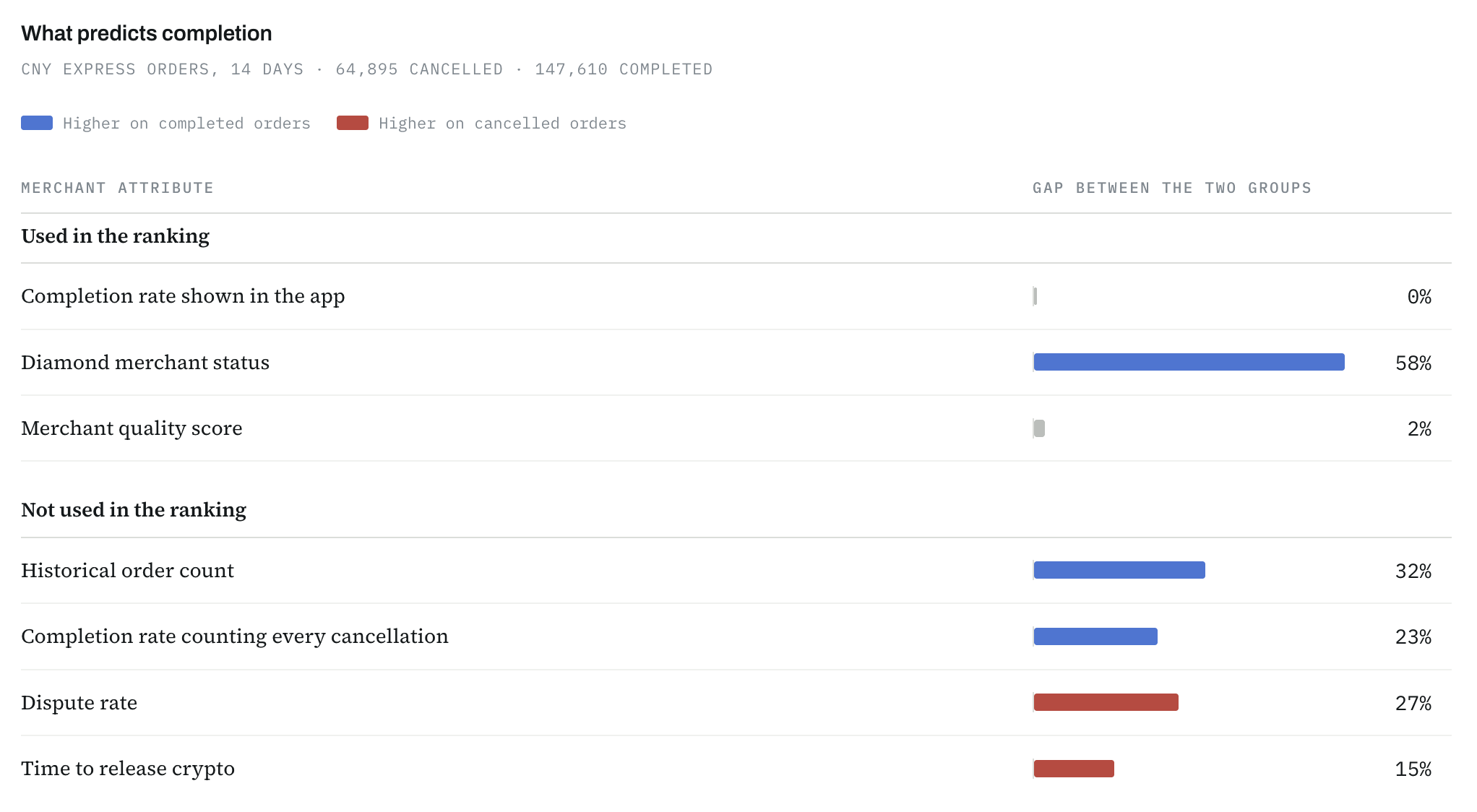
Hypothesis 2:
Maker's completion rate does not play a crucial role in CNY. Instead, other merchant quality (dispute rate, crypto release time) are more important.
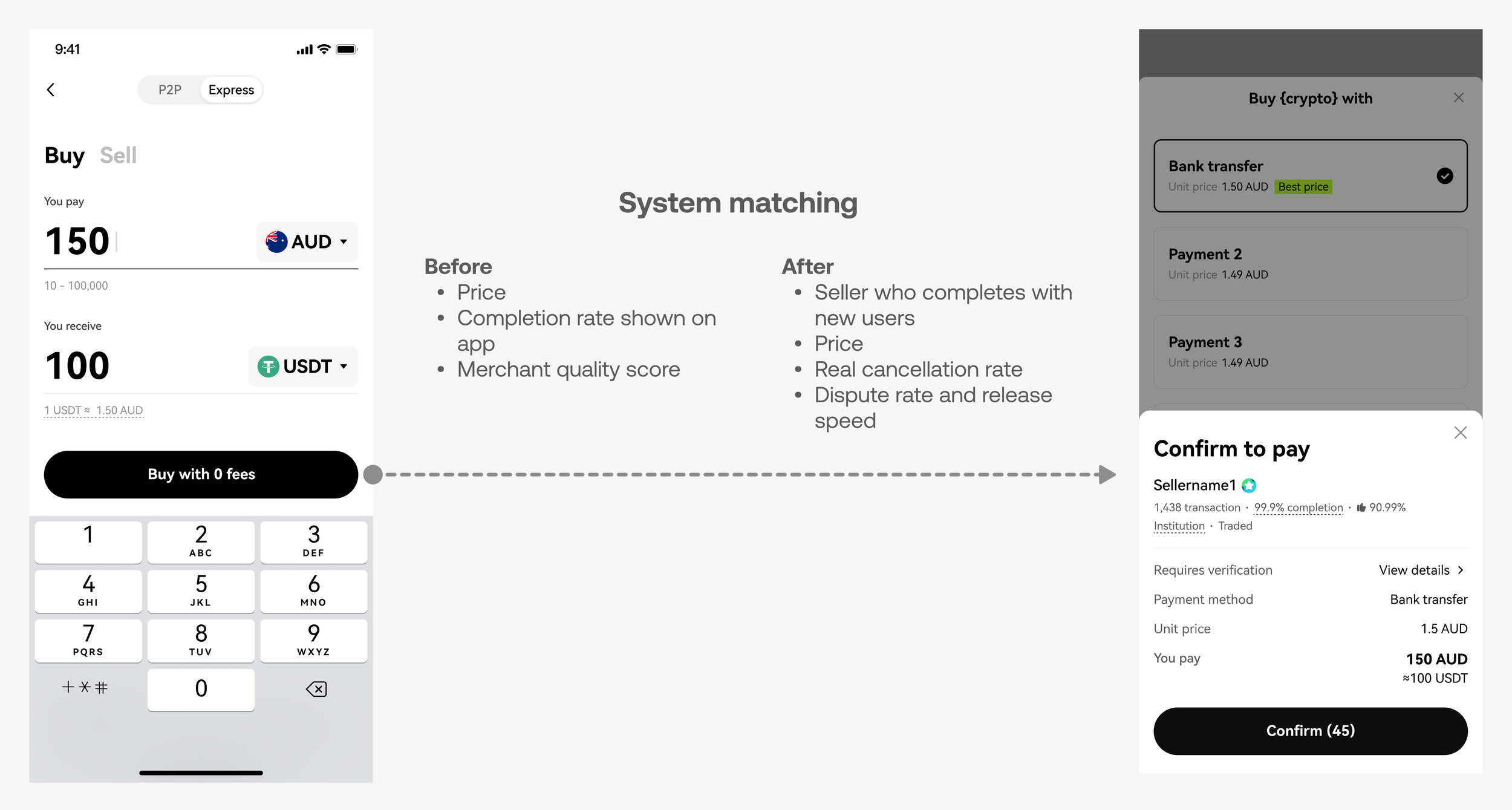
Solution:
Re-sort on the factors that are actually sensitive to completion and cancellation.
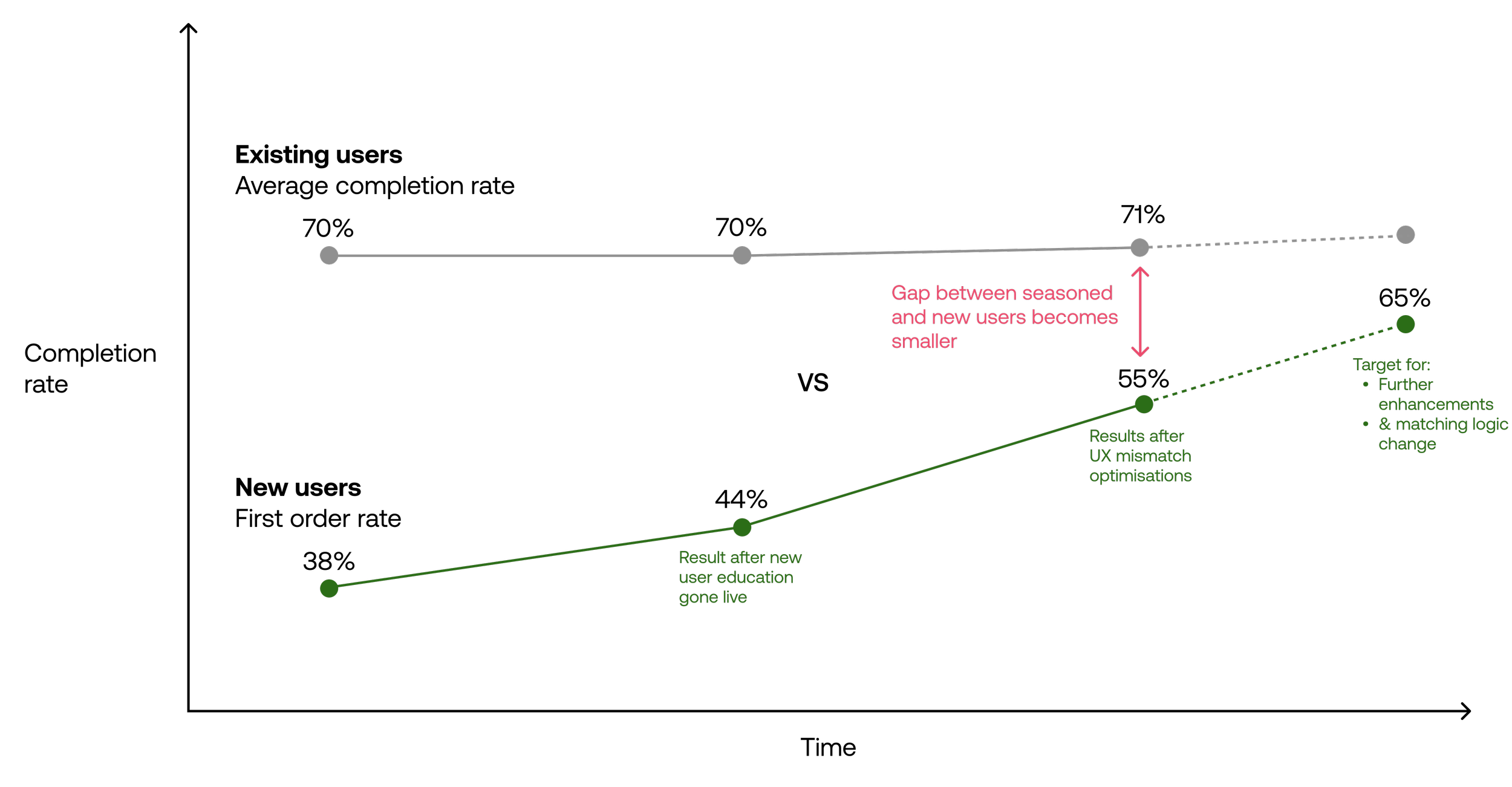
11/ Success metrics
Results
Lever 1 • On top of the flow
New user education
+6 pt
completion rate for new users. 38% → 44%.
Order cancellation falls by 21%.
Lever 2 • Inside the flow
Mismatch UX optimization
+11pt
completion rate for new users, 44% → 55%
Lever 3 • Underneath, no UI
Matching logic optimization
1 in 5
merchants either avoid new users or do well with them. Heavily reduced P2P disputes from seller-side failures.
12/ Why we design what we design
Designing trust for first-time P2P traders
New users don't need a shorter flow.
They need to trust what's on the other side of it. That took three changes at three different layers