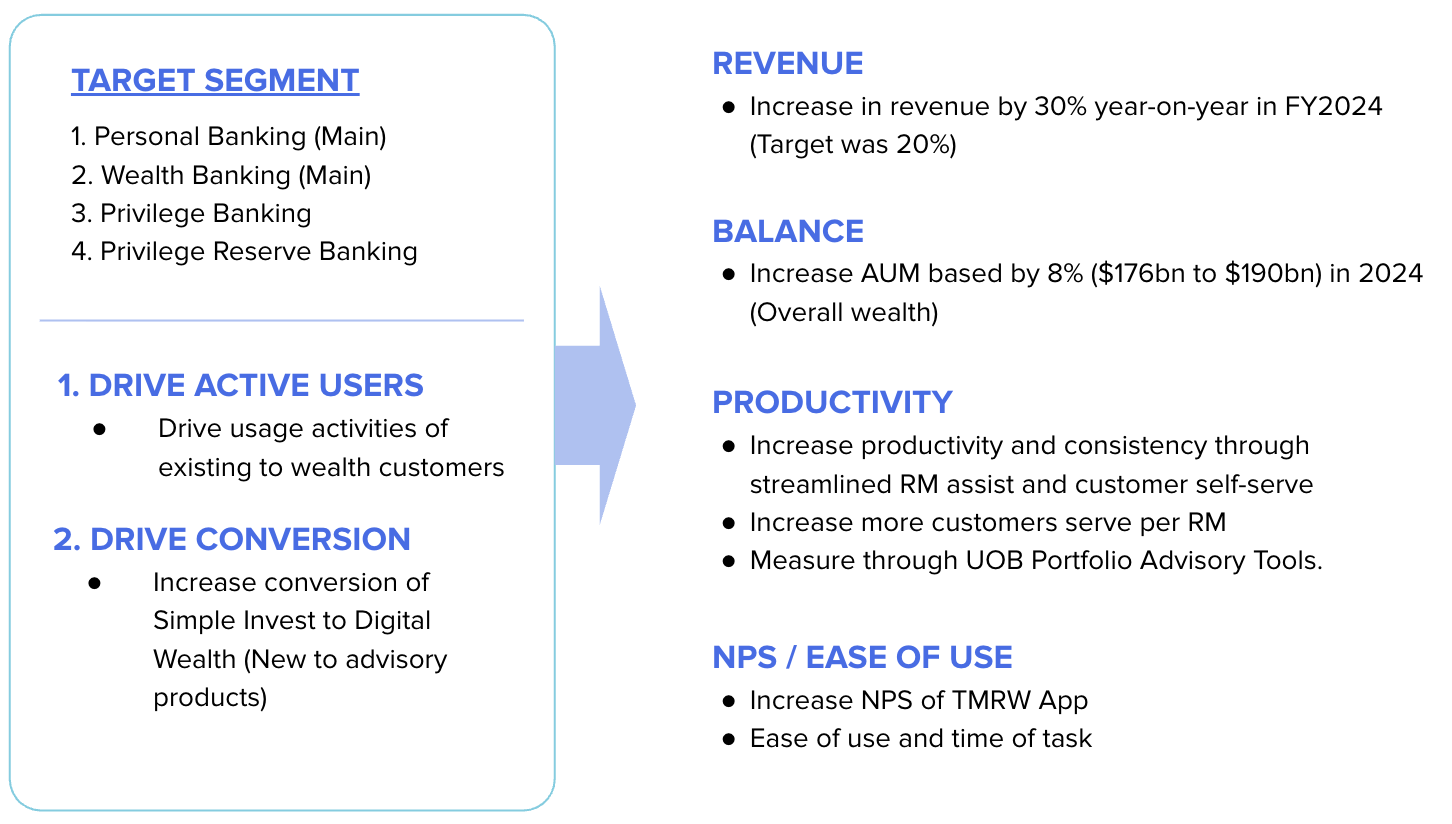
UOB's first self-serve digital wealth platform
Singapore's first self-serve path to retirement investing
My role
Product Designer for this specific project
Desk Research & interviews
Stakeholder Workshops
Journey Mapping
End-to-end UI Flows
Collab with UX researcher on user testing and iterations
Problem
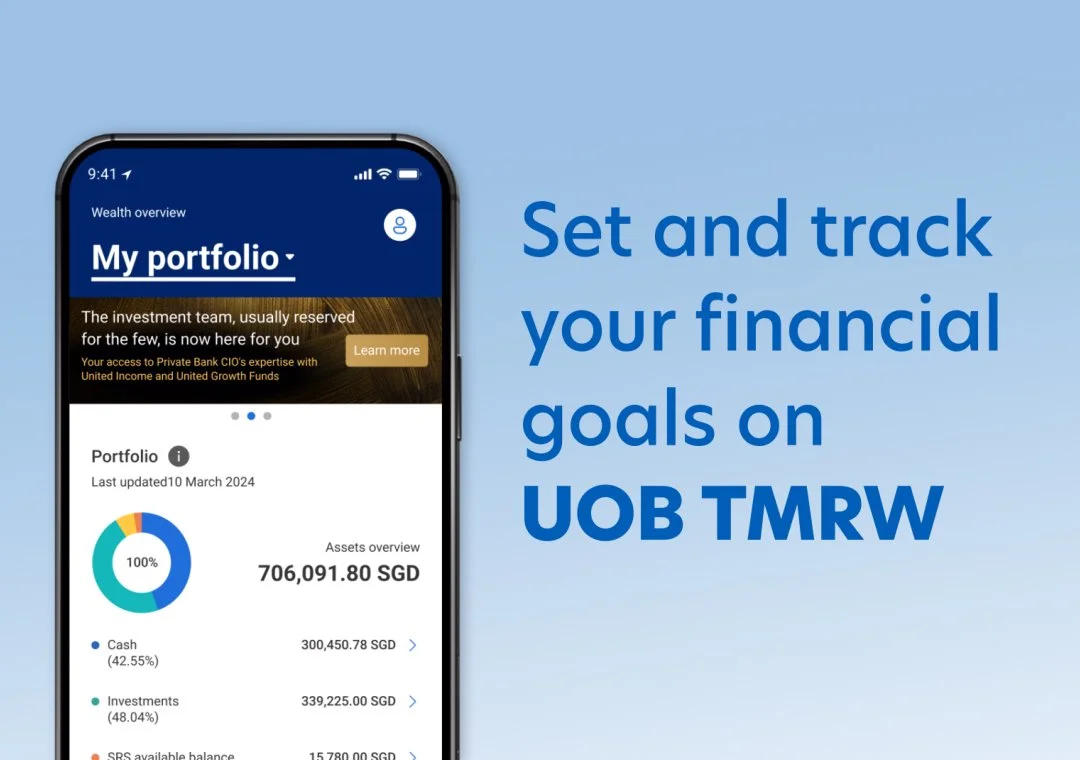
Wealth products at UOB were RM-gated, most customers had to visit a branch or speak to an advisor to invest. Over 85% of UOB TMRW's wealth-segment customers had no digital investment holdings. The goal was to change that.
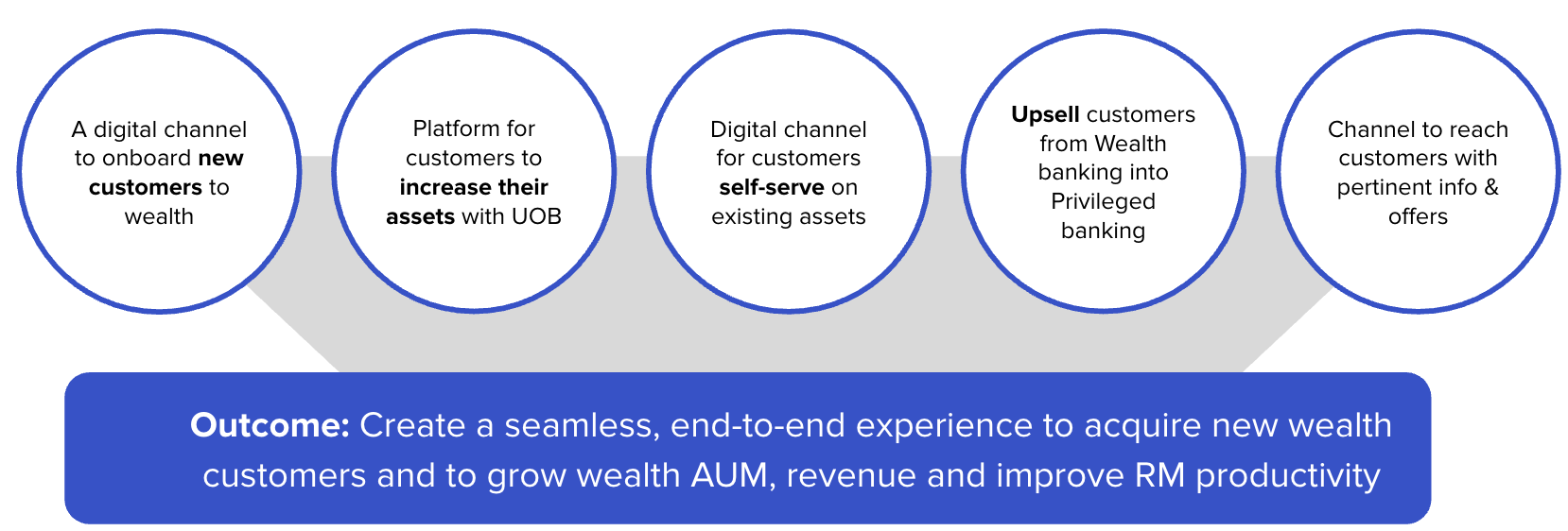
Objectives
How I framed the problem
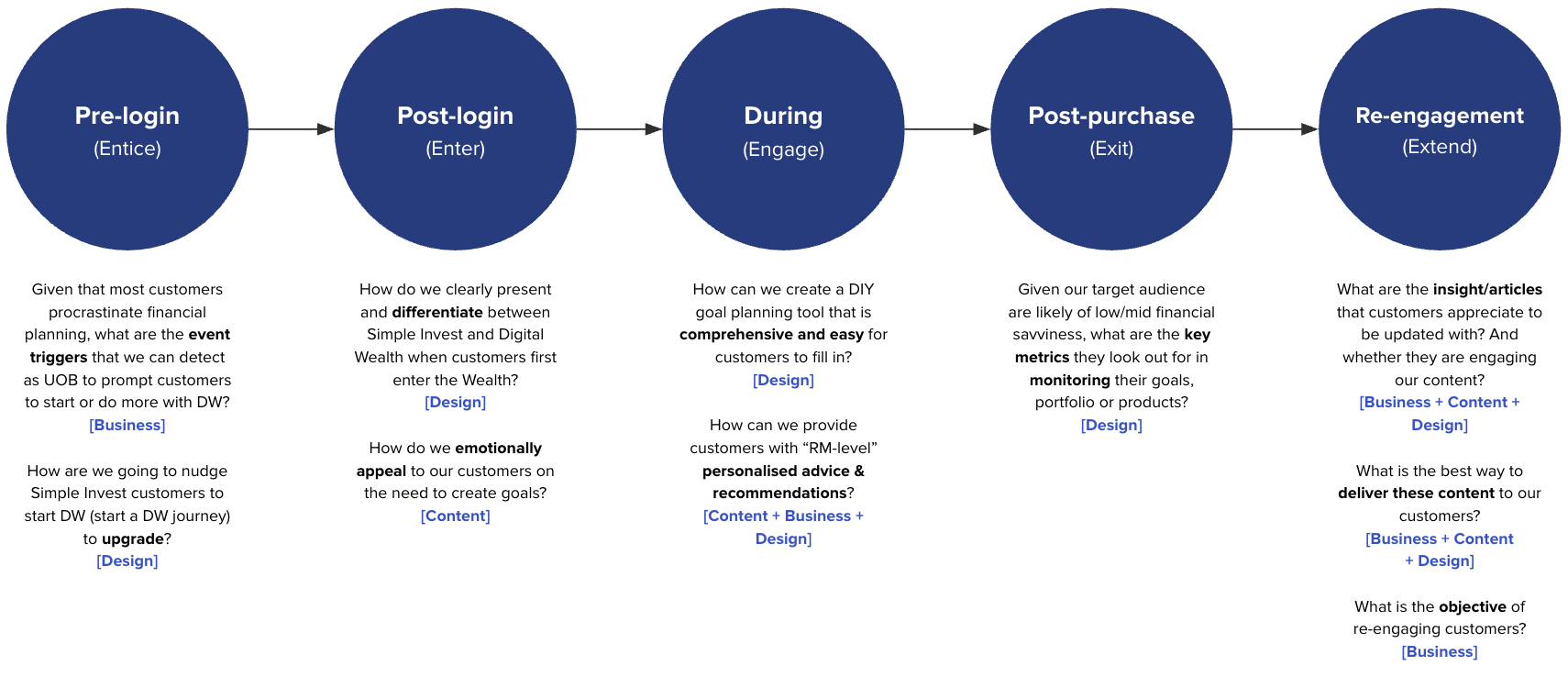
We mapped problems across the full customer lifecycle → from pre-login to re-engagement, to avoid designing only for the happy path.
Research insights
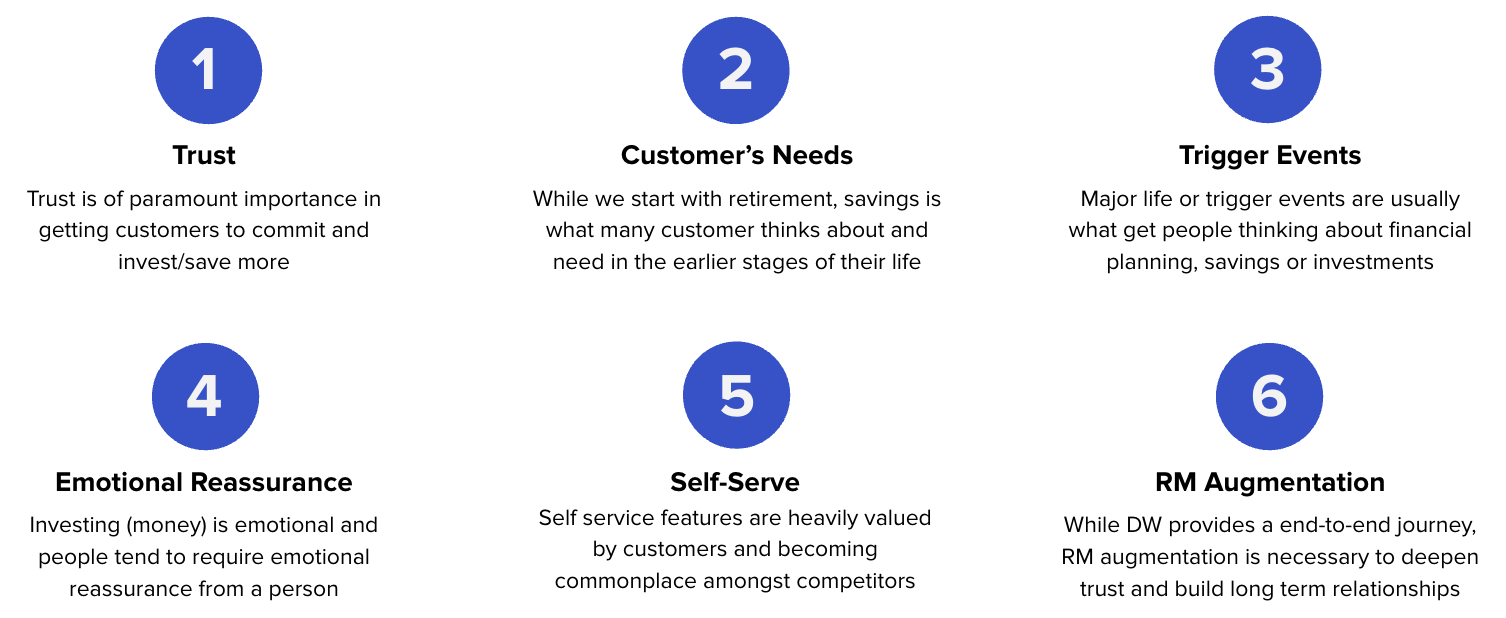
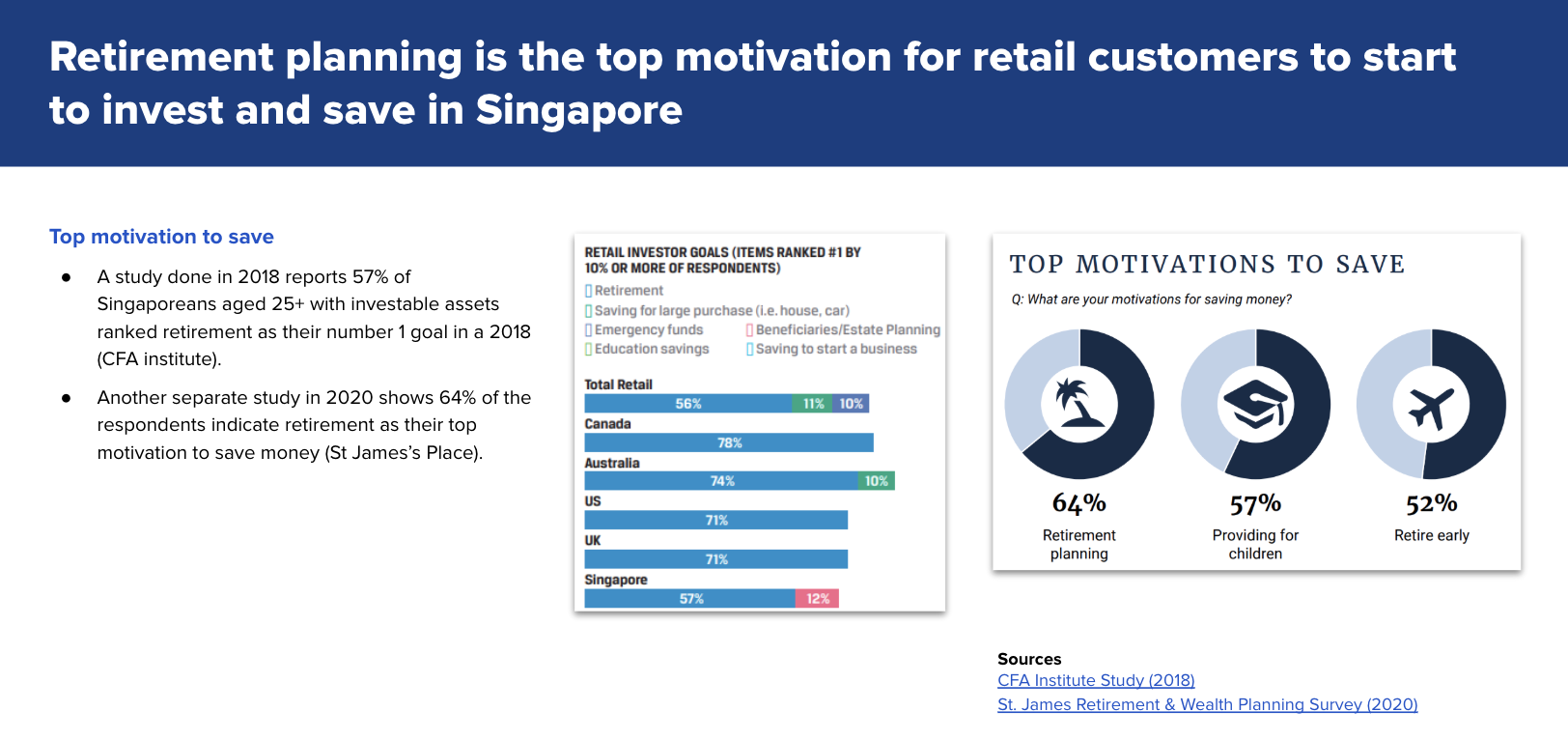
Desk research surfaced 6 themes that shaped our design principles.
Product proposition discussion
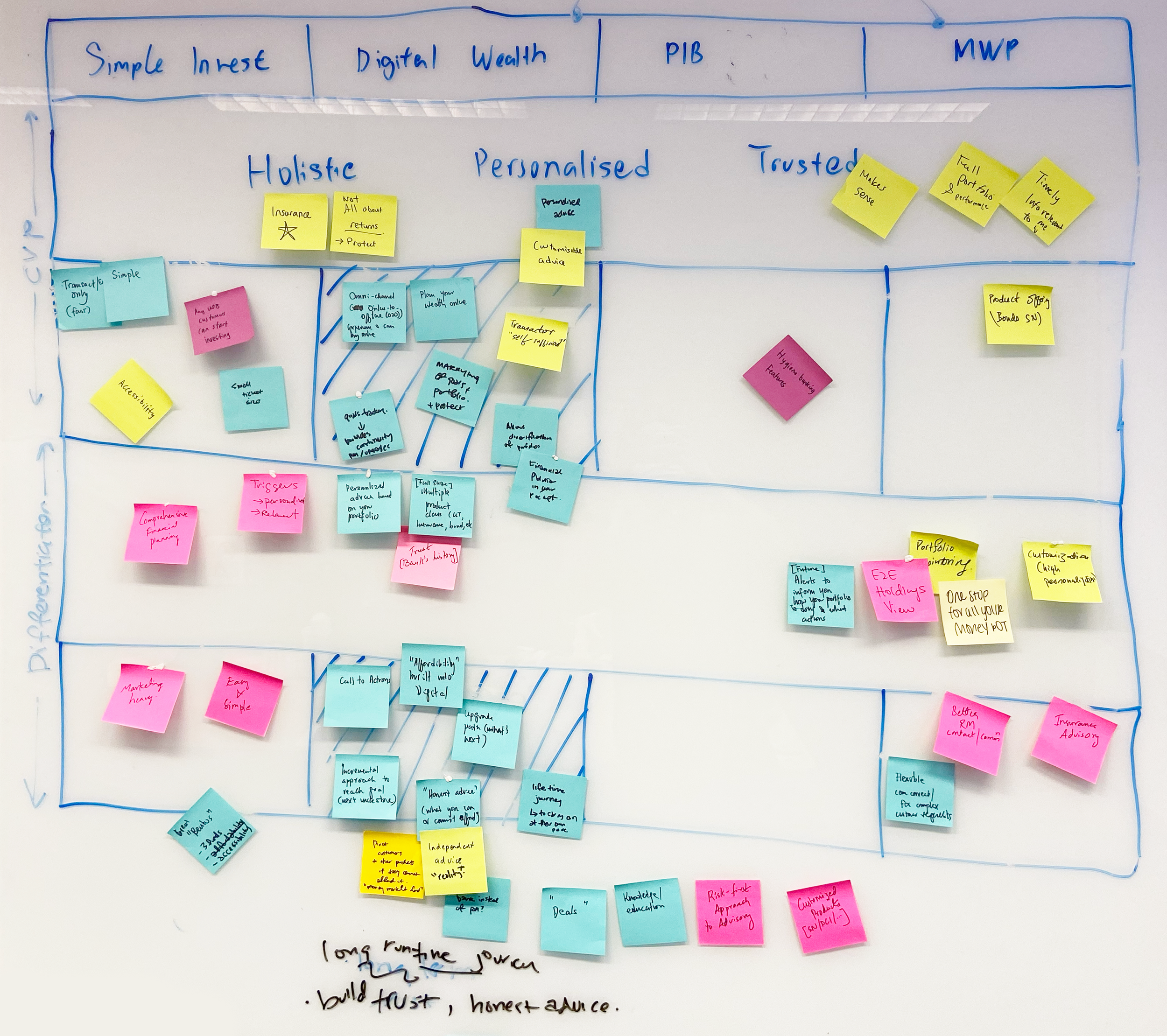
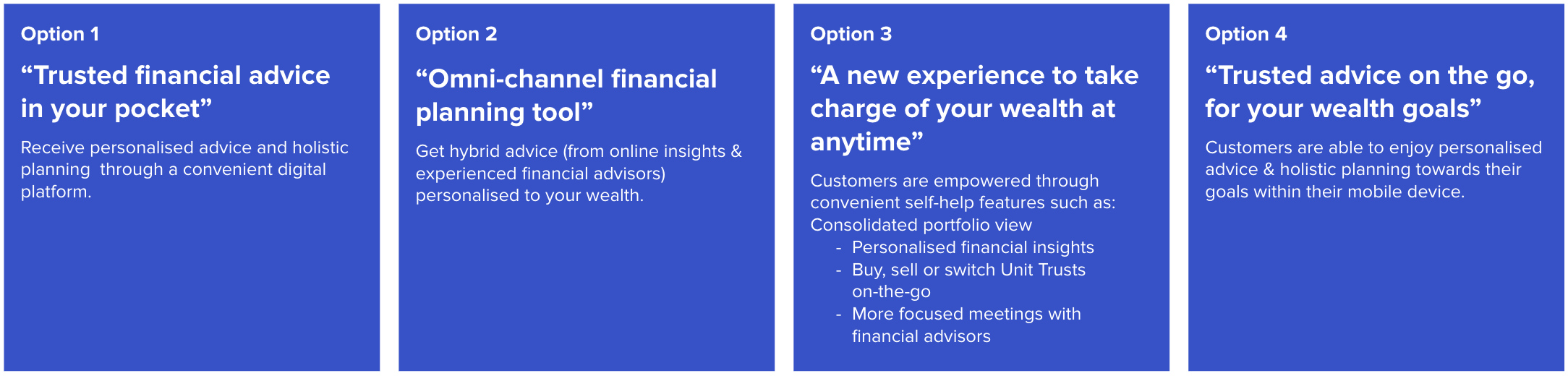
Before designing, we workshopped to look at omni-channel and product propositions with stakeholders to align on direction.
Who we designed for
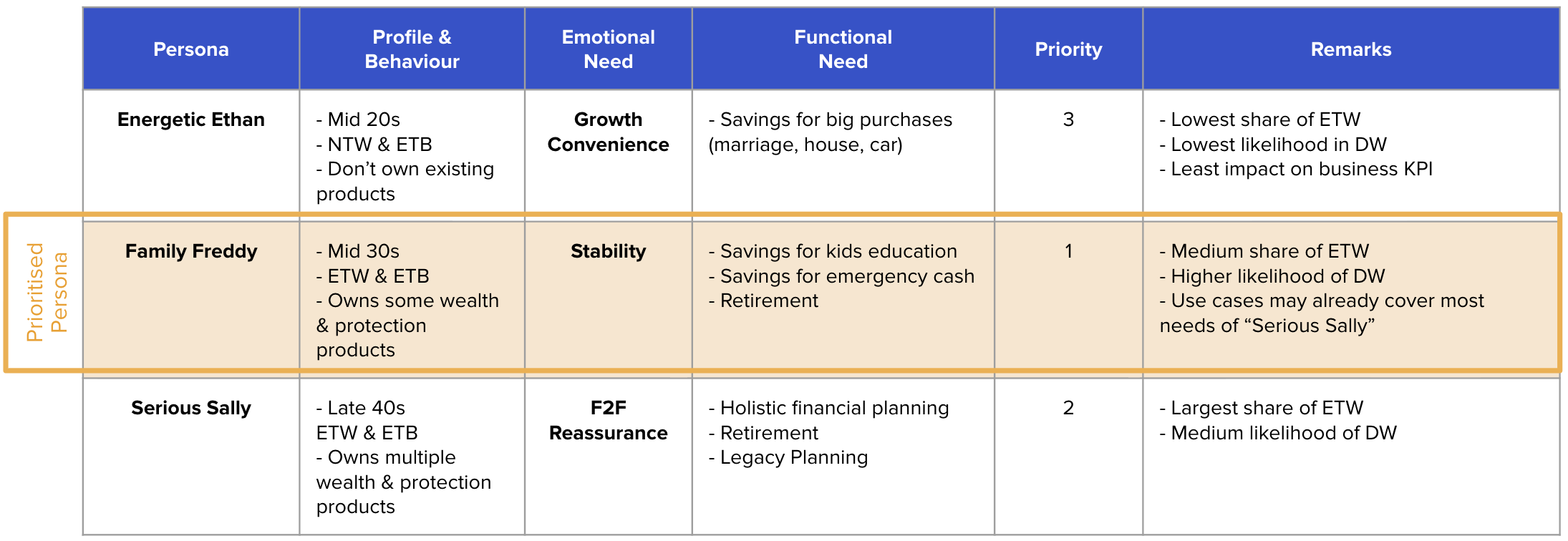
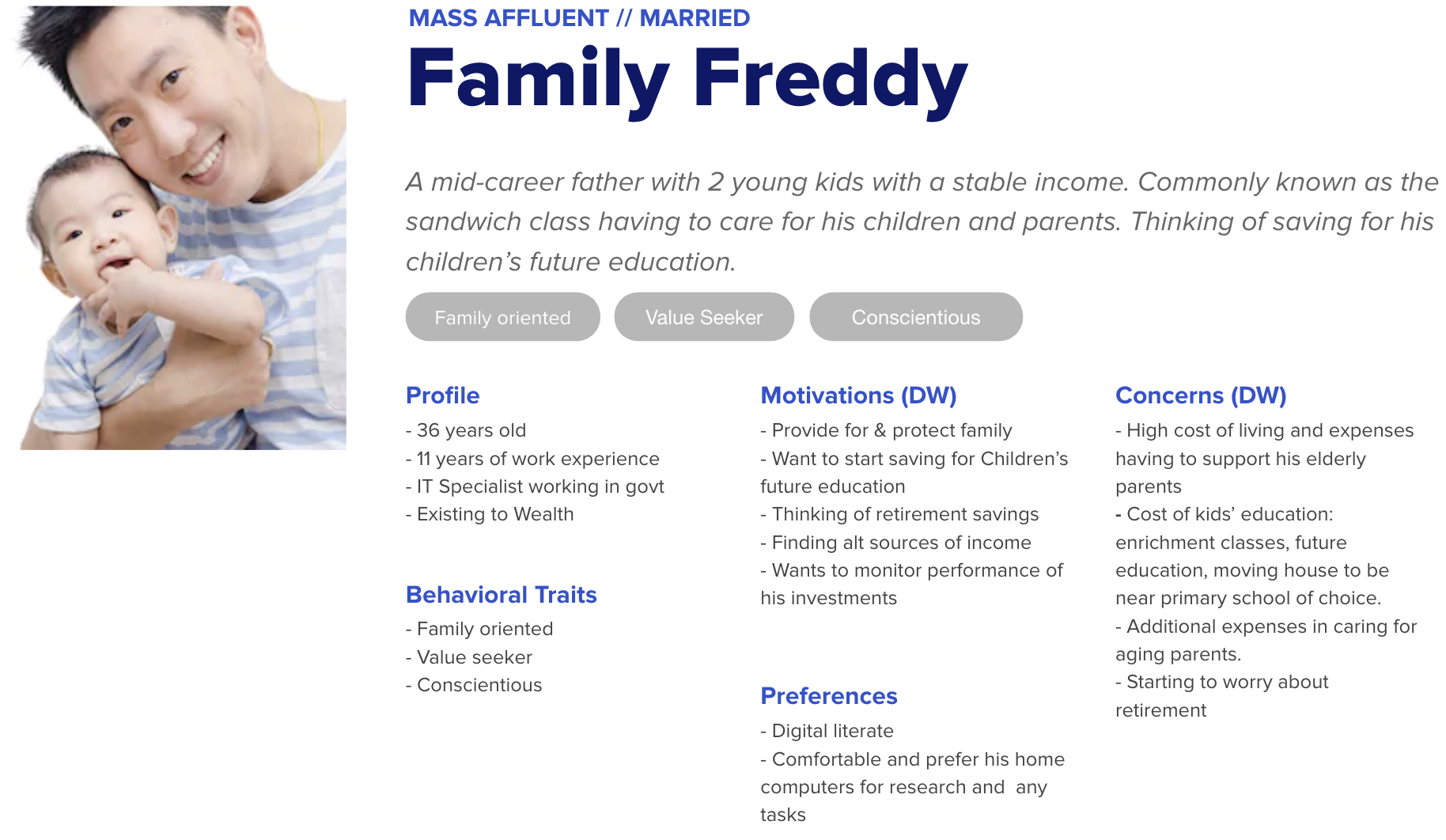
We prioritised "Family Freddy", mid-30s, existing UOB customer, stability-driven as the primary persona for Phase 1.
Journey architecture
We prioritised "Family Freddy", mid-30s, existing UOB customer, stability-driven as the primary persona for Phase 1.
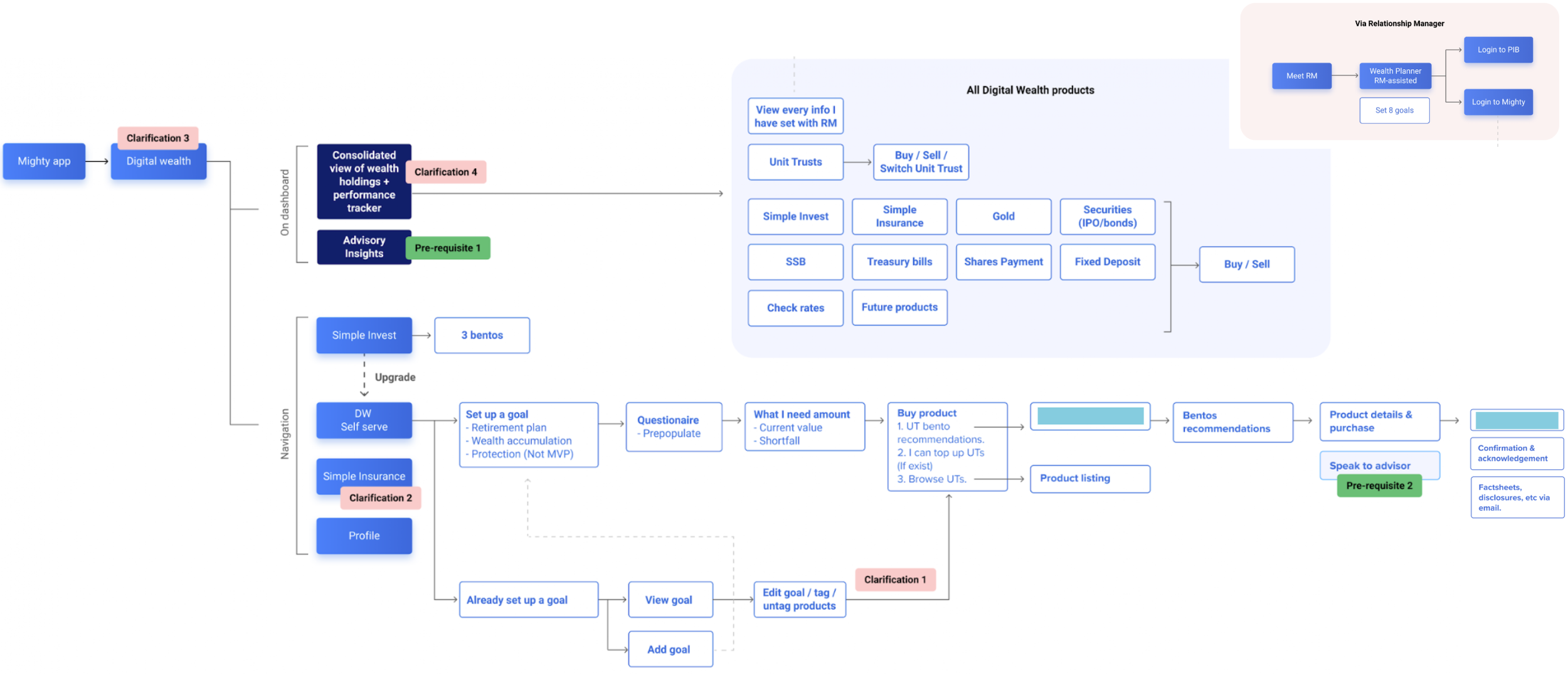
Journey designs
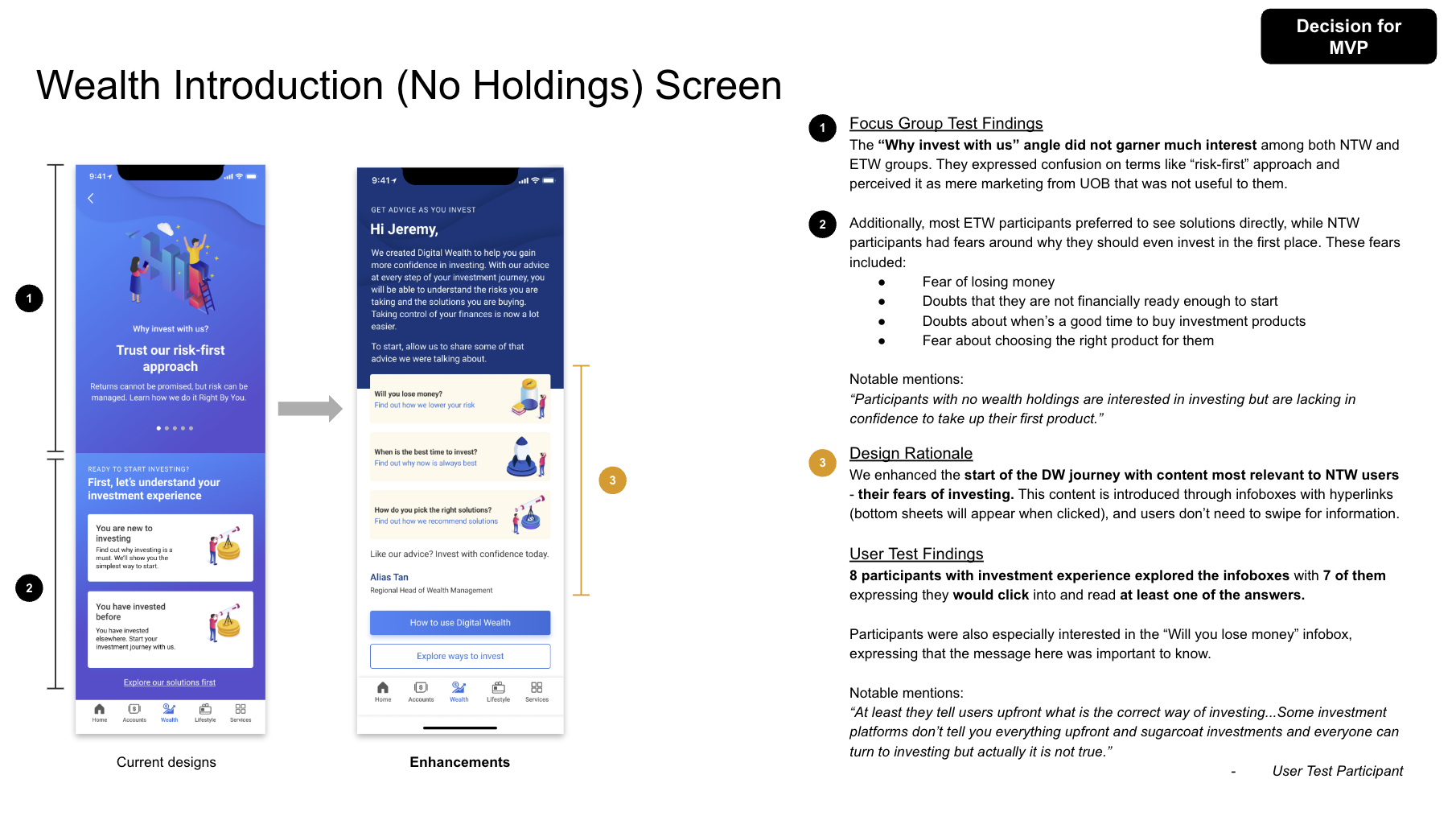
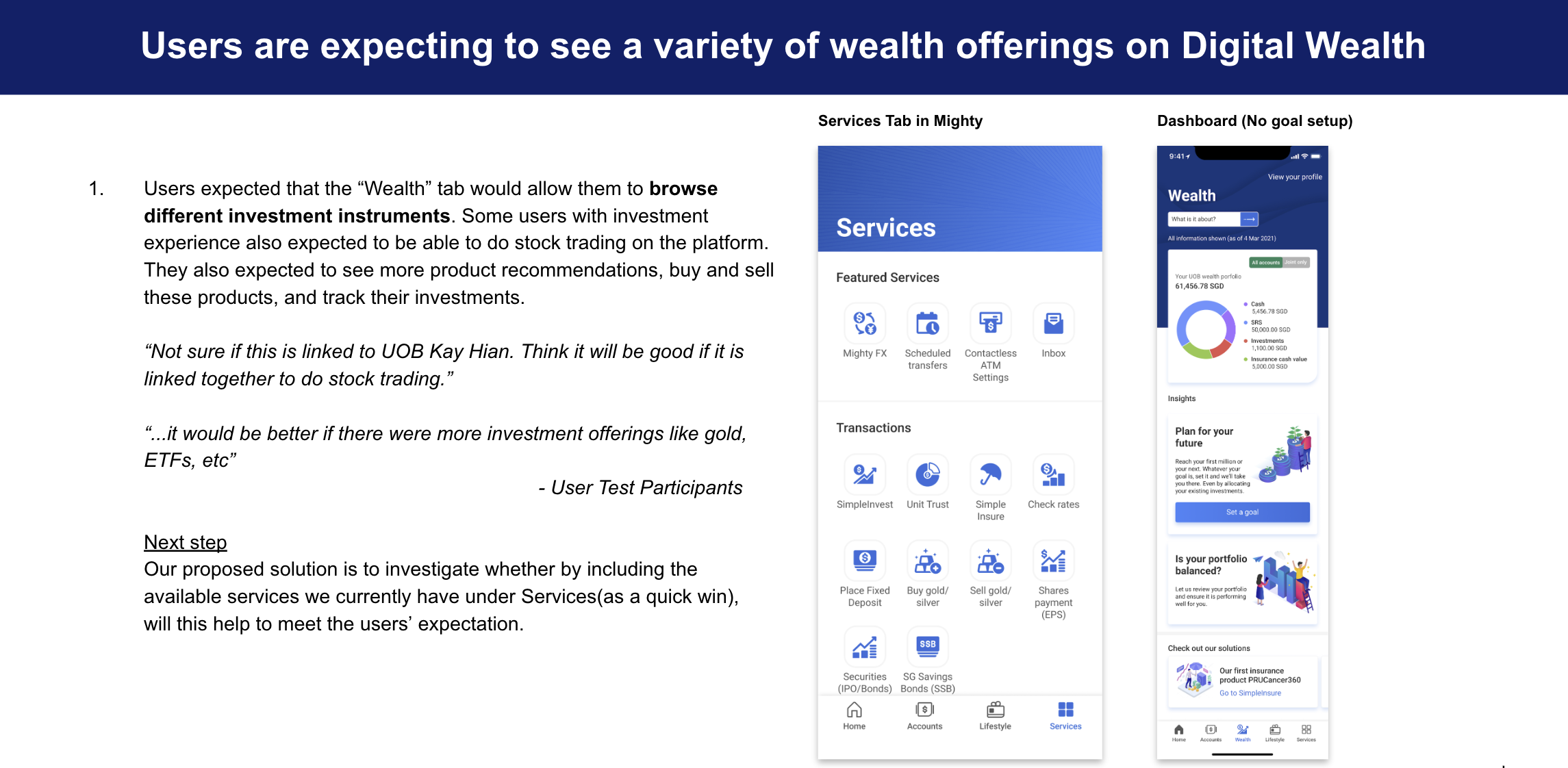
Designed for two distinct states. New users with no wealth holdings, and existing customers with assets but no digital access.
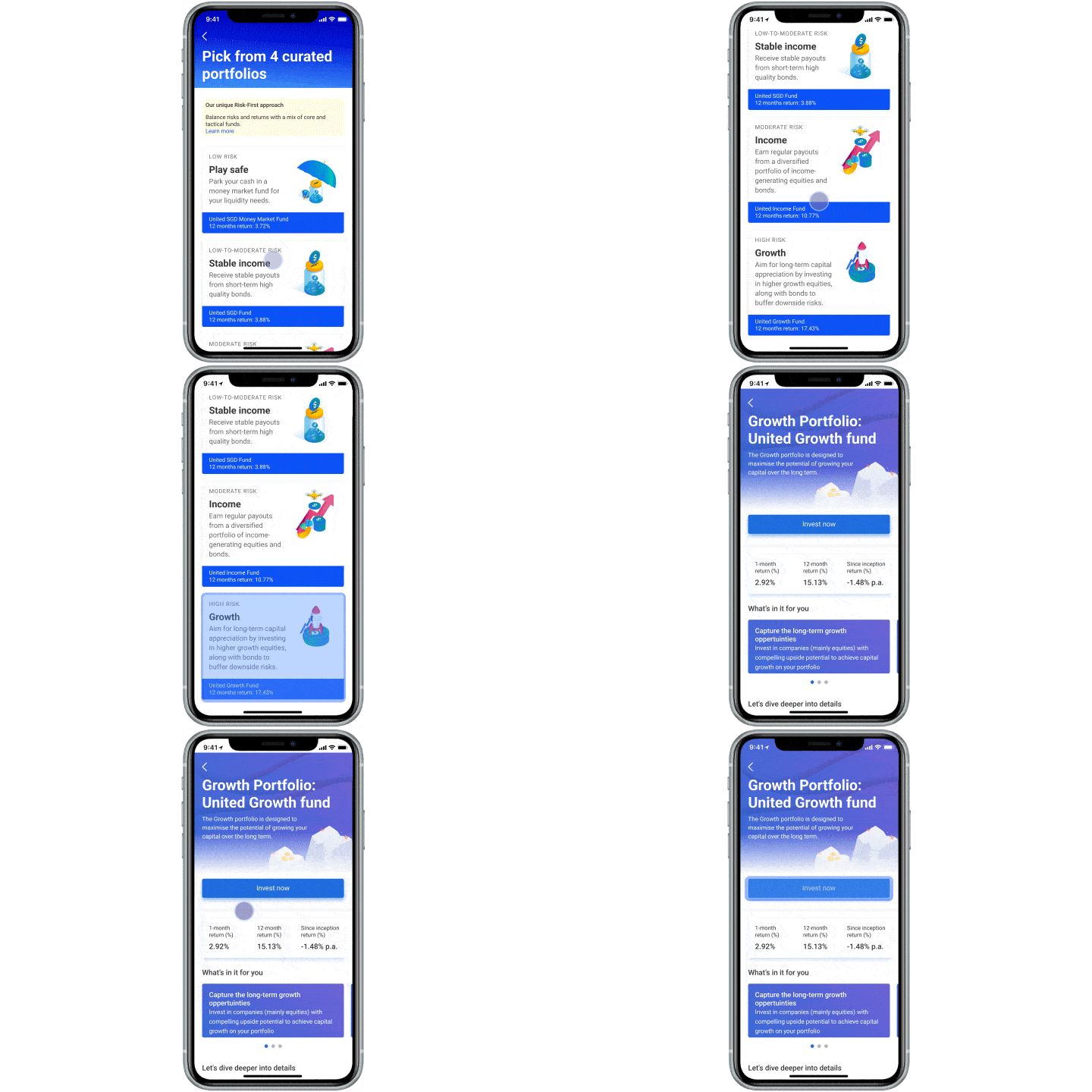
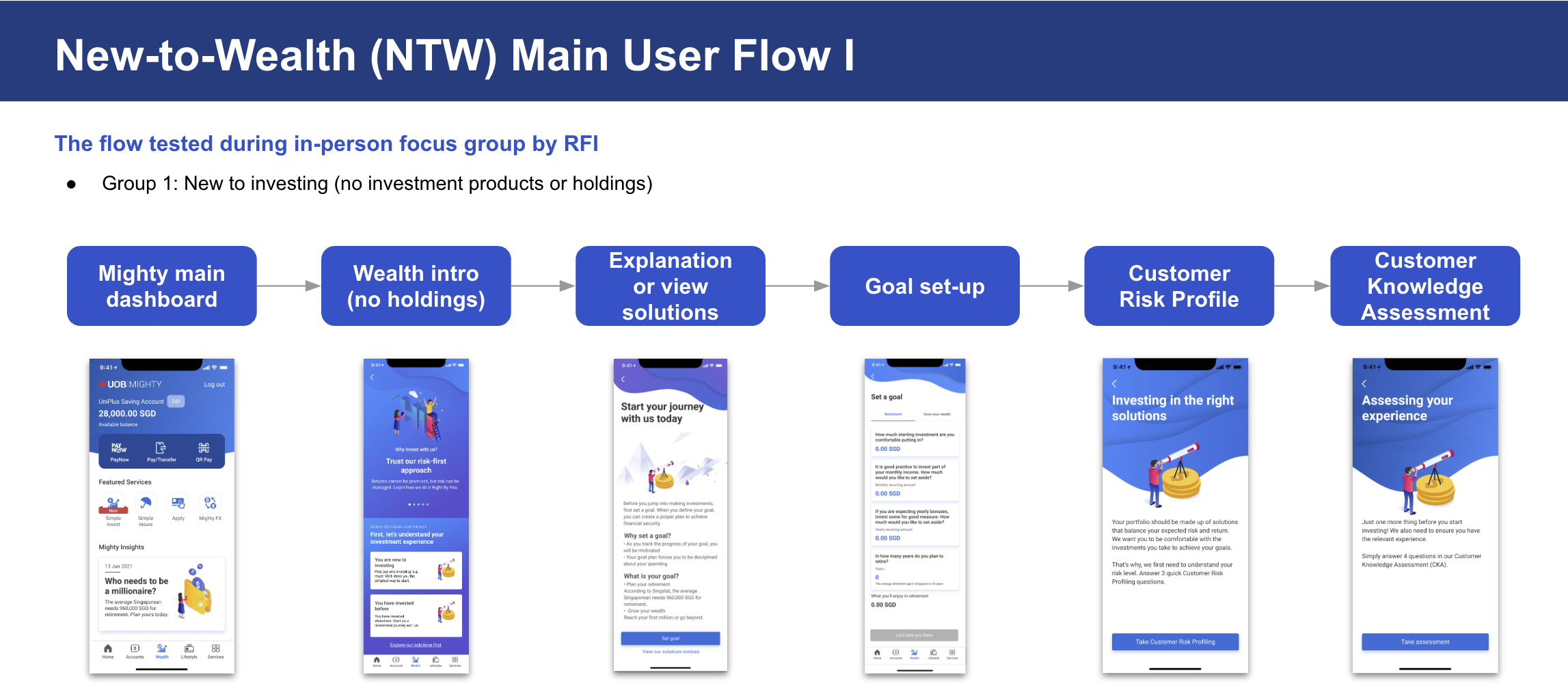
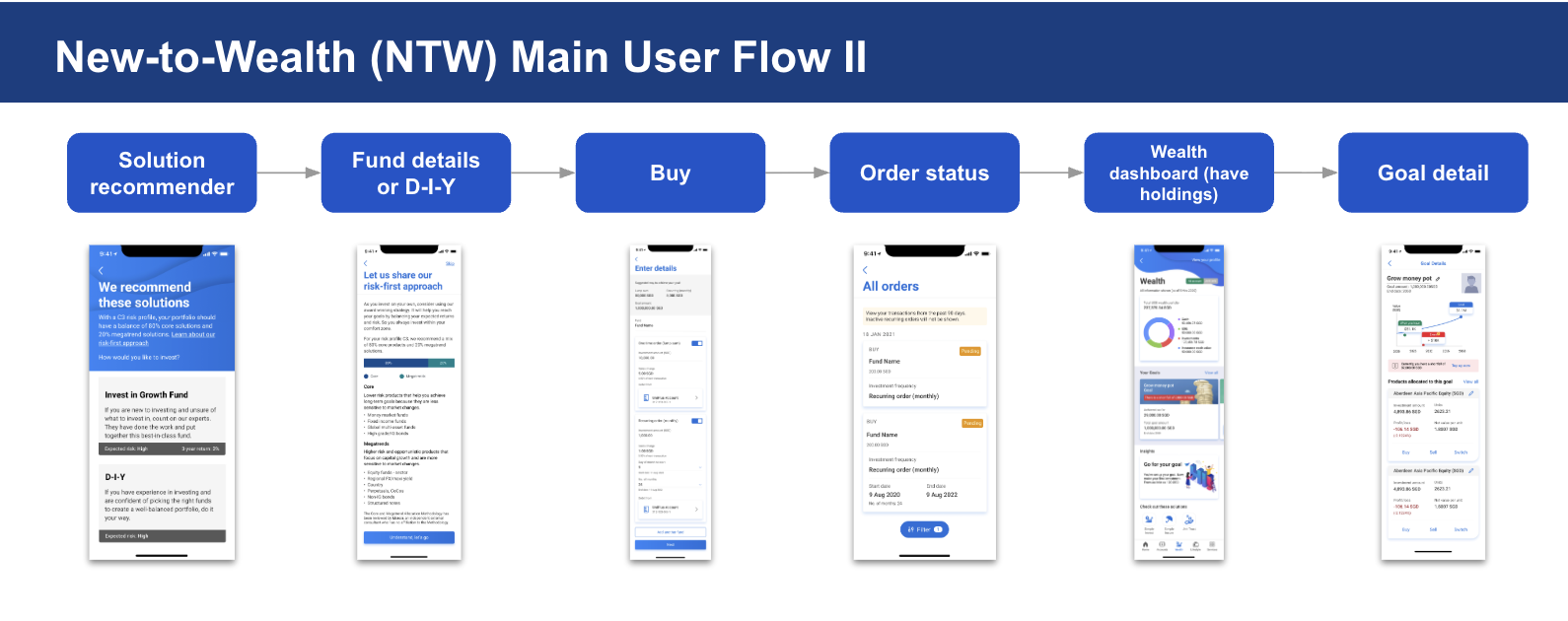
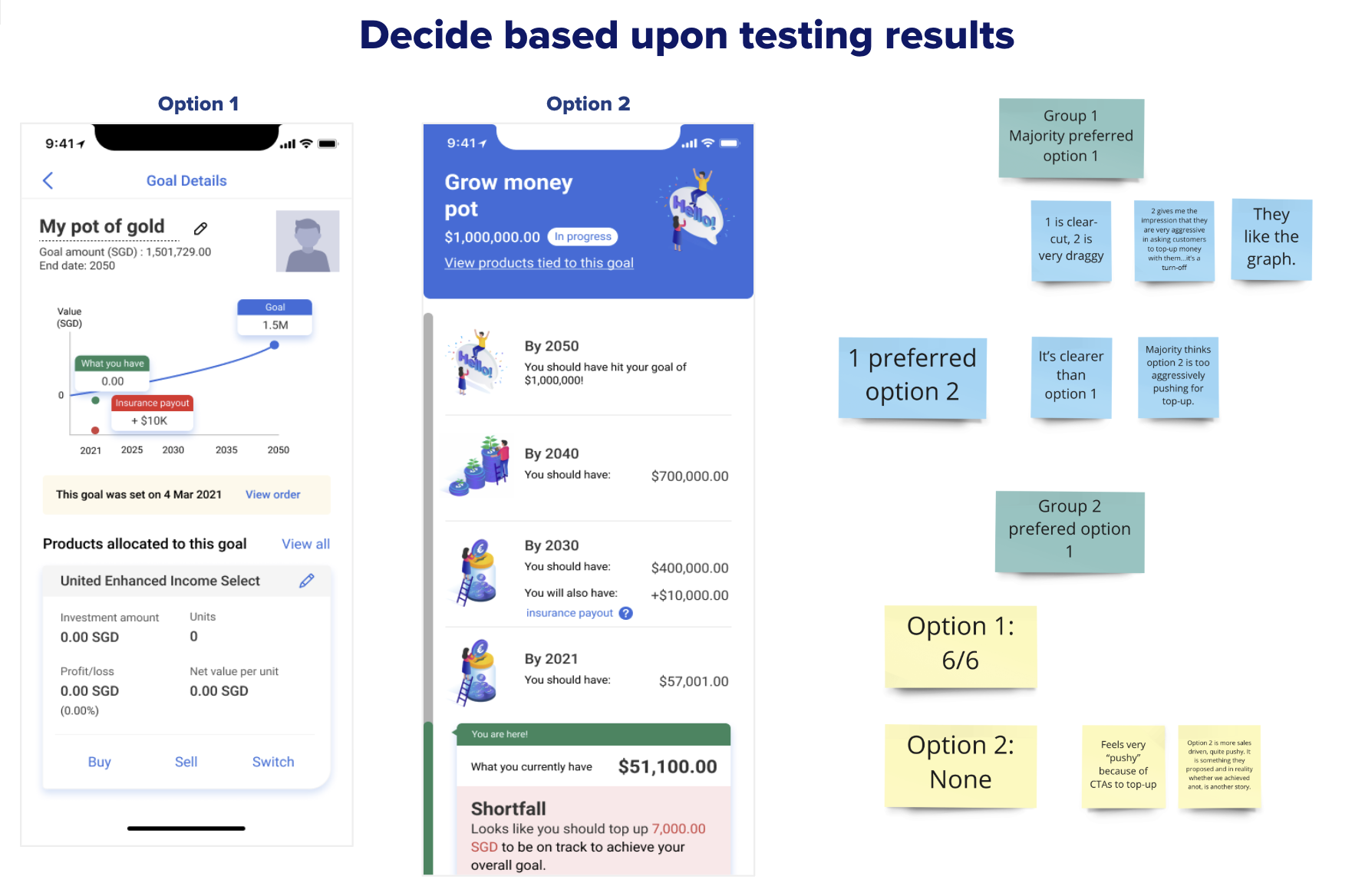
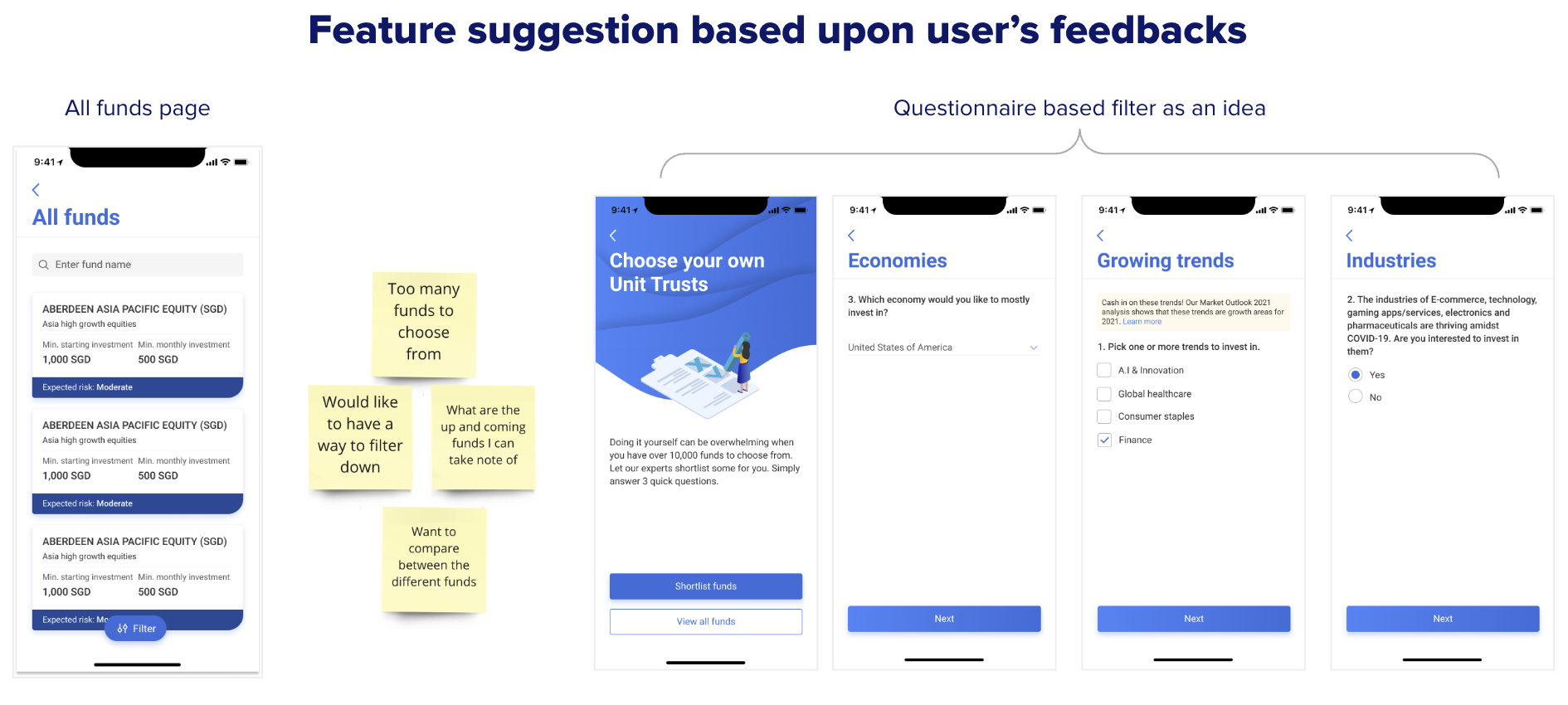
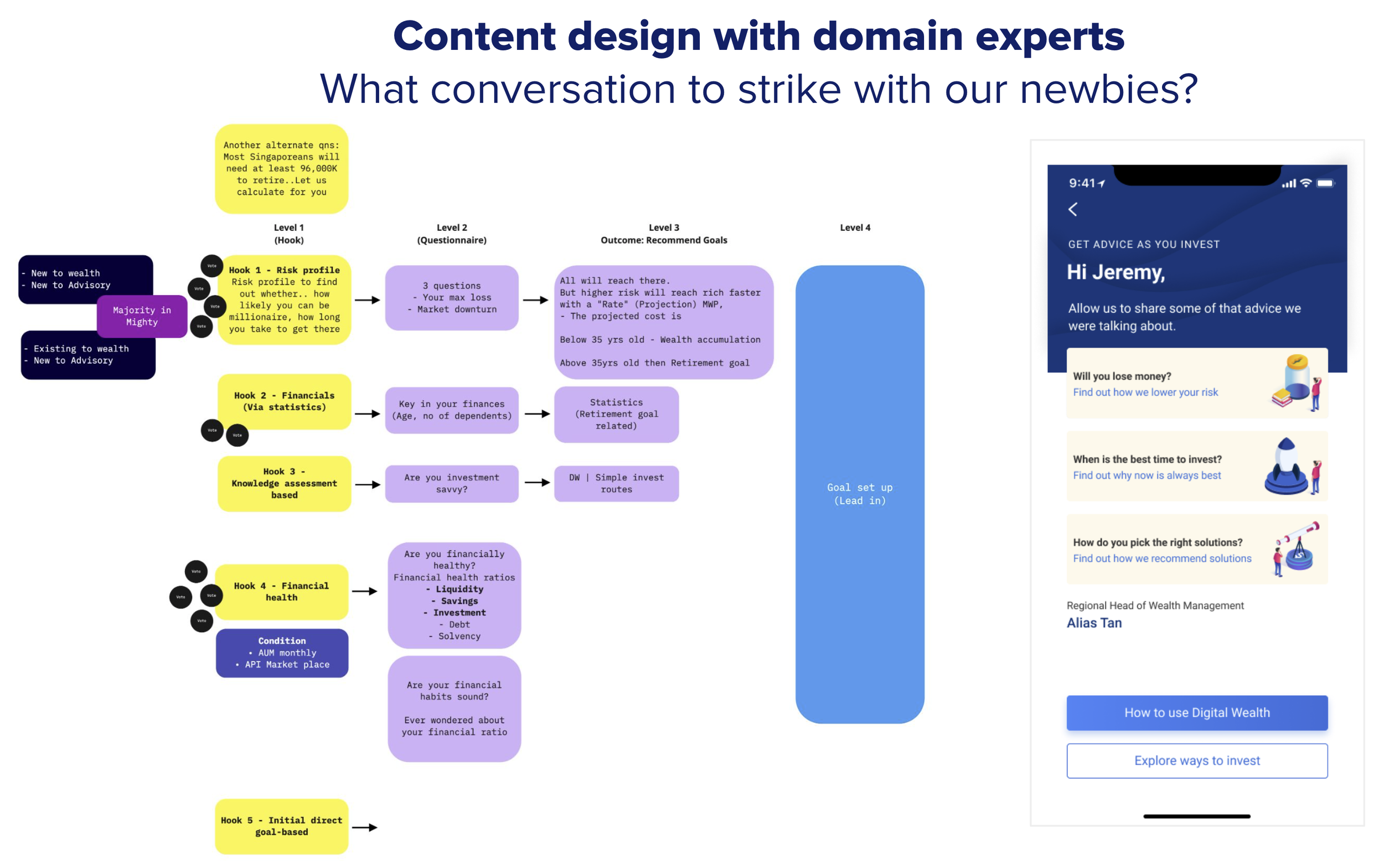
Iterations from internal testing
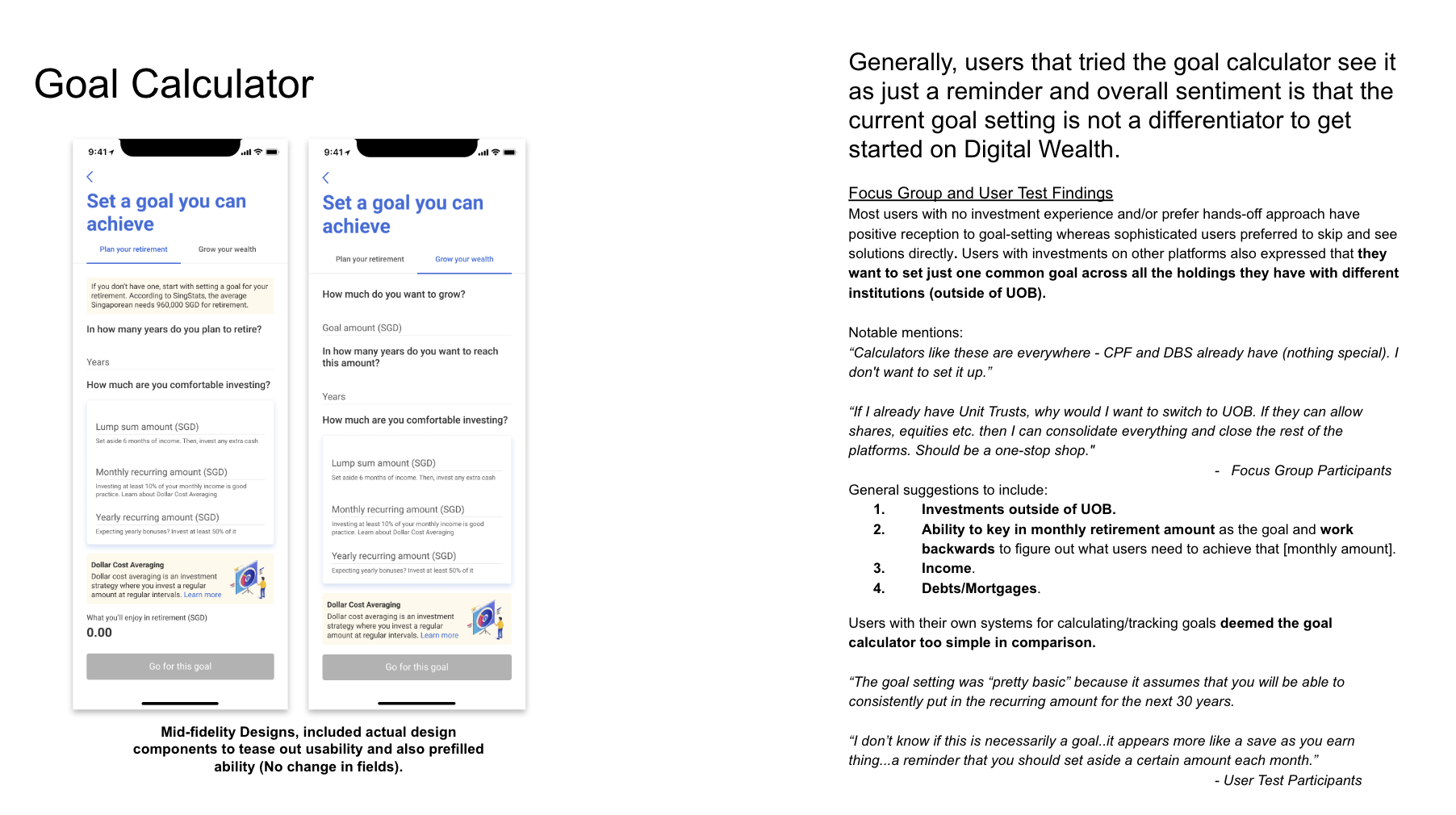
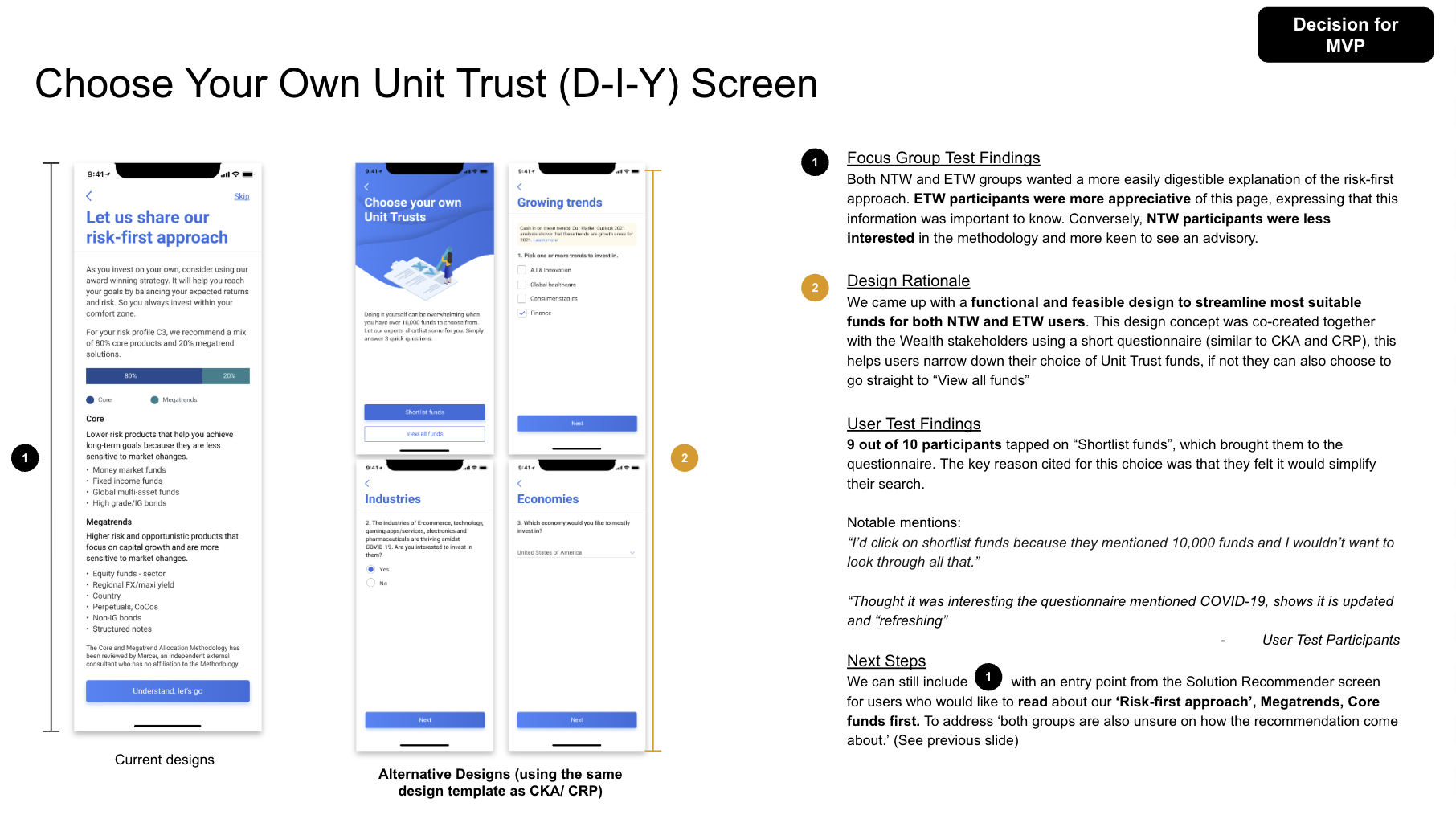
Iterated through focus group testing and usability rounds. New users got an onboarding state introducing goal-setting before showing investment products.
Other key considerations
Outcomes